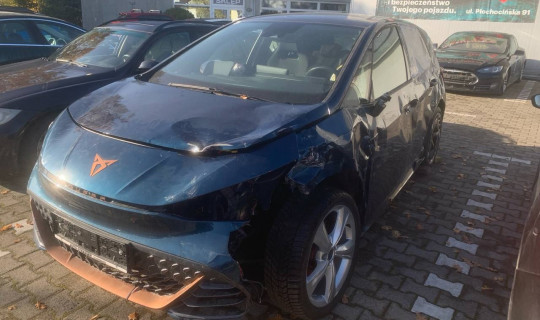
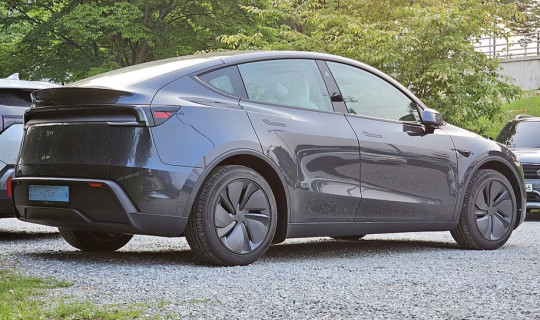
Technically, this car is almost a complete analogue of the Volkswagen ID.4, but has some differences in the interior. Another point is that this car, like most assembled in China, is mono-drive, it has one electric motor, it is installed at the back. The car is brand new, with a mileage of about 500 km, the only drawback is the mismatch of the charging system.
In order to change the type of charging, you need a complete set:
A complete set is required
- charging port;
- port cover;
- cables;charging module (Charger).
Replacing this device is also mandatory to ensure the correct charging mode and speed. Moreover, the manufacturer made it in a one-piece case. On the one hand, this solution improves the tightness of the module, which is not superfluous, given that it is located very close to the road. On the other hand, it makes the Charger practically a disposable part - in the event of a breakdown, it is unlikely that anything can be done with it, only replaced.
Actually, removing and replacing the charging module is the lion's share of the work. To get to it, you need to remove the plastic protection from the rear of the bottom of the car. And also unscrew the stabiliser to remove the Charger itself and the wires that go to it. By the way, the wires are located very low here, but thanks to the protection, no incidents with them occur.
Since the charging module is also included in the list of units cooled by the standard liquid system, we have to drain the antifreeze. We re-route and connect the pre-purchased cables to the battery, as well as all the other components required to convert our Audi Q4 e-tron to the CCS Type 2/Combo 2 charging system.
We change the Charger, charging port, cover, and assemble the car in the reverse order. We connect the hoses to the module, add antifreeze, and check the system. Adjust the software and put the car on charge. During the charging process, you need to monitor the coolant level - it will have to be topped up a little.
The display on the charging station shows that the car is capable of receiving 44 kW and that charging is going well, the battery has received about 0.3 kW in thirty seconds, and in general, it is currently 17% charged. We recharged the electric car and handed it over to the customer. Now he will not have any problems at any of the European charging stations.