

P0234: Causes, Symptoms, and Step-by-Step Repair
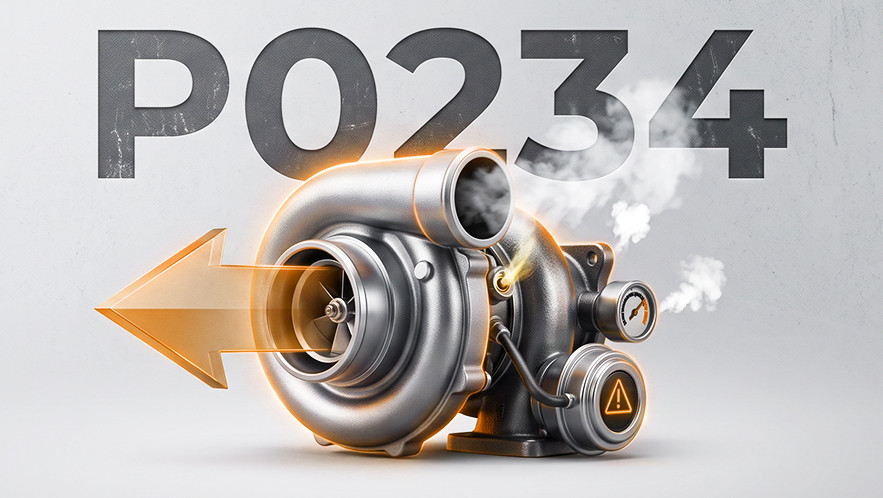
If the “Check Engine” light appears on the instrument panel and a scan reveals error code P0234, this is a serious reason to consult a specialist—because this code indicates a turbocharger blow-by. If not repaired in a timely manner, this malfunction will significantly affect the vehicle’s performance and may cause critical damage to engine components.
What does error code P0234 mean?
Simply put, this error indicates that the intake manifold is experiencing excessive boost pressure that exceeds the maximum limit set by the automaker.
How does the turbocharging system work, and when does P0234 appear?
A modern turbocharger is designed to increase engine power by forcing additional air into the cylinders. The engine control unit (ECU) constantly monitors this process.
- Parameter analysis: The ECU reads the signal from the manifold absolute pressure (MAP) sensor.
- Comparison with the reference value: The computer compares the received value with the stored digital maps.
- Fault logging: If the actual reading exceeds the correct nominal parameter for an extended period, error code P0234 is logged.
Causes of Error P0234
The operation of the turbocharging system depends on many components. Any malfunction in their interaction can lead to a pressure spike.
A damaged wastegate valve or its actuator
The wastegate valve is designed to allow exhaust gases to bypass the turbine wheel at the appropriate time. If the valve itself sticks or its actuator fails, the turbocharger begins to spin up uncontrollably.
Clogged or leaky intercooler hose
Damage to the vacuum lines or intercooler hoses disrupts the control of the turbine geometry (if present) or the wastegate. Due to a loss of vacuum or improper air distribution, the system loses its ability to stabilize pressure.
Other common causes
- Malfunction of the boost control solenoid (valve N75).
- Seizing of the variable geometry blades inside the turbocharger due to carbon buildup.
- Malfunction or incorrect readings from the MAP sensor.
Symptoms of P0234: How to Identify the Problem?
Excessive pressure is quite noticeable while driving.
| Symptom | Description of the symptom |
| Fault Mode | The ECU limits engine RPM and power to protect engine components. |
| Loss of traction | The vehicle accelerates sluggishly, and performance drops sharply after a pressure surge. |
| Unusual noises | A distinctive whistling, humming, or hissing sound can be heard from under the hood. |
Troubleshooting Code P0234
Adjusting and restoring the system requires a systematic approach. Our technicians perform repairs according to a clear procedure:
- Computer diagnostics and real-time analysis of sensor performance parameters.
- Checking the vacuum lines and boost hoses for leaks.
- Testing the actuator’s functionality and checking the free play of the geometry lever.
When is turbocharger regeneration necessary?
If the cause of blow-by is internal mechanical seizing of the turbine blades or wear on the wastegate valve, a surface repair alone will not suffice.
- Significant carbon buildup and oil deposits on the blades.
- Mechanical wear of moving parts and shaft play.
In such cases, the optimal solution is professional turbocharger reconditioning, which restores the unit to its factory specifications.
How much does it cost to fix error code P0234?
The cost of repair depends directly on the severity of the problem.
| Type of service | Estimated Cost |
| Computer diagnostics | Starting at 200 PLN |
| Replacement of vacuum hoses / N75 valve | Starting at 150 PLN |
| Basic actuator adjustment | Starting at 200 PLN |
| Comprehensive unit regeneration | Starting at 900 PLN |
Can you drive with error code P0234?
A short trip to a repair shop in emergency mode is perfectly acceptable, but prolonged operation of the vehicle with this code is strictly prohibited. Excessive pressure places enormous strain on the piston assembly, which can cause piston seizure or engine failure.
In which cars does error code P0234 occur most frequently?
This fault is typical for many turbocharged diesel and gasoline cars:
- Volkswagen / Audi / Skoda / Seat (especially on 1.9 TDI and 2.0 TDI engines due to carbon buildup on the catalyst).
- Ford (Focus and Mondeo models with TDCi diesel engines).
- Opel (1.7- and 1.9-liter CDTI engines).
The Difference Between P0234 and Other Turbocharger Fault Codes
It is important not to confuse turbo boost with related error codes.
| Code | Meaning | Main difference |
| P0234 | Excessive pressure (Overboost) | Pressure is higher than normal; there is a risk of mechanical failure. |
| P0235 | Boost Pressure Sensor Circuit Malfunction | Problem with the electrical system or the MAP sensor itself. |
| P0299 | Turbocharger underboost | Lack of pressure due to an air leak or impeller wear. |
Conclusion: How to effectively fix code P0234?
To permanently resolve this issue, you need to pinpoint the exact location of the fault. Simply clearing the code from the ECU’s memory will not solve the problem. The specialists at the STS service center in Warsaw have all the necessary equipment to quickly identify the root cause of the underboost, recalibrate the control modules, or perform a complete overhaul of the unit. Schedule a turbocharger diagnosis and repair at STS to preserve your engine’s lifespan!