



Tesla Model 3: deactivating limited power mode (limp mode)
TESLA Model 3
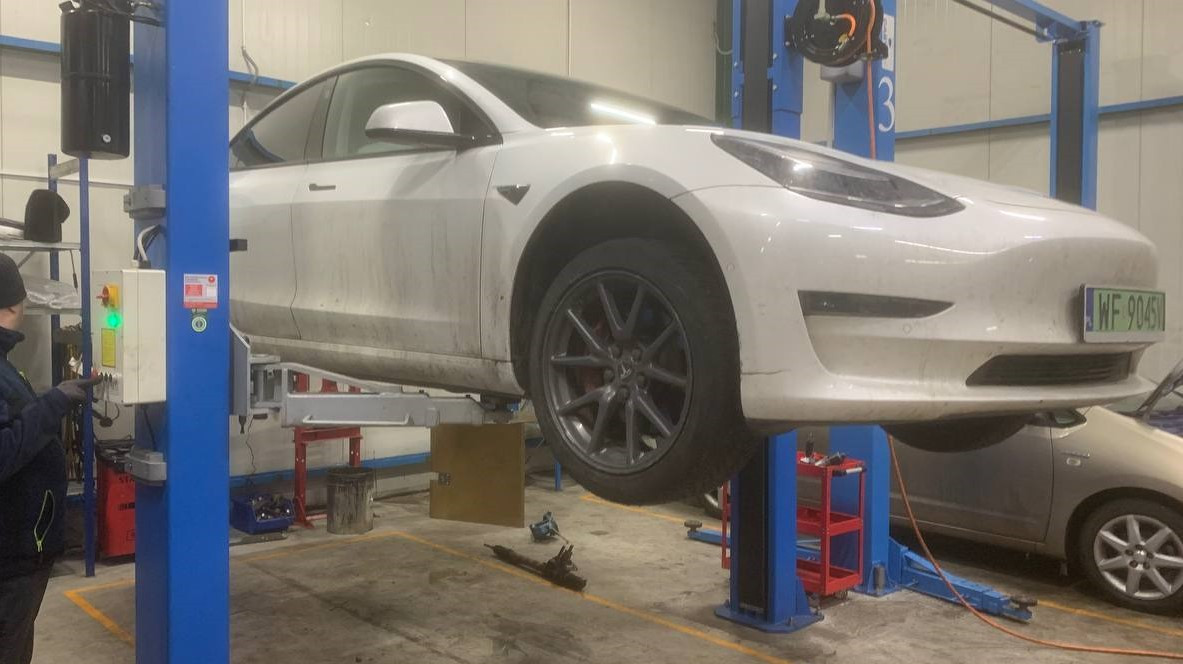
Customer Inquiry
Mr. Lukasz, a resident of Warsaw and owner of a Tesla Model 3, contacted the STS workshop. For two weeks, his car had been displaying a persistent error message regarding the drive system. According to the customer, the problem likely involved the front motor.
It is worth noting that this was a repeat visit. Mr. Lukasz had previously come in with a similar complaint, but at that time, the active error could not be detected during diagnostics. During that service, work was performed on the suspension (replacement of control arms), and the oil and filters in the gearboxes were replaced. After that, the car was driven without any critical issues until the error message became persistent.
The owner decided to contact us again and asked if we had access to Tesla Toolbox 3, since the car’s standard service menu did not display detailed information about the error. Of course, at STS we use all available diagnostic tools—both standard equipment and devices developed under our own brand.
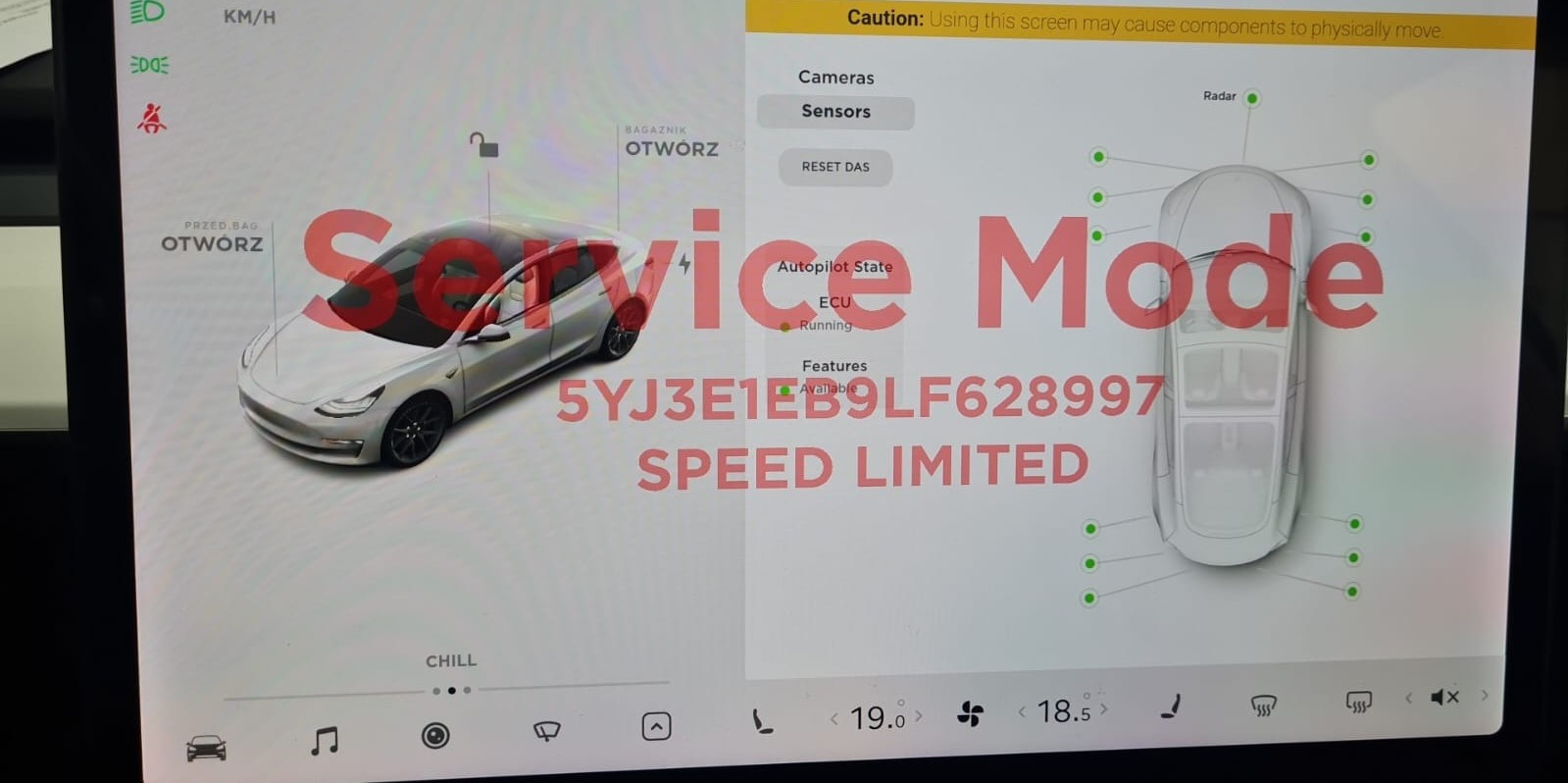
Our team informed the client about the possibility of preliminary diagnostics and, to avoid delaying the process, stayed to work overtime. The car was promptly brought into the service bay.
Symptoms: limp mode and speed limitation
After accepting the vehicle, it was confirmed: the car was in limited power mode. The display showed a maximum speed limit of 103 km/h.
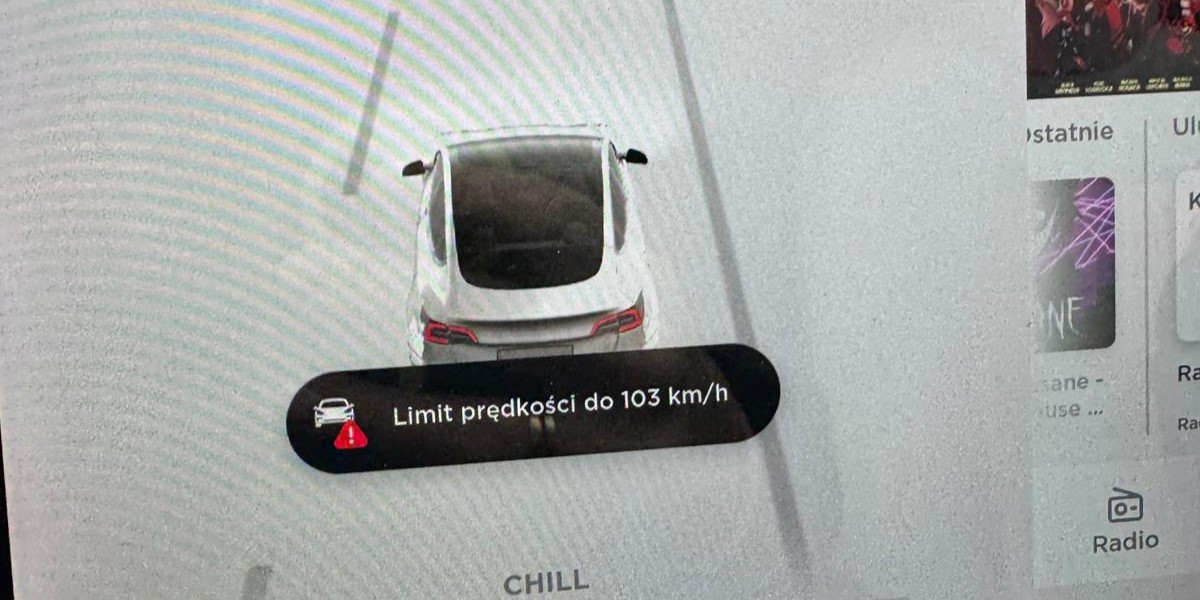
For an electric vehicle, this means that the control system detected a critical or potentially critical malfunction in the drivetrain components and reduced power to prevent further damage.
However, the standard on-board diagnostics did not provide a clear answer as to what exactly caused the transition to emergency mode.
Theory vs. Practice
Before beginning a thorough disassembly, the STS technicians decided to check how such symptoms are interpreted at the level of general algorithms. A query was formulated in Polish and sent to the artificial intelligence system, describing the situation: the message “Drive system requires service,” prolonged limp mode, and the absence of detailed information in the service menu.
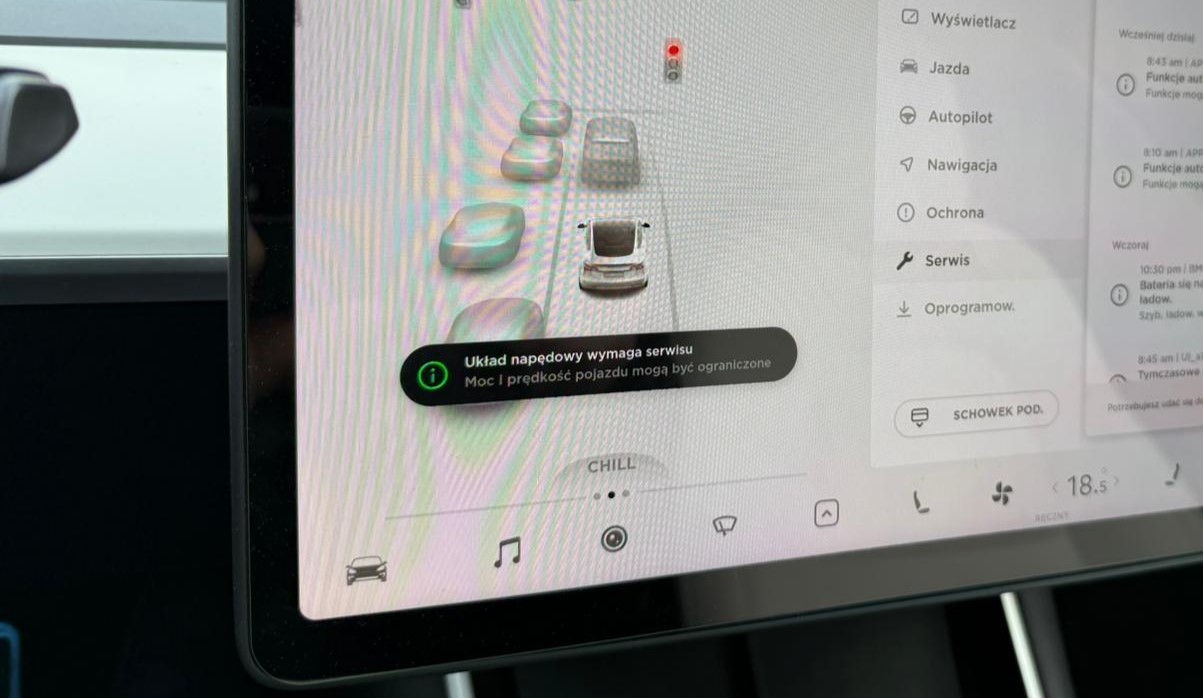
The response contained a typical list of possible causes:
- front motor inverter malfunction;
- high-voltage insulation issue;
- rotor position sensor error;
- malfunctions in the drive unit cooling system;
- a problem with the 12-volt battery;
- hidden errors in the gateway or drive module.
Formally speaking, everything makes sense. The algorithm analyzes the symptoms and generates the most likely scenarios.
However, none of these hypotheses takes into account the specific vehicle’s history, its previous operation, or the physical condition of the electrical connections. Moreover, systematically checking all theoretical possibilities would mean a significant wait time and associated costs for the customer.
That is why STS technicians decided to proceed based on their experience and the logic of technical inspection.
Diagnostics: Logic, Not Just a Scanner
The vehicle was raised on a lift for a visual inspection. It was important to determine whether any previous work had been performed that could have affected the drivetrain.
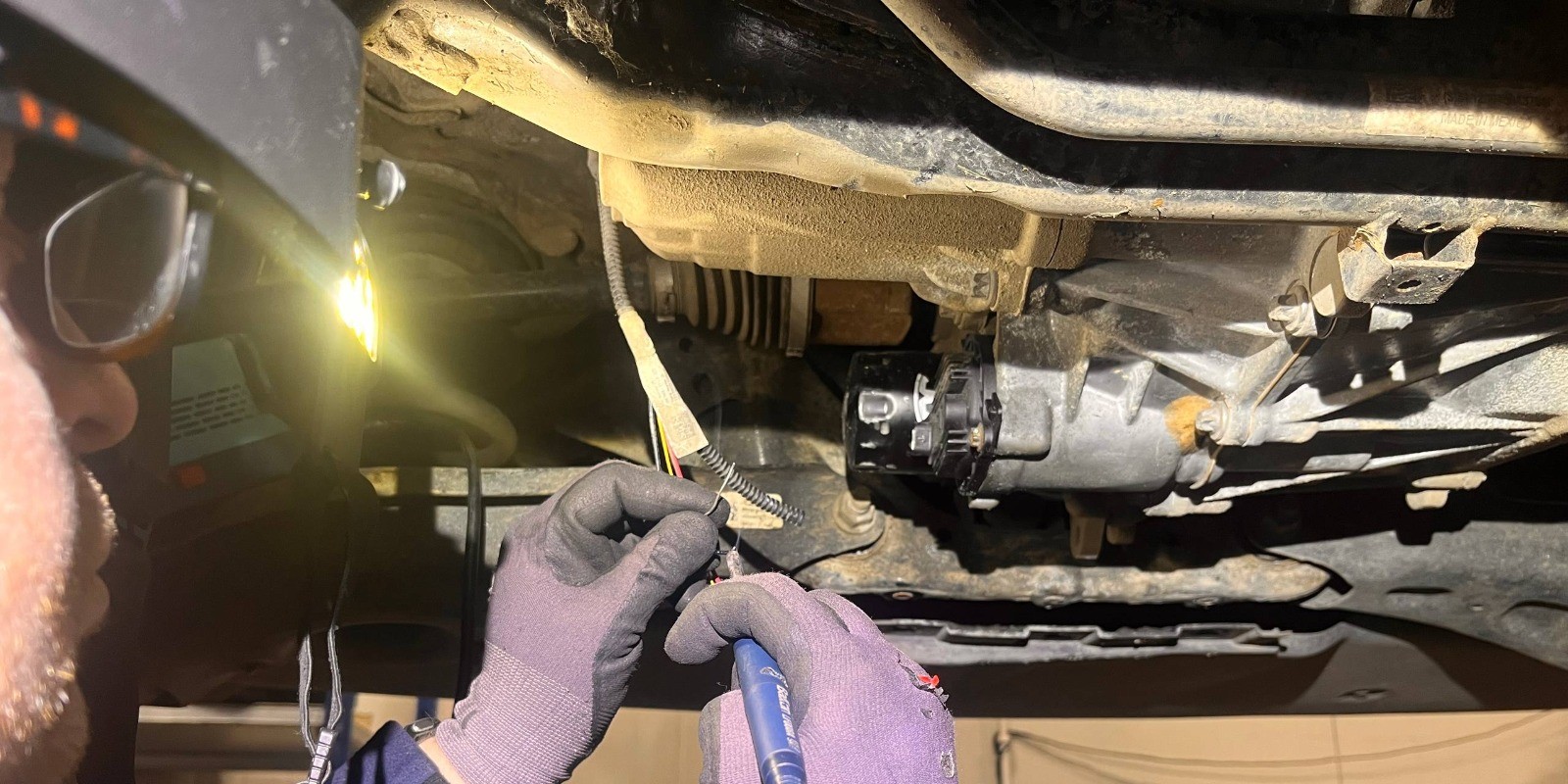
Given that the oil in the gearboxes had been changed previously, the condition of the rear engine oil pump wiring was checked (the vehicle is all-wheel drive).
During the inspection, a loose connection was found in the pump connector. The contact group showed signs of metal fatigue, which had caused the connection to weaken. As a result, the electronics periodically lost the correct signal from the rear drive, and eventually the system completely "stopped recognizing" the motor.
This is precisely what caused the vehicle to enter limp mode with speed limitation.
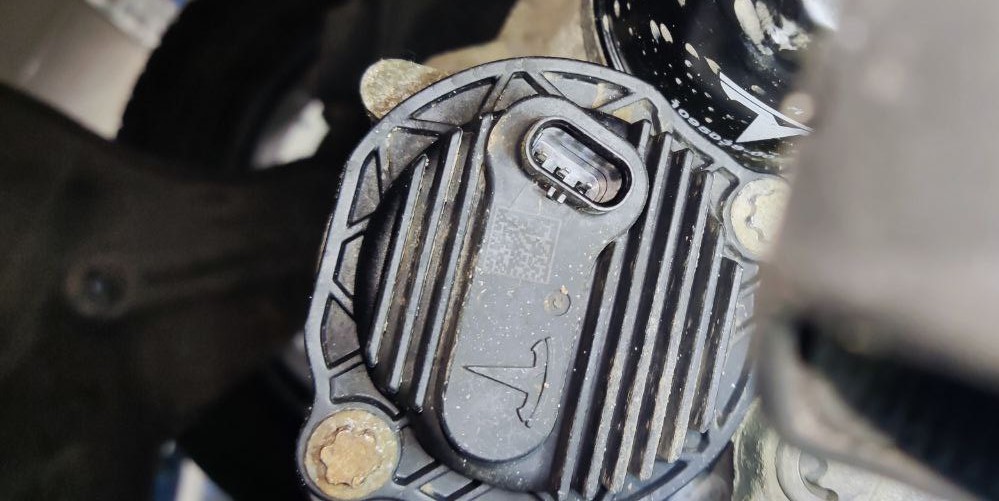
In other words, the problem was not in the inverter, not in the high-voltage insulation, and not in the complex electronic modules, but in the degradation of the electrical connection.
Repair without unnecessary costs
Repeating the oil drain and replacement procedure would have meant additional costs for the customer. STS specialists decided to take a more rational approach.
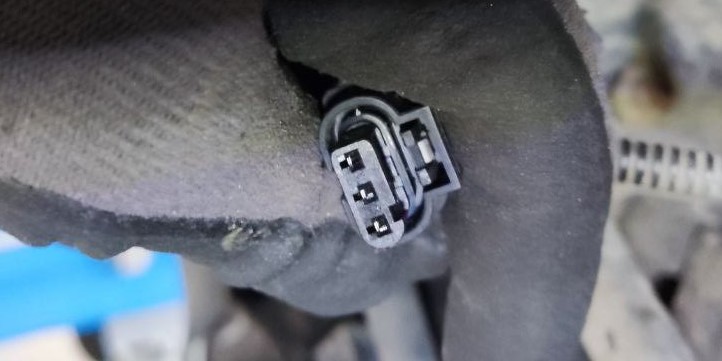
The following was performed:
- restoration of the connector part ("male") with reinforcement of the contact group;
- replacement of the second part of the connector ("female");
- checking the tightness and quality of the connection;
- post-assembly diagnostic testing.
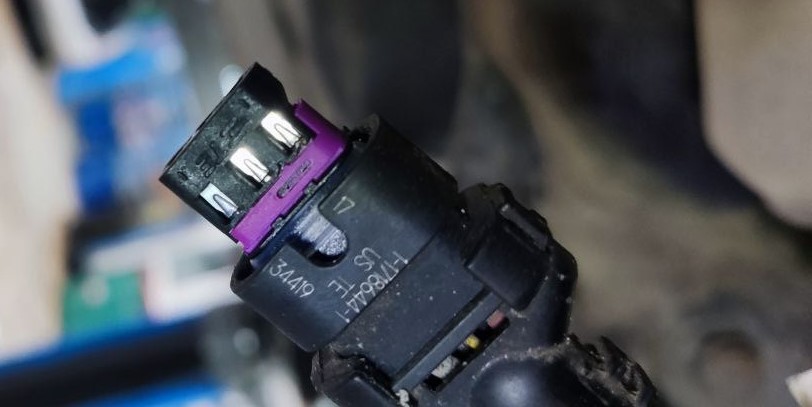
After restoring stable electrical contact, the system began to correctly detect the rear motor again. The errors disappeared, the limited power mode was canceled, and the car returned to full operation.
Result
- the 103 km/h speed limit was removed;
- All-wheel drive restored;
- The "Drive system requires service" message was eliminated;
- Unnecessary costs for a repeat oil change were avoided.
A satisfied customer is the best proof of a job well done
After the repair, Mr. Lukash left a review on Google. And for the STS team, a happy customer is the greatest reward. This case shows that even in a modern electric vehicle, a loose electrical connection can cause the system to go into emergency mode.
Professional diagnostics is not just about working with a scanner, but involves systematic analysis, checking the physical condition of components, and taking the vehicle’s service history into account.
The STS team in Warsaw has once again proven that the exact cause is determined not by a list of hypotheses, but by systematic technical work and a commitment to the result.