


Tesla Model Y Long Range Battery Balance Issue: Installing Active Balancers Instead of Replacing the Battery
TESLA Model 3 TESLA Model Y
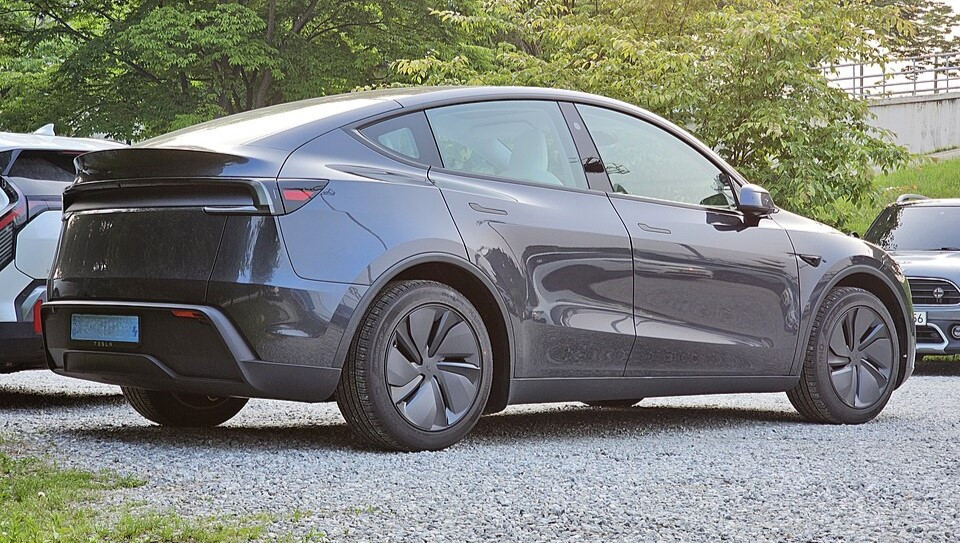
Tesla electric cars have earned their well-deserved popularity thanks to their performance and technological sophistication, however, their high-voltage batteries (HVBs), like any other energy storage devices, may experience degradation and uneven wear of individual cells over time or due to operating conditions. At our STS.Electro service center, we performed a diagnostic inspection and upgrade of a Tesla electric vehicle’s high-voltage battery, which restored its performance without having to completely replace the expensive modules.
Cell Imbalance and BMS Errors
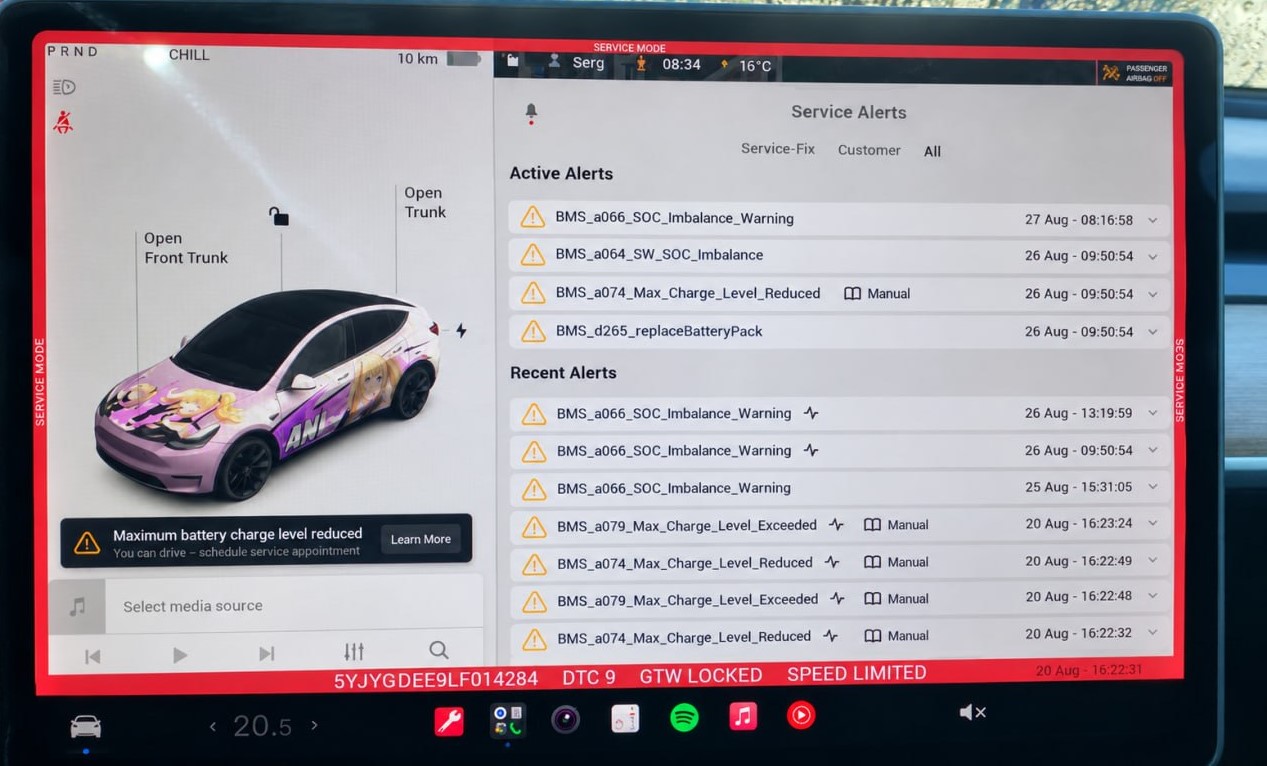
The owner of a Tesla Model Y Long Range crossover came to our service center complaining of a decrease in the maximum battery charge level and power limitations. During a detailed computer diagnostic of the high-voltage system using service software and an inspection of the BMS (battery management system) parameters, the following critical issues were identified:
Active and historical system errors: Diagnostics recorded a series of safety and battery management system warnings, including:
- BMS_a066_SOC_Imbalance_Warning – warning about cell state-of-charge imbalance
- BMS_a064_SW_SOC_Imbalance – software-detected charge level imbalance
- BMS_a074_Max_Charge_Level_Reduced – critical alert regarding forced reduction of the maximum charge level
- BMS_d265_replaceBatteryPack - error requiring battery pack replacement
Significant voltage drop (delta): the pack voltage delta reached a critical 416 mV. The system issued a direct maintenance recommendation: "Battery balancing is recommended."
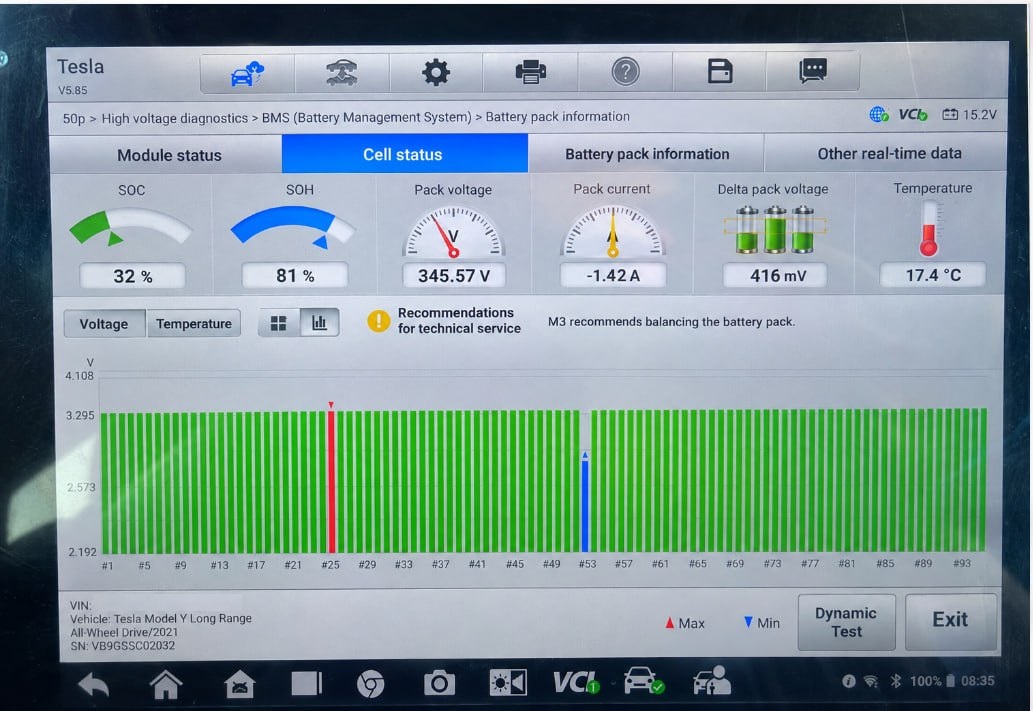
Discrepancy in module parameters: The cell status graphs clearly showed a drop in voltage in individual cells (highlighted in red and blue on the diagnostic scanner), while others remained at their rated voltage. This pattern is most commonly observed in the middle cells of the battery pack, as their design causes them to heat up more and cool down less effectively. As a result, the standard BMS adjusts to the lowest “threshold”: if a sagging cell cannot hold more than a nominal 2.5 V, then all other battery cells will be limited to this level, even if they are potentially capable of holding 3.0–3.3 V. This forces the system to artificially limit the total capacity and charging power.
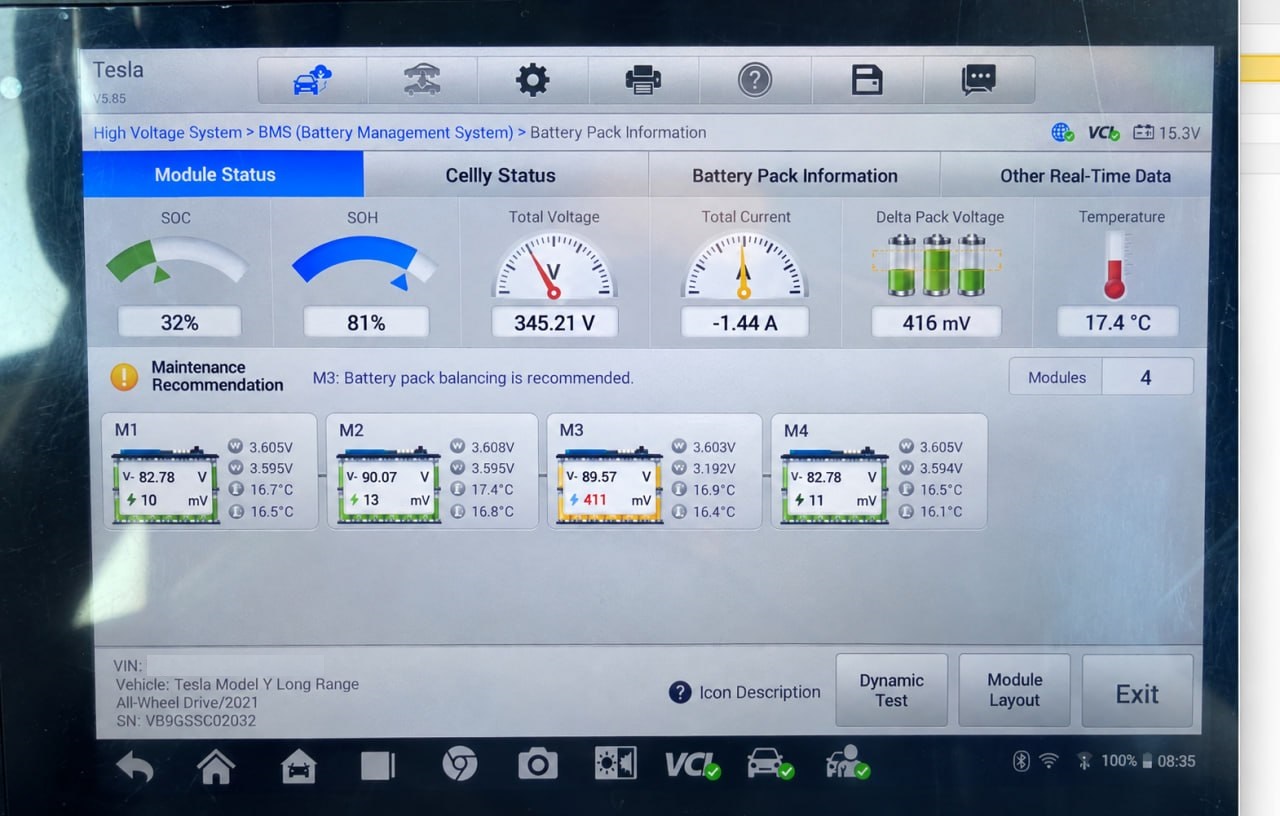
When Tesla’s stock passive battery balancing system can no longer keep up with the enormous potential difference between cells (especially in batteries with high mileage), this results in a constant emergency mode, speed limitations, and the inability to charge the car to 100%.
Installation of an active balancing system
Since simple software balancing or the standard practice of leaving the battery on the charger for an extended period in such neglected cases does not yield results (the imbalance is too great), the specialists at STS.Electro specialists carried out a full range of work involving the disassembly, inspection, and modification of the battery:
- Removal and disassembly of the battery: The battery was removed from the vehicle and placed on a lifting stand in the service area to allow safe access to the internal busbars and modules.
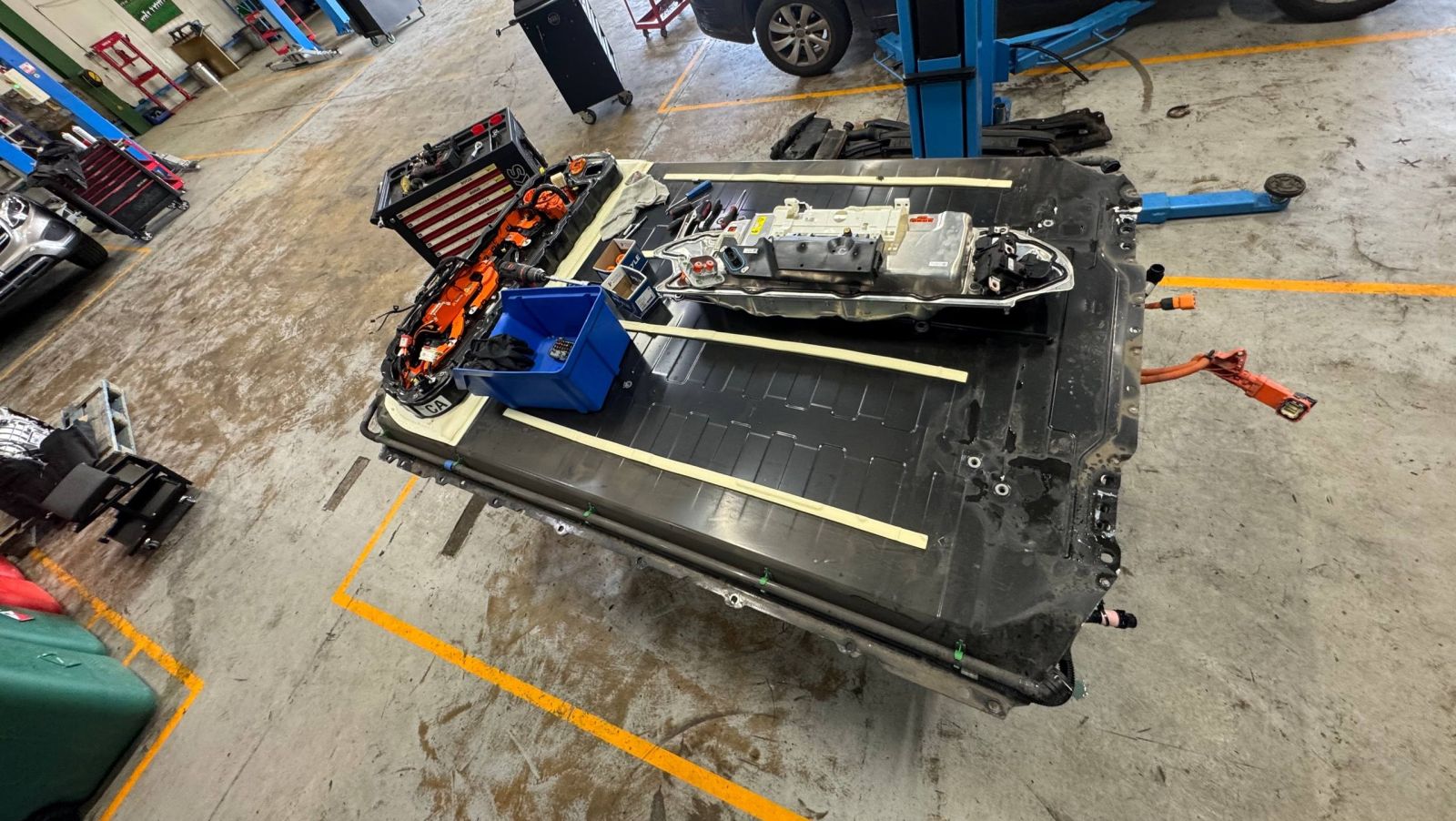
- Installation of active balancer boards: Unlike the standard passive resistive systems, which simply dissipate excess energy as heat, the engineers installed active balancer modules. These modules physically transfer energy from “excess” cells to those with lower potential, ensuring constant voltage equalization both at rest and during charging/discharging.
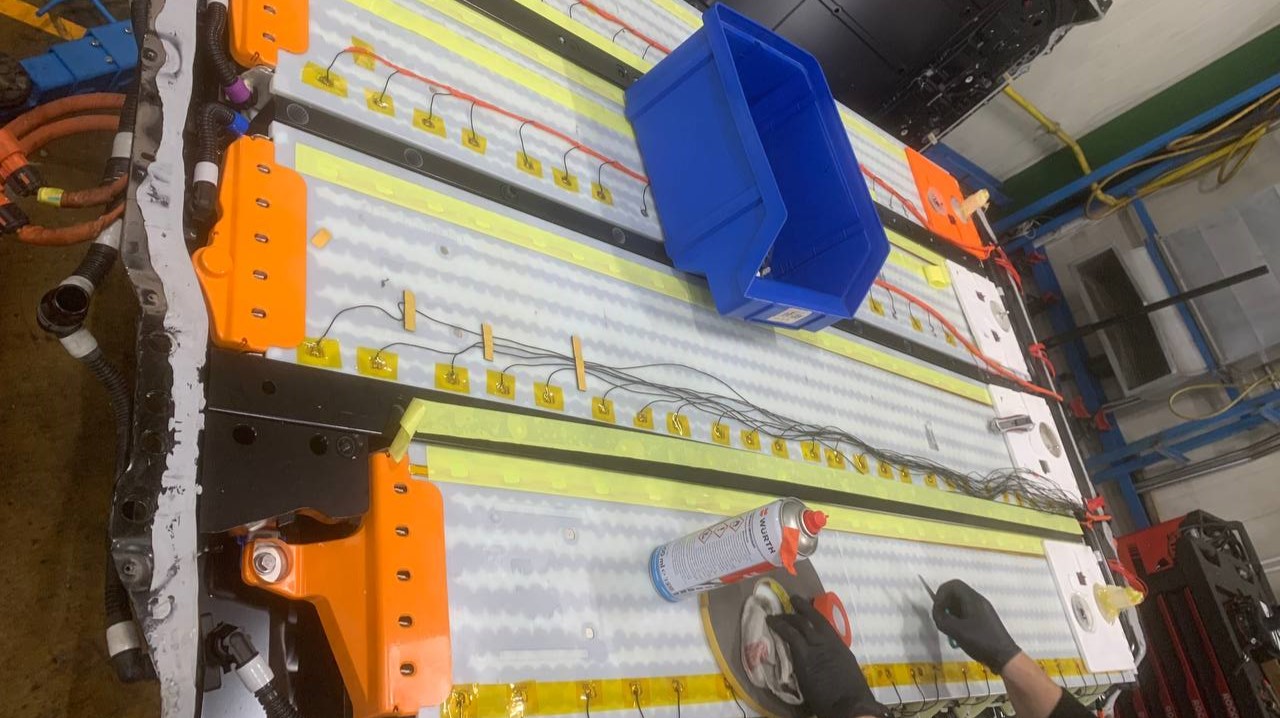
- Wiring and Soldering: We carefully connected the power and signal wires from the balancing boards to each individual battery module, adhering to all electrical safety standards for high-voltage systems.
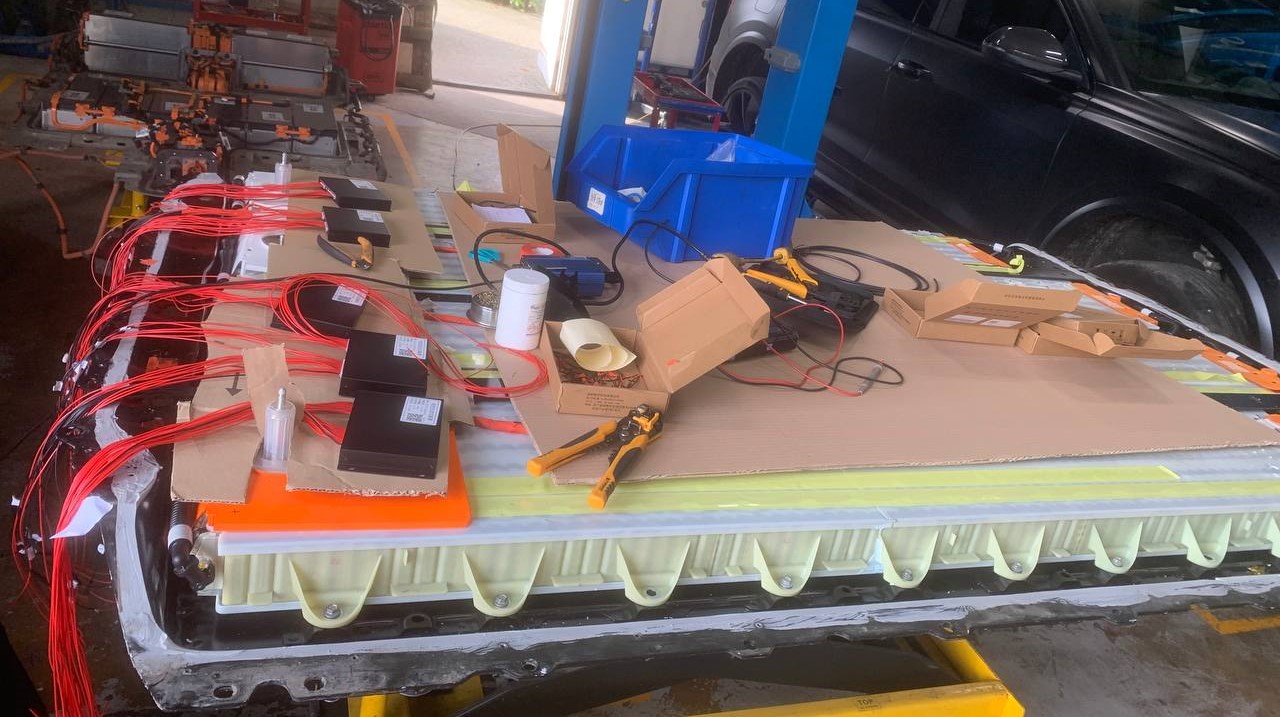
- Final testing and calibration: After integrating the equipment and assembling the battery enclosure, we conducted a verification test using service software, checked the temperature conditions (normal range is approximately 17–17.4 °C), and removed the charge limit.
Result
Thanks to the installation of active balancers, we were able to completely eliminate the dangerous cell imbalance, resolve the SOC_Imbalance error, and restore the electric vehicle’s original range. The degradation level and overall health (SOH 81%) have stabilized, and the onboard system no longer limits the maximum charge level.
Are you experiencing BMS errors, reduced range, or charging limits on your Tesla?
Don’t rush to buy a new high-voltage battery. The experts at STS.Electro in Warsaw will perform a thorough diagnostic of your high-voltage battery, identify the cause of the imbalance, and select the optimal solution—from professional balancing to the installation of active balancing modules.
Installing active balancers in a Tesla Model 3 or Model Y high-voltage battery from STS.Electro is a reliable way to breathe new life into your high-voltage battery and avoid the enormous costs of replacing the entire battery pack.