

Code P0130: What Does It Mean, and How Do You Repair a Lambda Sensor?
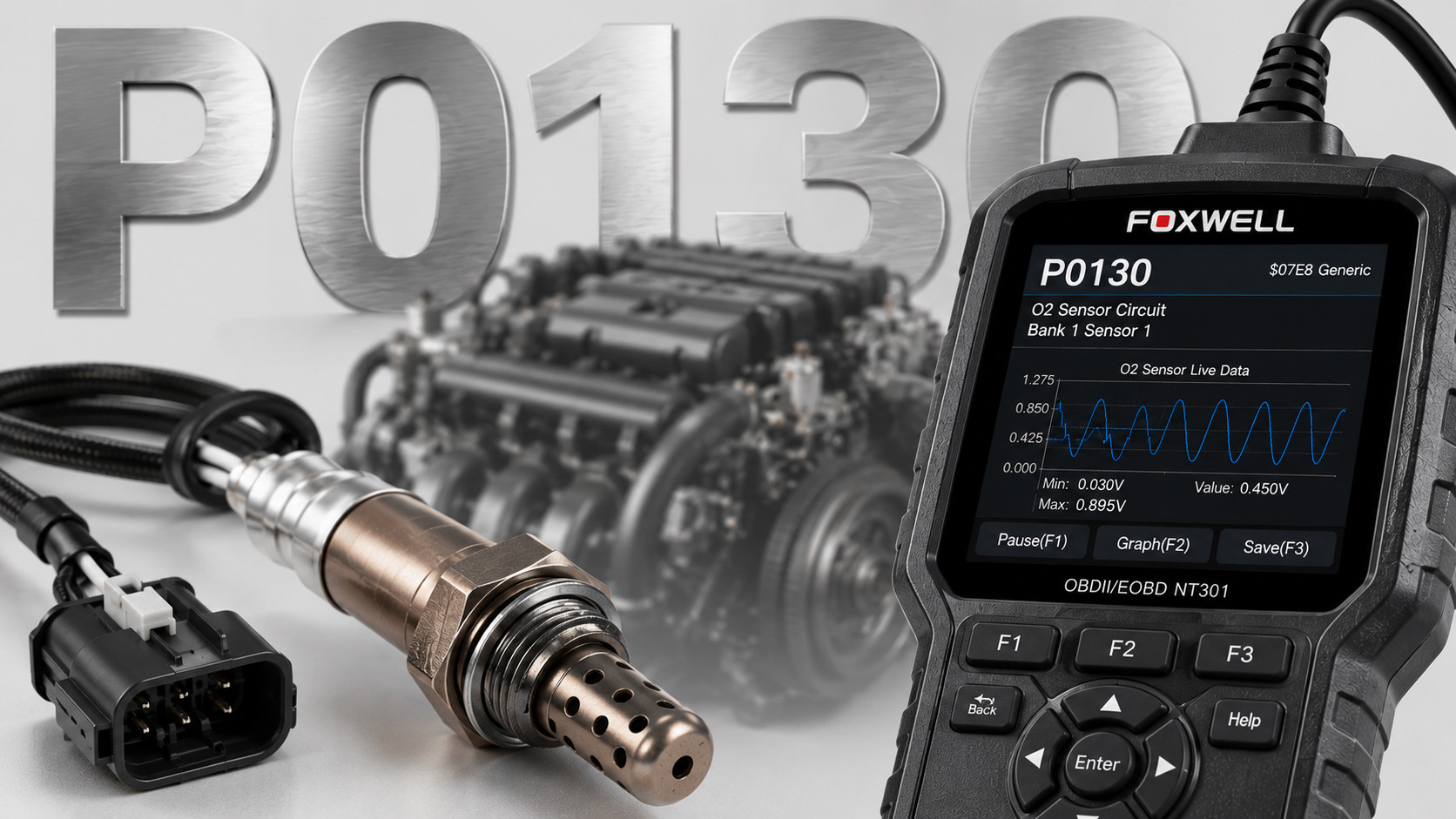
Modern engines are extremely sensitive to the quality of the fuel-air mixture, so even the slightest malfunction in the exhaust system immediately affects the vehicle’s performance. When error code P0130 appears during diagnostics, it directly indicates a problem with the first oxygen sensor (Bank 1, Sensor 1). The engine ECU can no longer determine the exact fuel-air mixture it is currently preparing. At first glance, it may seem that you can continue driving with code P0130, but this is an illusion: the engine quickly goes into limp mode, increases fuel consumption, and gradually damages the catalytic converter. You definitely shouldn’t ignore this, so let’s figure out where to look for the cause of the malfunction and how to fix it.
What is a lambda sensor, and why does the ECU respond to its signals?
A lambda sensor (or oxygen sensor) is a device installed in the exhaust manifold or immediately downstream of it to analyze the exhaust—specifically, to determine the amount of residual oxygen in the exhaust gases.
The sensor transmits the collected data to the vehicle’s control computer. In technical literature and diagnostic scanners, this component is referred to by various names: Engine Control Unit (ECU) or PCM (Powertrain Control Module).
The main reasons why the ECU/PCM constantly monitors the signal from the sensor:
- Mixture Formation: Based on the lambda data, the control module constantly adjusts the duration of fuel injection to maintain the ideal air-to-gasoline ratio (14.7:1).
- Emissions standards: Constant adjustment minimizes harmful emissions and ensures optimal operation of the catalytic converter.
- Engine protection: An incorrect signal causes the PCM to operate in emergency mode, which can lead to knocking or excessive fuel consumption.
For more details on common signs of oxygen sensor failure, see the article on symptoms of a faulty lambda sensor.
P0130, P0131, P0132, and P0133: Differences and Why They Matter
The P0130 diagnostic code indicates a general electrical circuit malfunction in Bank 1 Sensor 1. However, there are associated codes that more precisely indicate the nature of the problem.
| Error Code | Explanation | Symptoms and Nature of the Problem |
| P0130 | Malfunction in the oxygen sensor circuit (Bank 1, Sensor 1) | The control module is receiving an incorrect or unstable signal. |
| P0131 | Low voltage in the circuit (lean mixture) | The sensor voltage drops below 0.1 V; the ECU determines that there is too much air in the mixture. |
| P0132 | High voltage in the circuit (rich mixture) | The voltage exceeds 0.9 V, which is interpreted as an excess of fuel. |
| P0133 | Slow oxygen sensor response | Measurements are delayed; the sensor is “degrading” due to contamination. |
Why does the sensor stop responding properly?
The cause of the malfunction can be either electrical issues (a damaged circuit, connector, or sensor heater) or mechanical wear or poisoning of the sensing element.
Lead and sulfur in fuel—the sensor’s invisible enemy
Using low-quality gasoline with high lead or sulfur content destroys the sensitive ceramic element. Lead deposits on the sensor’s electrodes, causing it to lose its ability to generate voltage. Special attention should also be paid to vehicles equipped with LPG systems: an improperly adjusted gas mixture causes the sensor to overheat and burn out prematurely.
Wear, carbon buildup, and electrical damage
In addition to the chemical effects of fuel, the following factors affect the unit’s performance:
- Deposits and soot: Oil deposits (if the engine burns oil) block the flow of gases to the ceramic head.
- Wire damage: Burnt-out or oxidized contacts in the connector interrupt the signal.
- Air leakage: A crack in the exhaust manifold skews the sensor’s readings.
For example, on Opel vehicles, P0130 most often occurs not due to wear on the sensor itself, but due to excess air being drawn in through a cracked exhaust manifold or a faulty crankcase ventilation valve (CVV).
ECU Response to P0130 and Consequences for Engine Operation
When the system check illuminates the warning light on the dashboard, the ECU switches engine control to emergency mode (Open Loop).
Consequences for the vehicle after the fault is detected:
- Fuel consumption increases (sometimes by 20–30%) because the ECU delivers a richer fuel mixture.
- Acceleration performance decreases; the engine may “lag” or jerk.
- Idle speed becomes unstable.
- Accelerated catalyst deterioration due to fuel burning in the exhaust system.
The scanner shows P0130—what’s next?
Computer diagnostics is only the first step. You need to check the real-time parameters (live data) using a scanner and an oscilloscope:
- Read the current voltage of the sensor (it should range from 0.1 to 0.9 V).
- Check the resistance of the sensor’s heating element.
- Make sure there are no breaks in the power supply or ground circuits.
Universal or OEM lambda sensor—which one should you choose?
When a replacement is needed, the question of which part to choose arises.
| Parameter | Original Sensor (OEM) | Universal sensor |
| Installation | Quick; fits the stock connector perfectly | Requires soldering or the use of special crimp connectors |
| Reliability | 100% compatible with the vehicle’s ECU | Occasional signal transmission delays may occur |
| Price | Higher | More affordable |
STS.Parts experts recommend choosing an original sensor or a proven alternative from a reliable brand. This will prevent false signals and premature failure of the part.
Cleaning the sensor—when does it make sense, and when is it a waste of time?
Attempting to clean the sensor with orthophosphoric acid or special solvents only helps in cases of surface soot contamination. However, if the ceramic element is worn out, contaminated with lead, or the internal heater has burned out, cleaning is a waste of time. In 90% of cases, the part will need to be replaced.
The actual cost of fixing error code P0130
The cost of fixing the problem depends on several factors:
| Step / Work | Estimated cost |
| Computer diagnostics and error code reading | Low |
| Instrumental electrical inspection and disassembly | Medium |
| Cost of a new oxygen sensor | Depends on the vehicle (universal / OEM) |
The error code reappears after replacing the sensor: where to look for the cause?
If you’ve already replaced the part but P0130 reappears, check the following:
- Leaky exhaust manifold (atmospheric air being drawn into the sensor).
- Damage to the wires running from the sensor to the PCM (short circuit or oxidation).
- Problems with the LPG system, if present (incorrectly configured injection map).
- Failure to clear the trouble codes from the ECU memory after repairs.
Need help with diagnostics or selecting a lambda sensor?
It can be difficult to resolve a P0130 error on your own, since the problem isn’t always with the sensor itself, but can also be due to wiring, air leaks, or mixture settings. If you need an accurate diagnosis or a reliable replacement part, the experts at STS.Parts are always here to help.
Don’t put off repairs—browse the STS.Parts catalog or contact our consultants right now to restore your car’s optimal performance and normal fuel economy!