

How to replace a car battery
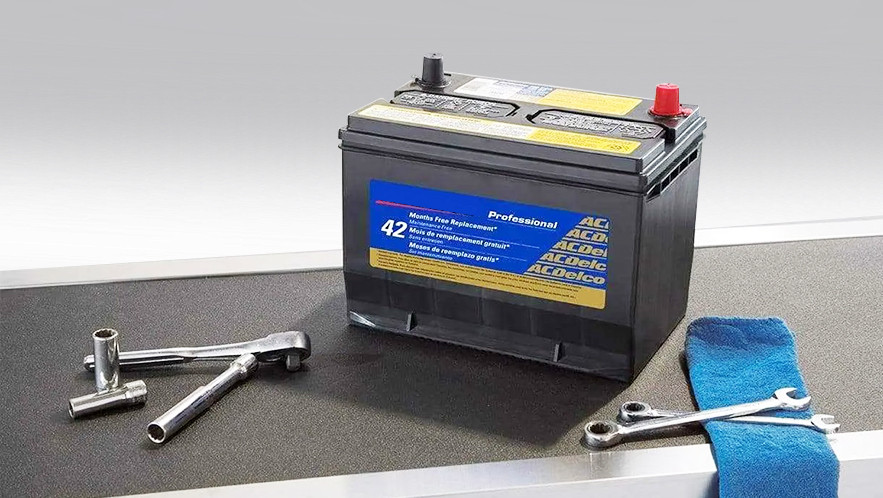
The battery in your car is a source of energy without which the engine will not start, the lights, electronics and safety system will not work. Its role in car maintenance cannot be overestimated. When the battery starts to lose its charge, you experience difficulties starting the engine, electrical appliances work intermittently, and sometimes even the on-board computer malfunctions. In such a situation, the only reliable solution is to replace the battery.
Many drivers are interested in how to replace a battery correctly, whether it is possible to do it yourself, how to choose the right model, and in which cases it is better to trust the specialists. In this article, we have compiled answers to all these questions for you, prepared step-by-step instructions, and tips to help you safely replace your battery.
Battery diagnostics: how to determine its condition
Before you decide to replace your battery with a new one, it is important to assess whether the battery has really reached the end of its service life. Timely diagnostics can help you avoid unexpected breakdowns on the road and unnecessary expenses.
Here are some basic methods for checking the condition of your battery:
| Test method | What it shows | How to perform |
| Voltage measurement | Battery charge status | Use a multimeter. If less than 12 V, the battery is discharged. Check the starting current. Check the starting current. Check the starting current. Check the starting current. |
| Visual inspection | Physical condition of the battery | Cracks, swelling, traces of electrolyte — a sign that it needs to be replaced. |
| Check after overnight parking | Charge retention | If the car does not start in the morning, the battery is not holding its charge. |
Can a flat battery be restored?
Sometimes the battery is not yet ‘dead’ but has simply lost some of its charge. In this case, you can try to restore its performance at home. Sometimes this can delay the replacement of the battery for several months.
What you can do:
- Recharge the battery with a rectifier. Connect the battery to the charger for 8-12 hours, using a low current. This will help restore its capacity.
- Check the terminals. Clean the clamps of oxidation, because even a small layer of corrosion interferes with normal current transmission.
- Perform battery ‘training’. Sometimes several cycles of full charging and discharging help (but do not allow complete deep discharge, as this is harmful).
- Reduce energy consumption. Turn off additional devices when the engine is not running.
However, if the battery loses its charge quickly after these steps, it means it is time to replace it.
How to choose a car battery
Choosing the right battery is key to keeping your car's electrical system running smoothly. Don't just go by price or brand. There are a bunch of technical specs to consider that determine compatibility and durability.
Key criteria
Before deciding which battery to choose, pay attention to the following characteristics:
- Capacity (Ah) – corresponds to the amount of energy that the battery can deliver. Choose the capacity according to the car manufacturer's recommendations. Too little capacity will make it difficult to start the engine, and too much can cause charging problems.
- Starting current (A) – a critical indicator for cold starts. The higher it is, the easier it is for the battery to start the engine in cold weather.
- Battery type:
- Lead-acid — the classic option for most cars.
- AGM (Absorbent Glass Mat) — recommended for cars with a start-stop system.
- EFB (Enhanced Flooded Battery) — an intermediate option, also compatible with start-stop systems.
- Dimensions — the new battery must fit exactly into the engine compartment.
- Polarity — pay attention to where the positive and negative terminals are located.
- Brand and warranty — the reliability of the manufacturer often determines the actual service life.
Additional tips
It is worth considering the climatic conditions. If you often drive in low temperatures, choose a battery with a higher starting current. For cars with a large number of electronic power consumers, it is advisable to choose a battery with a reserve capacity.
12 V batteries for hybrids and electric vehicles
Many people mistakenly believe that hybrid and fully electric vehicles do not have conventional batteries. Of course, such cars are equipped with high-voltage batteries that are responsible for the movement of the car. These are completely different types of energy storage devices, and their replacement requires a completely different approach, which we will discuss separately.
However, in addition to the main high-voltage battery, hybrids and electric cars always have a 12 V battery installed. Its functions are to power the on-board electronics and safety systems, as well as to control the start-up of the main modules. The difference is that in such cars, the 12 V battery is often smaller and has a special design for working with control systems.
Preparing for replacement
Once you have decided on a new battery, it is time to prepare for replacement. This stage is often underestimated, although the safety and correctness of the work depends on it.
Before you start dismantling, do the following:
- Park the car on a level surface.
- Turn off the engine and all power consumers.
- Disconnect the alarm or electronic systems that may interfere.
- Prepare your tools: wrenches, screwdrivers, and possibly a small flashlight.
- Wear protective gloves and goggles.
- Read the operating instructions for your car model.
Instructions for replacing a car battery
To help you safely replace your car battery, we offer detailed step-by-step instructions.
Step 1: Disconnect the old battery
- Open the engine compartment.
- First disconnect the negative terminal (minus), and then the positive terminal (plus).
- Use a wrench or spanners of the appropriate size to loosen the clamps.
Step 2: Remove the battery
- Remove the fasteners.
- Carefully lift the battery. Remember: it is heavy (10-15 kg).
Step 3: Prepare the space
- Check the battery compartment. It must be dry and clean.
- Clean the terminals of any corrosion.
Step 4: Install the new battery
- Place the battery in the compartment.
- Secure it so that it does not move.
Step 5: Connect in reverse order
- First connect the positive terminal, then the negative.
- Make sure that the clamps securely hold the terminals in place.
Step 6: Check the result
- Start the engine.
- If the engine starts easily, the installation has been done correctly.
How can you make sure that the battery is working properly?
Once you have completed the installation, it is important to test the new battery in operation.
The main signs that everything is OK are:
- The car starts without delay.
- The voltage at the terminals when the engine is running is 13.8–14.5 V.
- All electrical appliances are working steadily.
- The start-stop system (if any) is working without interruptions.
How to properly dispose of an old battery?
Do not try to dispose of the battery yourself. Old batteries contain lead and electrolyte, which are harmful to the environment.
Disposal options:
- Take it to a recycling centre.
- Exchange it for a discount when buying a new battery in a shop.
- Take it to a specialised service station.
How long does a battery last?
The service life of a battery depends on many factors:
- On average, it is 4-6 years.
- Frequent short trips reduce the battery's service life.
- Using a rectifier for charging helps to extend the battery's life.
- If the battery starts to discharge quickly, you should consider replacing it.
Replace it yourself or at a workshop?
Many drivers hesitate: should they do everything themselves, or is it better to turn to specialists?
| Option | Advantages | Disadvantages |
| Replacement by yourself | Cost savings, simple for experienced people | Risk of error, especially when replacing a battery in a hybrid car or electric vehicle |
| Replacement at a workshop | Guarantee of correct installation, checking the condition of the electrical system | More expensive, requires a visit to the service centre |
Possible problems after replacement and their solutions
Sometimes even correct installation can lead to difficulties. Let's look at the most common situations.
| Problem | Cause | Solution |
| The car won't start | Wrong terminals connected | Check the connection of the positive and negative terminals |
| Rapid discharge | Current leakage or faulty generator | Check at a service station |
| Sparks during installation | Consumers not turned off | Turn off all devices |
| Start-stop system malfunction | Inappropriate battery type installed | Use AGM or EFB |
Now you know how to remove a battery, how to install a battery in a car, and what to do if problems arise. And if you are not confident in your own abilities, STS technicians in Warsaw are always ready to help you replace your car battery quickly and safely.