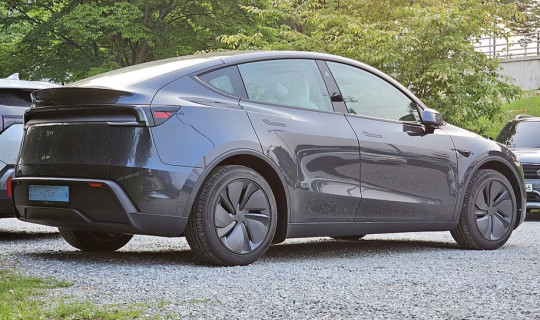
Modern Chinese electric vehicles and hybrids have long since gone beyond being mere means of transportation. Today, they are true “smartphones on wheels,” where driver and passenger comfort depends directly on the multimedia ecosystem. A striking example of this approach is the updated BYD Song Plus crossover from 2025. An impressive digital interior, smart assistants, online navigation, and continuous over-the-air (OTA) system updates make this car exceptionally high-tech.
However, when importing the vehicle from China to European countries, owners almost immediately face a major obstacle: a lack of connectivity.
The issue is that the BYD Song Plus relies on a telematics module from the BYD DiLink 5.1 platform (manufactured by Hangzhou Yihang Electronics Co., Ltd., part number SFHWI-7924200 / MTEB06) for internet connectivity. An eSIM chip designed exclusively for local Chinese carriers (China Unicom or China Mobile) is soldered into this module at the factory.
Once in Europe, this eSIM becomes a problem. Chinese providers do not offer international roaming for these chips, so the car simply “does not recognize” European cell towers. This cannot be fixed via software: it is impossible to reprogram or reconfigure the eSIM through the menu or a scanner, since the profile is hardcoded at the hardware level. As a result, the owner ends up with a great car but a “silent” multimedia system—no real-time maps, no traffic updates, no apps, and no ability to update the firmware.
It was with this specific request—to restore full internet connectivity to the car—that the owner of a 2025 BYD Song Plus turned to the STS service center in Warsaw.