


Repair of the CUPRA Born's high-voltage battery: replacement of the fuse cartridge after a car accident
CUPRA Born
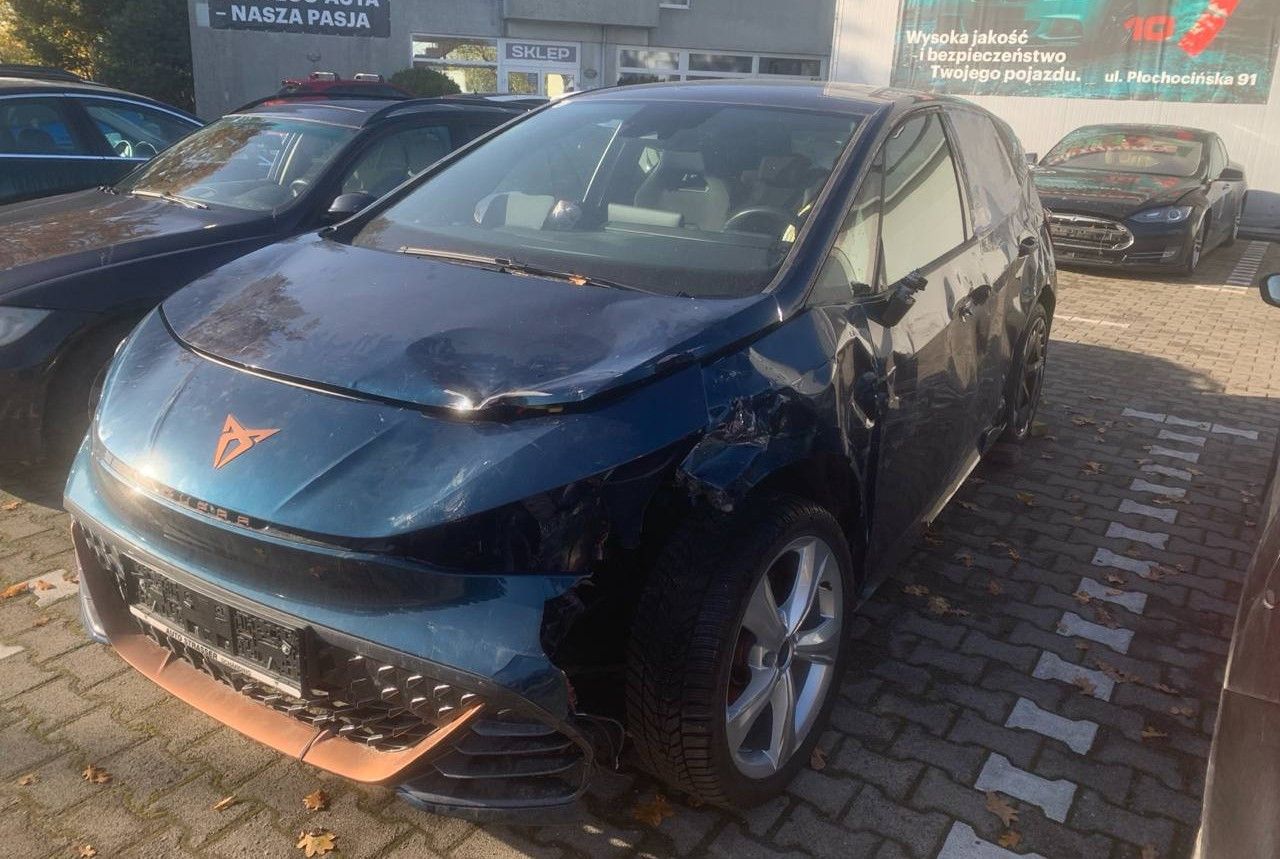
CUPRA Born—Spanish character on the MEB platform
The CUPRA brand, which evolved from SEAT’s high-performance division into an independent premium sports sub-brand of the Volkswagen Group, has always focused on emotion, dynamism, and striking design. The CUPRA Born, introduced in 2021, became the brand’s first all-electric hatchback.
Built on the versatile VW MEB modular platform (the same as the VW ID.3, ID.4, and Audi Q4 e-tron), the Born combines the practicality of a city hatchback with an attractive, sporty exterior, a refined chassis, and sharper handling. It is a modern, high-tech electric car with a reliable battery based on LG Energy Solution lithium-ion modules (400 V system voltage).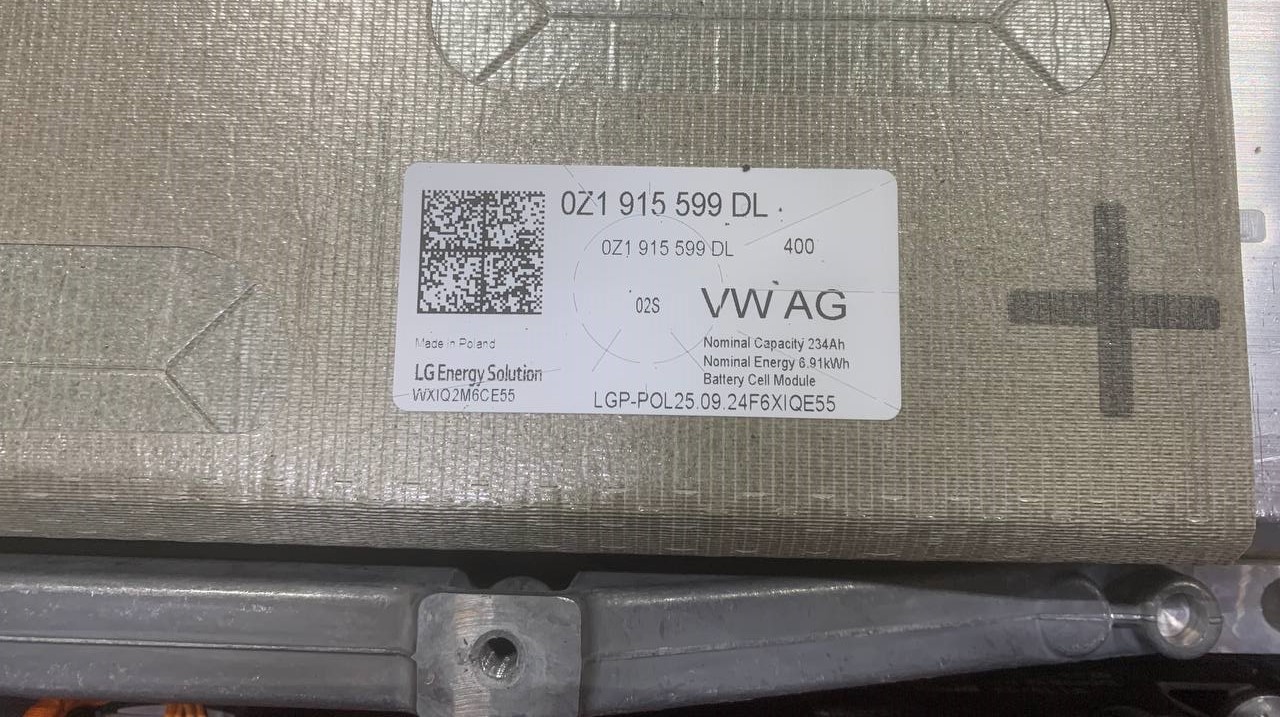
However, even in the most advanced electric vehicles, safety comes first, and in the event of mechanical damage, a safety mechanism is triggered that completely immobilizes the car.
Features of CUPRA Born (2024) Repair After a Crash
A 2024 CUPRA Born with 31,815 km on the odometer was brought to the STS.Electro service center. The car sustained damage to the front left side as a result of a traffic accident. After the impact, the car completely “shut down”: the high-voltage circuit was de-energized, the dashboard did not respond, and the electric vehicle became immobile.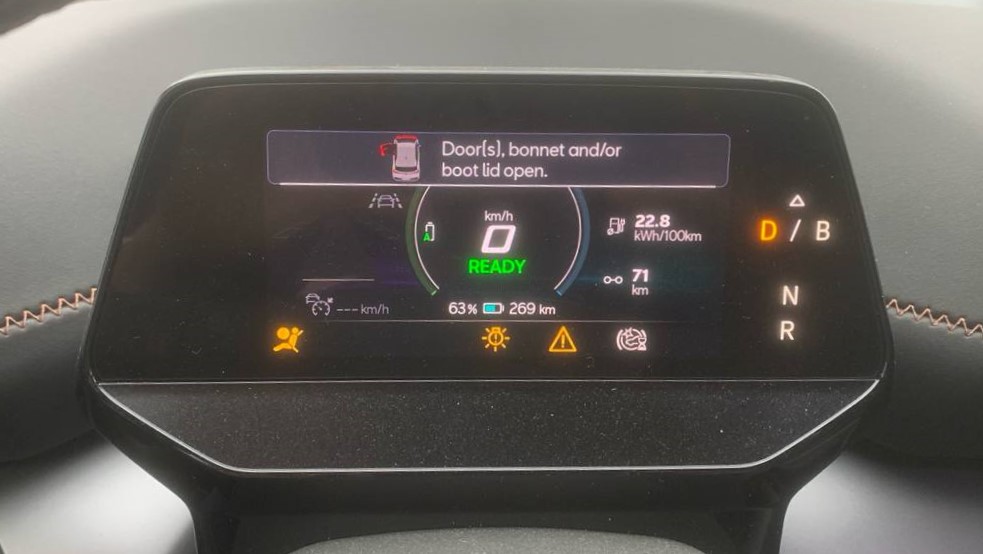
The reason for this “shutdown” is the VW Group’s sophisticated safety system. During a collision, when airbags deploy or an impact is detected, the SRS Airbag Module sends an electronic signal to activate the high-voltage pyrofuse (High Voltage Pyrofuse / Pyroswitch).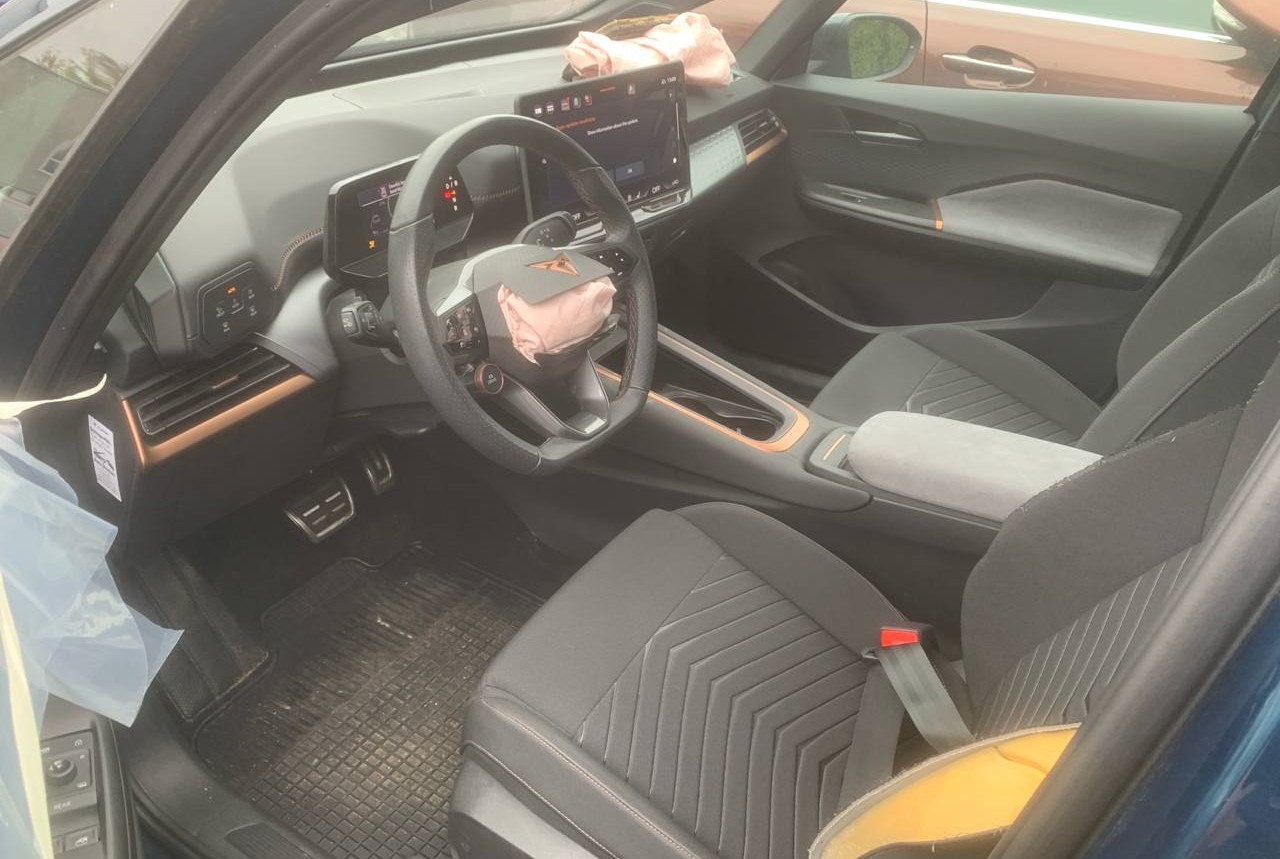
The micro-pyrofuse inside the fuse physically severs the battery’s copper power bus within milliseconds. This is done to:
- instantly de-energize the high-voltage circuit (over 300–400 V) during a crash
- prevent the risk of a short circuit, arc flash, and fire
- protect the driver, passengers, and rescue workers from electric shock when they come into contact with the deformed vehicle body.
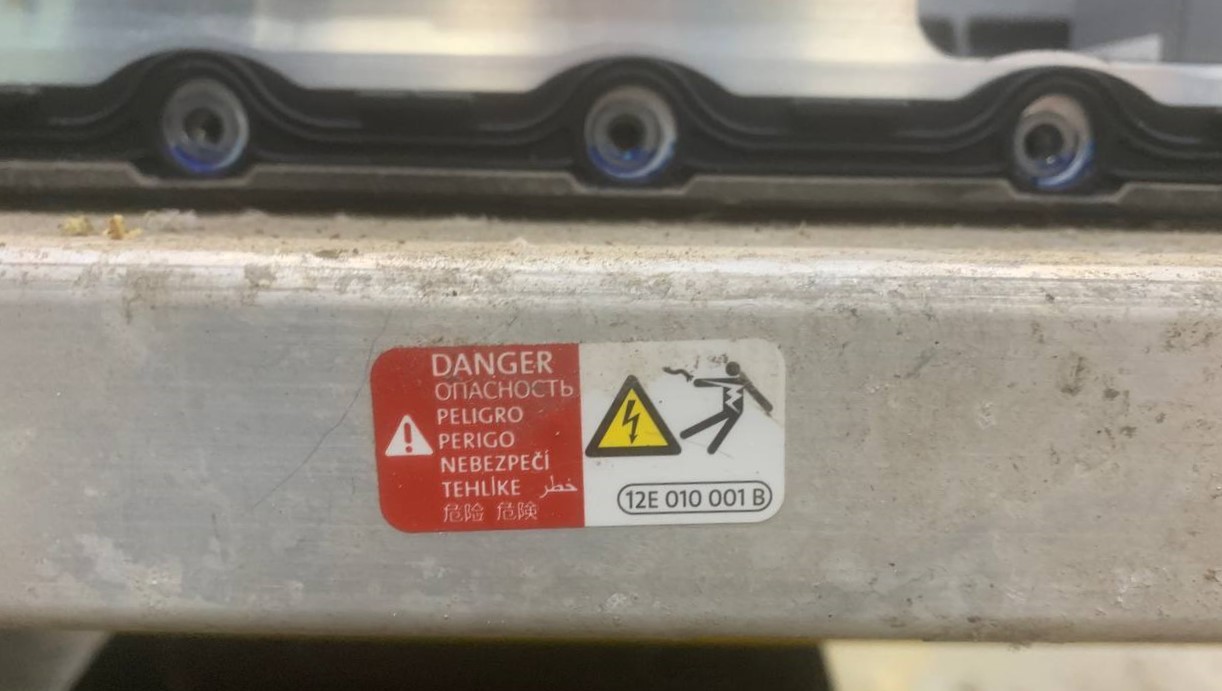
The main challenge: when the fuse blows, the battery is completely isolated. Without power to the power and control circuits, the vehicle not only won’t run—diagnostic scanners won’t even “detect” the vehicle, indicating a complete loss of communication with the battery management system (BMS).
Workflow at the STS.Electro workshop
Upon receiving the immobilized vehicle, STS.Electro specialists began a step-by-step restoration of power:
- Safe removal of the high-voltage battery pack: in compliance with all high-voltage safety regulations, the technicians removed the traction battery pack, still in its assembled state, from the underbody.
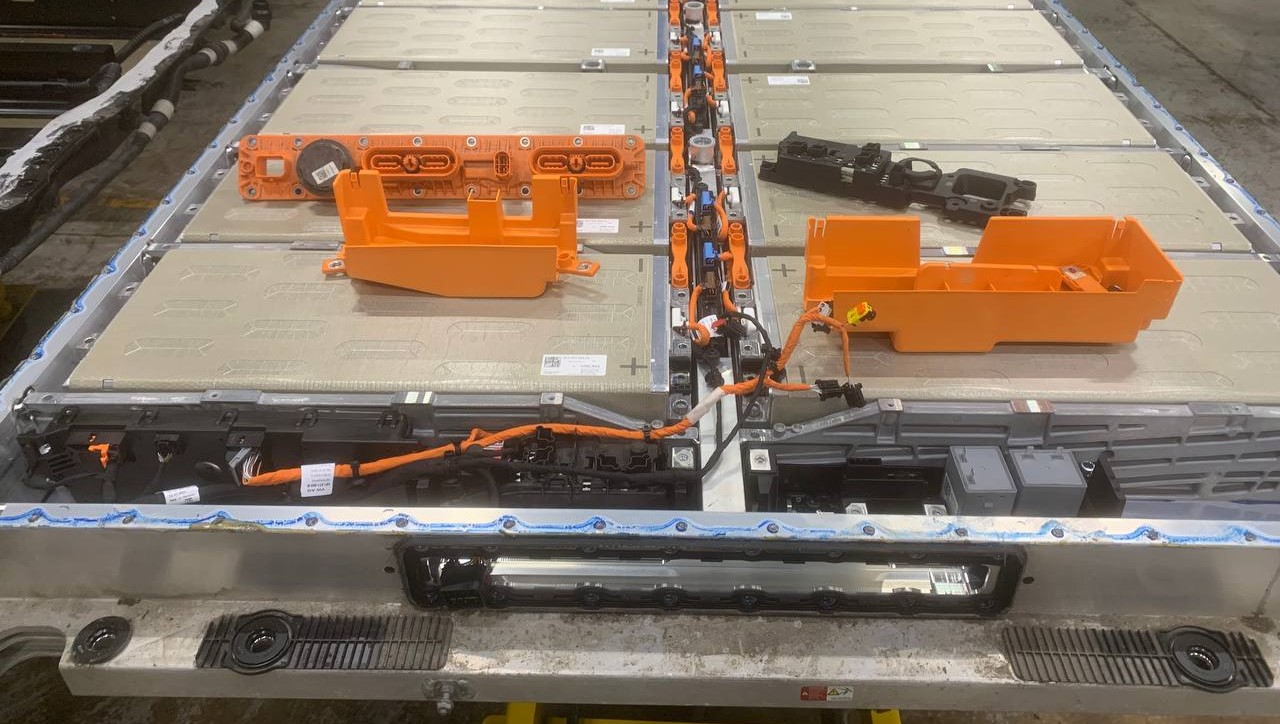
- Battery inspection and disassembly: After depressurizing the housing and removing the protective covers, we gained access to the internal switching units, power buses, and LG Energy Solution modules.
- Replacement of the defective part: During circuit testing, a break in the emergency fuse was confirmed. The failed part was replaced with a new genuine VW AG fuse, part number 11K 915 463 C (coded P37B24 / ODK HB60183DAAL).
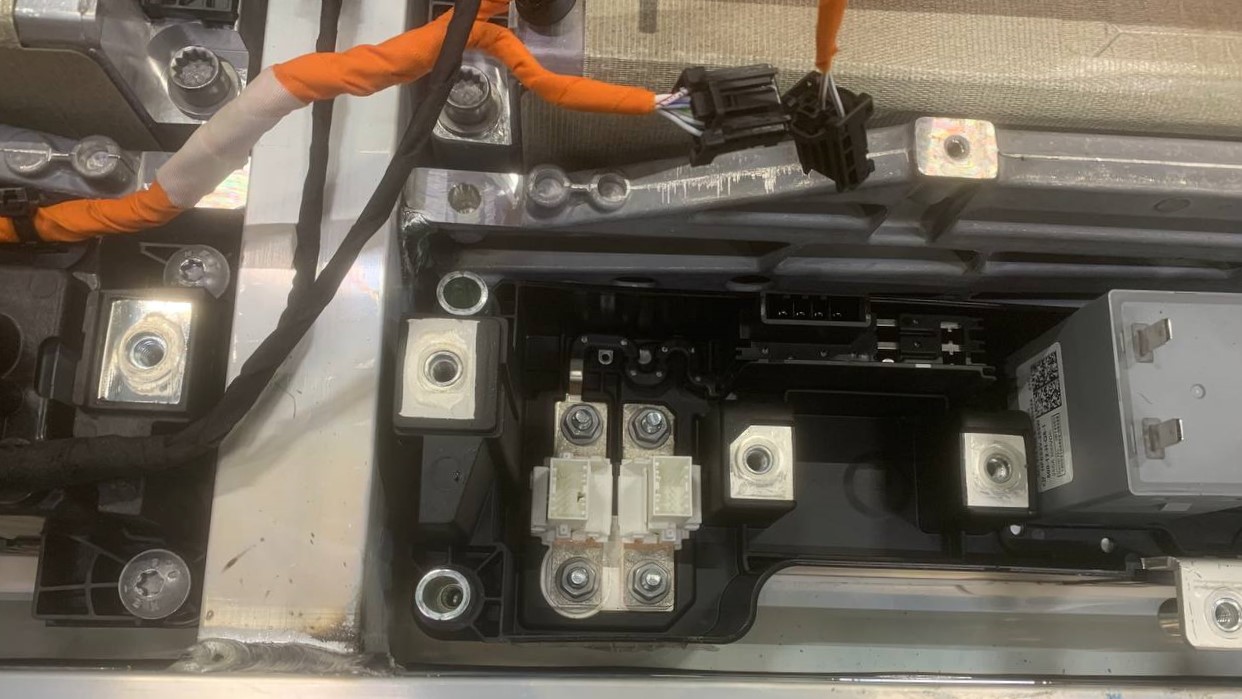
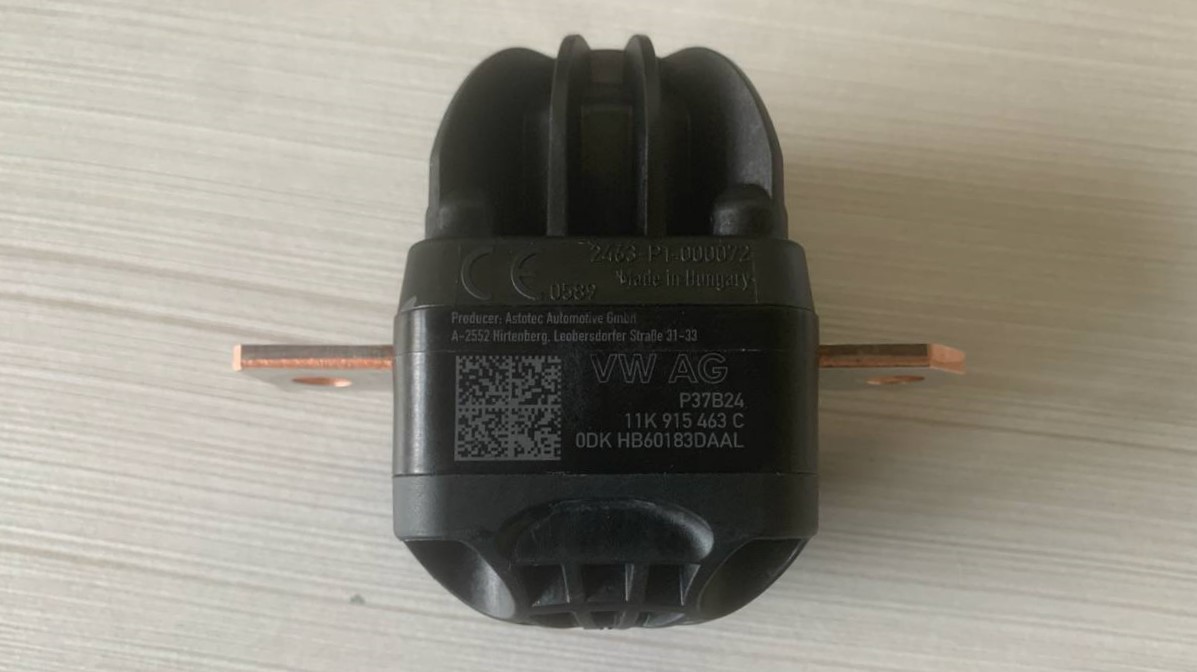
- Clearing crash data and reassembly: Simultaneously, the SRS module’s memory was cleared of crash data (information about the collision). The battery was hermetically sealed, connected to the cooling circuit, and reinstalled in the vehicle.
- Final calibration: Using specialized equipment, STS.Electro specialists unlocked and calibrated the BMS unit.
After replacing the part, the CUPRA Born’s high-voltage circuit resumed operation. The battery successfully passed cell balancing tests and a capacity check, and the vehicle is back in working order and ready for further bodywork.
Do you need repairs to your electric vehicle’s high-voltage system or battery?
Have you encountered a high-voltage battery protection trip, high-voltage circuit errors, or a battery lockout following a traffic accident? Don’t risk your safety and don’t attempt to repair complex electronic units on your own. The specialists at the STS.Electro service center have all the necessary equipment, professional software, and experience to safely service, diagnose, and repair high-voltage battery packs of any complexity.