



High-Voltage Battery Repair and Maintenance for the Volkswagen ID.4
VW ID.4
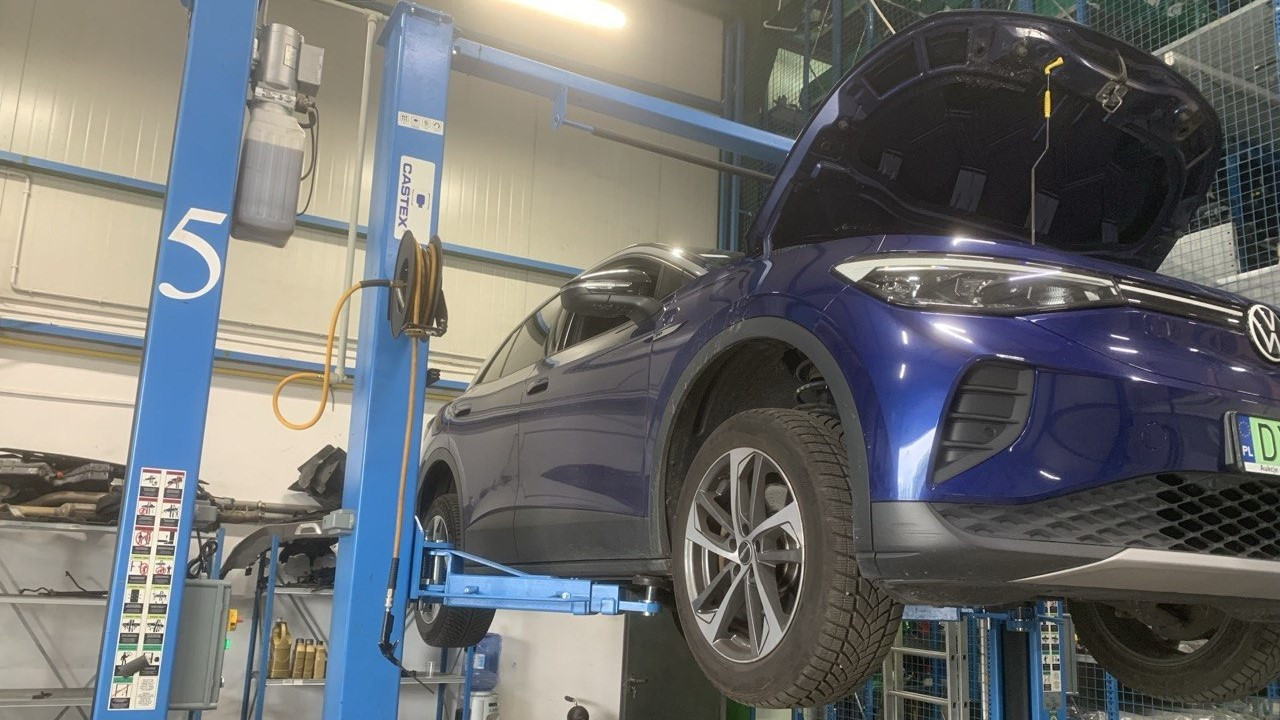
The purchase of a used Volkswagen ID.4 electric car (2021 model year, 214,000 km) went smoothly, but during her very first drive home, the new owner noticed a warning light on the dashboard. The service key indicator lit up, signaling a high-voltage battery error. At first, this had no effect on the car’s performance or its ability to drive—the car continued to run, but the error required immediate diagnosis.
The owner contacted an authorized dealership, where, following an initial scan, she was told that the power supply modules and the eCall system would need to be replaced. The total bill exceeded 10,000 euros.
Since the defect manifested immediately after leaving the dealership, the company that sold the car, as part of its warranty obligations, assumed financial responsibility and engaged STS.Electro as a specialized engineering contractor.
In-Depth Diagnostics and Engineering Findings
STS.Electro specialists scanned the system using Autel MaxiSys MS909&EV equipment and performed a direct connection to the disassembled battery pack.
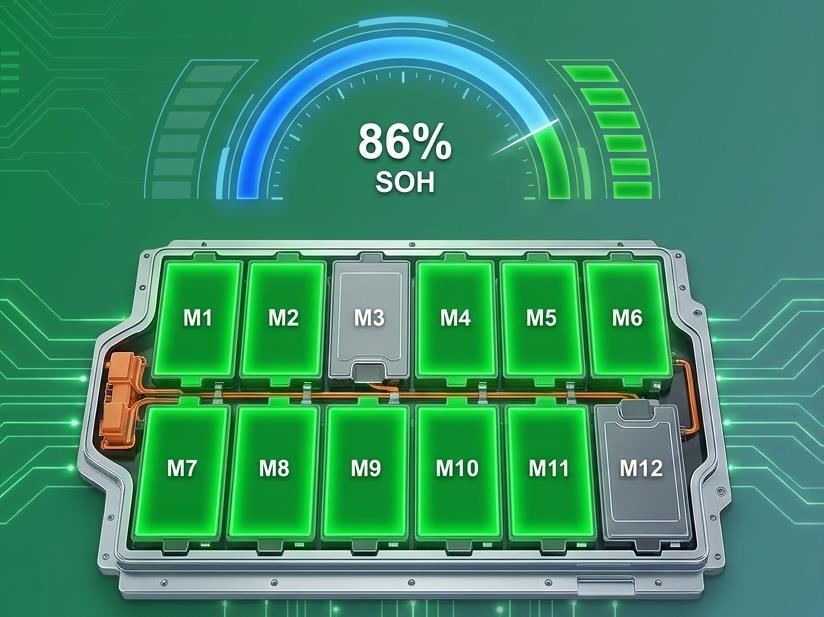
The battery’s overall State of Health (SOH) was 86%, which is an excellent indicator for this mileage. Of the 12 internal modules, 9 were functioning perfectly. However, a detailed inspection revealed important issues:
- Modules M3 and M12: Abnormal voltage fluctuations and sags under load were detected (peak delta 282 mV–341 mV), which triggered system error P0BBD00.
- Module M9 (65th cell): During cyclic testing (“charge/discharge/charge”) under load, the scanner indicated that the 65th cell of the 9th module was operating at the very lower limit of the acceptable range. It had already begun to degrade and would have inevitably caused the VBB to fail again within 1–6 months.
- BBB Module Specifications: The vehicle was originally equipped with modules bearing the OEM catalog number: 0Z1 915 599 H. The vehicle’s factory modules were manufactured in 2020, whereas STS.Electro selected replacement donor modules manufactured in 2021 with identical SOH and internal resistance values.
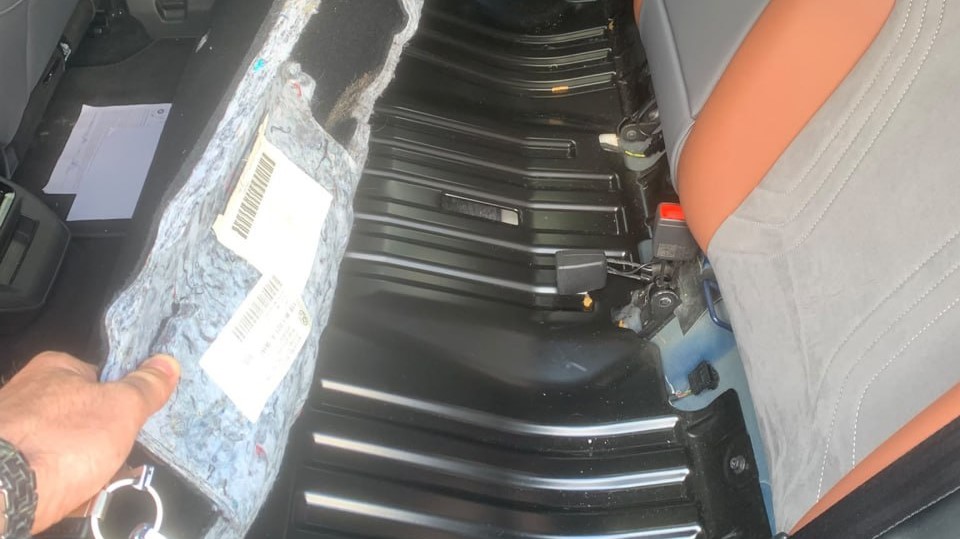
- eCall (SOS) System:There was no physical damage or wear to the telematics unit. The error occurred due to the simple discharge of the dedicated backup battery, which has a scheduled service life of approximately 4 years. The technical challenge was that this battery is located in a hard-to-reach place—under the rear row of seats—and the original battery itself is hard to find (available mainly from authorized dealers or at a significant markup). After installing the new battery, the unit required software adaptation (“calibration”).
An interesting observation: After replacing the eCall backup battery and performing the software synchronization, system errors related to the traction battery no longer appeared during diagnostic scans. - Windshield washer sensor: The low-fluid indicator was triggering falsely—the reservoir itself was intact and full. The cause turned out to be low-quality washer fluid containing soap impurities, which formed a residue (“sludge”) on the sensor contacts and disrupted electrical conductivity. Since the labor costs for cleaning and flushing out the old reservoir were equal to the cost of a new part, it was decided to simply install a new, inexpensive reservoir.
Scope of Work Performed
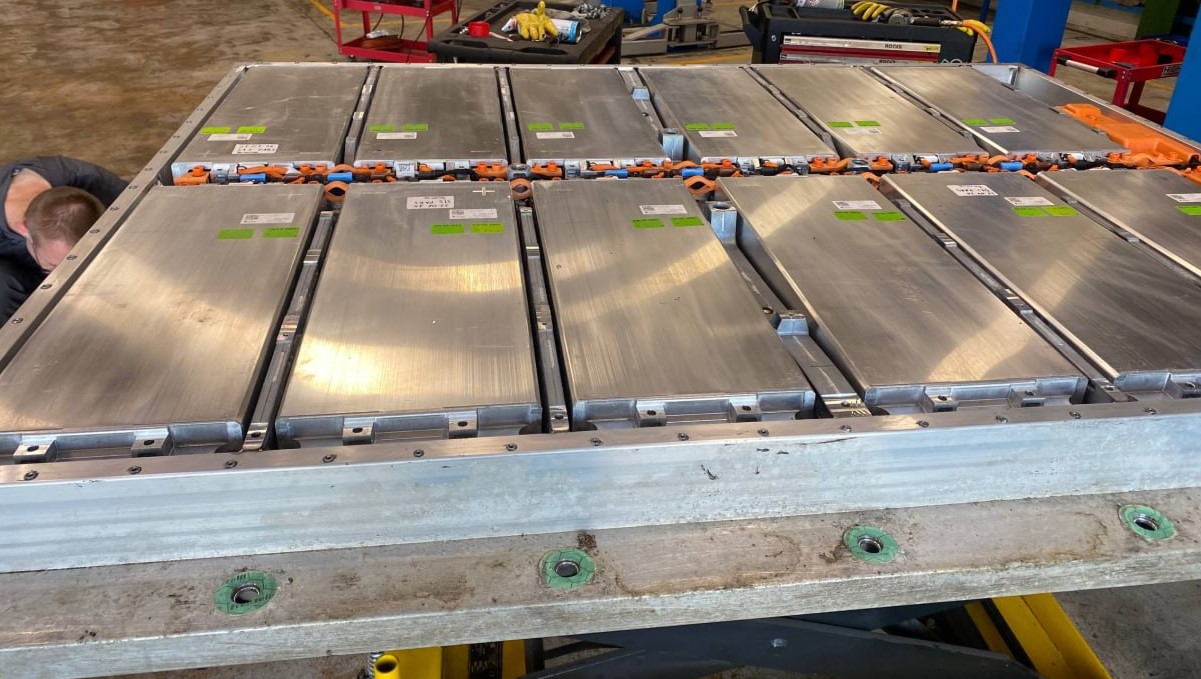
- Removal and opening of the high-voltage block: Compliance with factory safety standards when working with high voltage.
- Preventive replacement of 3 modules: Instead of replacing two modules (as the dealer had suggested), the technicians replaced M3, M12, and the worn-out M9 with tested OEM modules: 0Z1 915 599 H (manufactured in 2021). This eliminated the risk of having to disassemble the VVH again in the near future.
- Balancing and Leak Test: Cyclic cell voltage balancing was performed, seals were replaced, and the case’s airtightness was verified.
- eCall Service: Removal of the rear row of seats, replacement of the SOS backup battery, and coding and pairing of the unit.
- Additional Services: Replacement of the windshield washer reservoir, resolution of the causes of the sensor’s false activation, and basic vehicle maintenance.
Results and Cost
| Parameter | Official Dealer | STS.Electro |
| Approach to VBB | Local replacement of only 2 modules (diagnostic error) | Replacement of 3 0Z1 915 599 H modules |
| eCall repair | Assembly replacement / high-cost service | Replacement of the SOS backup battery under the seat + adaptation |
| Total cost | Over 10,000 euros | Half the price (less than 5,000 euros total) |
| Warranty | Standard | 1 year with unlimited mileage on replaced modules |
The Volkswagen ID.4 has been restored to full operational condition. Thanks to STS.Electro’s engineering approach, the seller fully fulfilled its warranty obligations to the buyer, saving at least 50% off the dealer’s estimate, and the old, removed 2020 modules were handed over to the customer.
Looking for professional service for your electric vehicle or hybrid?
Is an official dealer insisting on a costly replacement of the entire high-voltage battery or steering rack? Don’t rush to overpay.
The STS.Electro team specializes in in-depth engineering diagnostics and high-quality on-site repairs of complex components. We maintain our own inventory of verified parts, offer a 1-year warranty with unlimited mileage on all work performed, and provide optimal technical solutions for both private owners and the automotive industry.