



Comprehensive Diagnostics and Replacement of the Power Module for the 2021 Smart Fortwo
SMART Fortwo
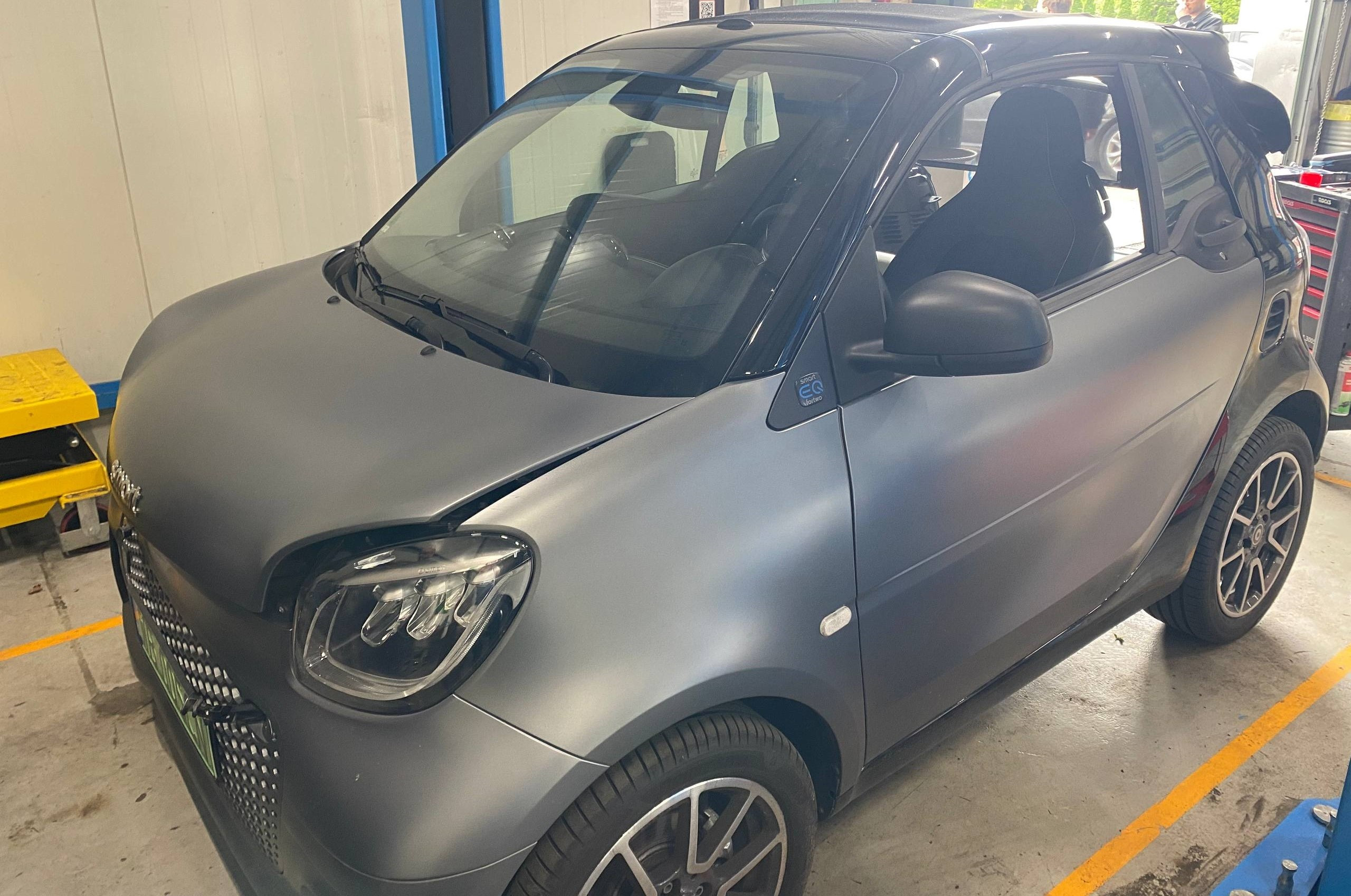
Technical Features and Design Specifications of the Smart Fortwo
The modern automotive industry is actively moving toward the standardization and global collaboration of brand platforms. As a result of this approach, the compact Smart Fortwo from the Mercedes-Benz Group received a powertrain and electronic systems developed by Renault engineers for the Zoe model.
The main and most interesting feature of this system lies in the design of the inverter-charger unit (known as the Chameleon Charger system). In an effort to minimize weight and save limited space in the compact car, the developers opted not to use a separate, bulky on-board charger (OBC). Instead, they utilized the car’s traction motor directly: when connected to a high-power AC charger, the motor’s stator windings act as an inductor (choke).
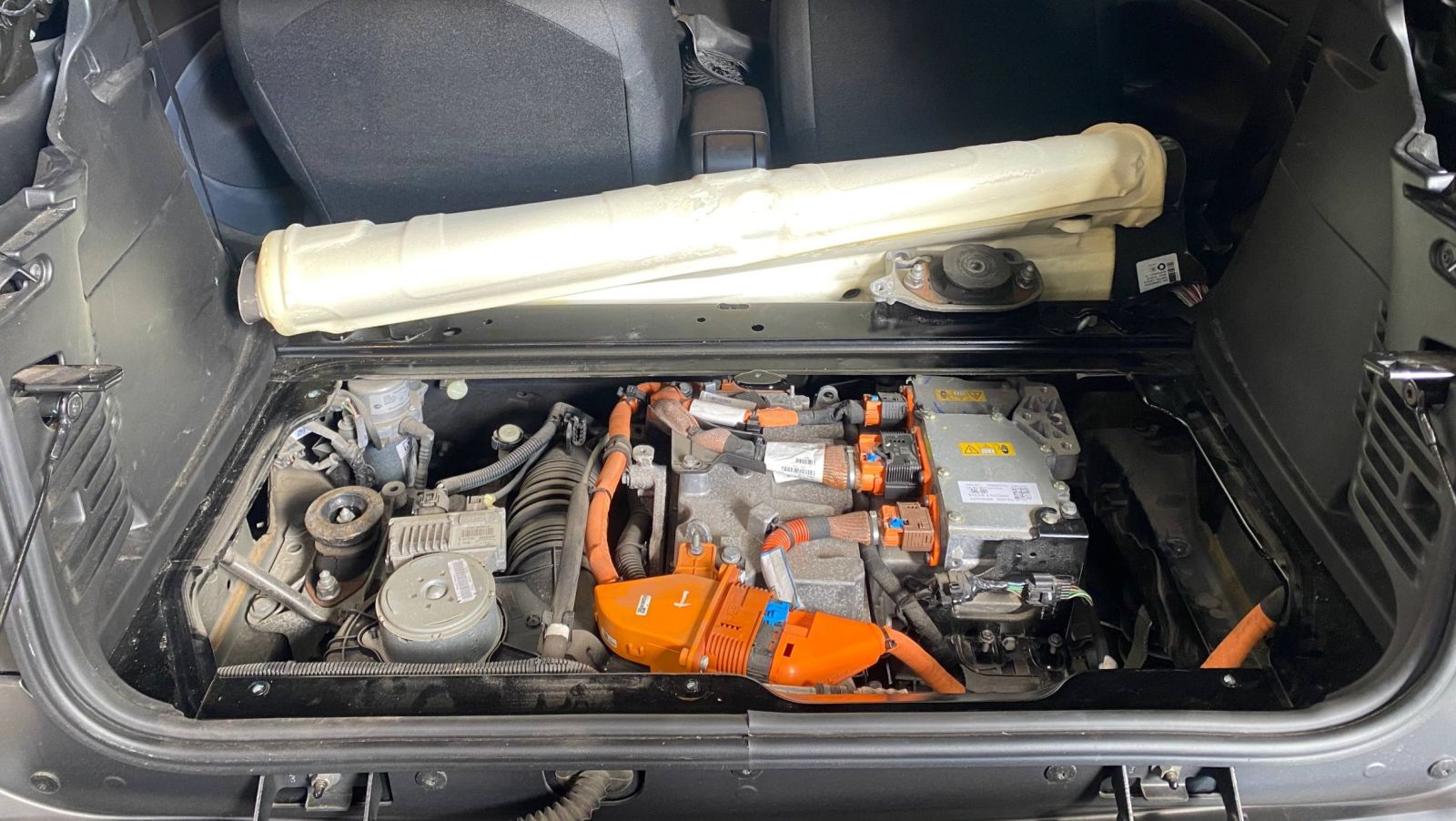
This engineering solution is indeed effective in terms of layout, but it has a significant downside. When operating in high-current modes, the unit is subjected to extreme thermal loads and constant temperature fluctuations. Over time, this leads to systemic overheating of the power control modules, causing them to fail. This is a classic “teething problem” of these platforms, one that owners of both the Renault Zoe and the smart fortwo frequently encounter.
Workflow at the STS.Electro Service Center
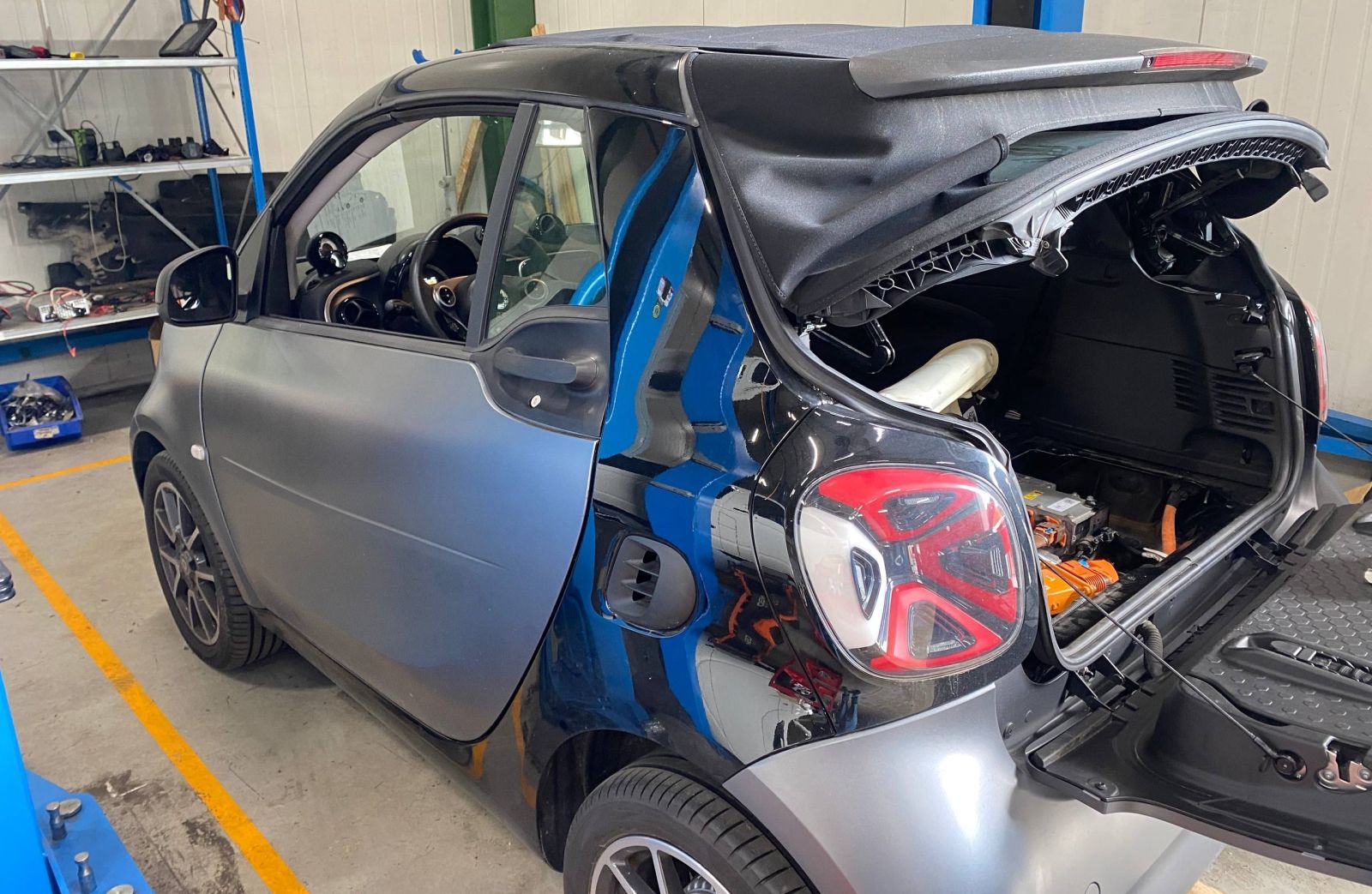
A 2021 smart fortwo was brought to us for repair with symptoms of a complete charging failure: when the cable was connected, the charging process did not start, and the on-board diagnostics clearly indicated a hardware malfunction in the charging control module. In addition, during the initial inspection of the engine compartment, an additional defect was discovered—a loose, completely unscrewed positive terminal.
Therefore, the STS.Electro technicians faced the task not only of replacing the part but also of conducting a full diagnostic cycle to eliminate associated risks and ensure the safety of the vehicle’s high-voltage system for future operation. The following procedures were performed:
- In-depth computer diagnostics and error analysis: Using specialized equipment, fault codes were read from the high-voltage system control units. The results confirmed a hardware failure of internal components within the power module.
- Power circuit audit and correction of related defects: During disassembly, specialists identified and documented a loose positive terminal. The contact surfaces were thoroughly cleaned of oxides, the correct connection geometry was restored, and the terminal was tightened to the specified torque.
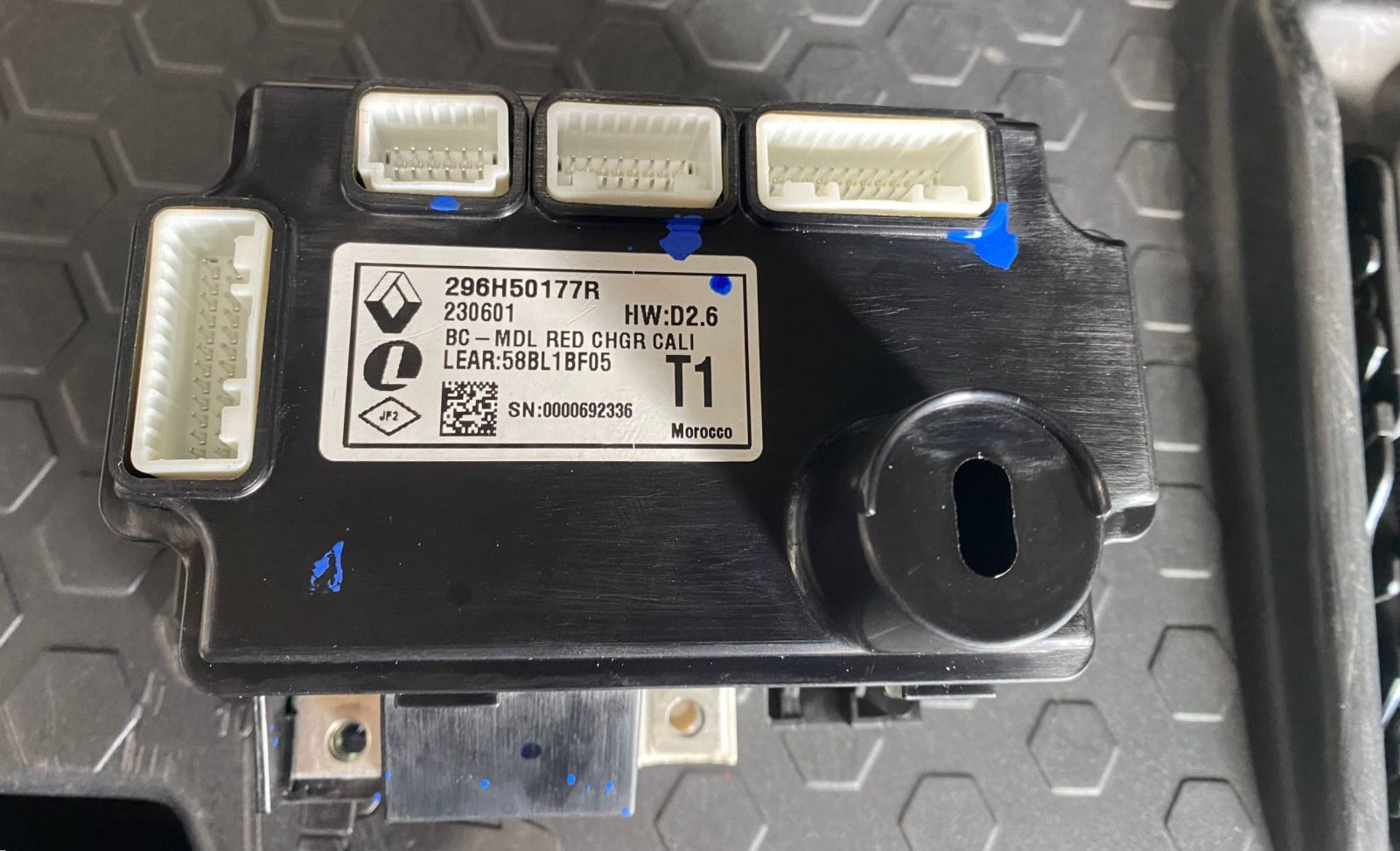
- Power module replacement: The damaged unit was replaced with a new original Lear/Renault power control unit for the charger, with OEM number 296H50177R (hardware version HW:D2.6, Lear part number: 58BL1BF05).
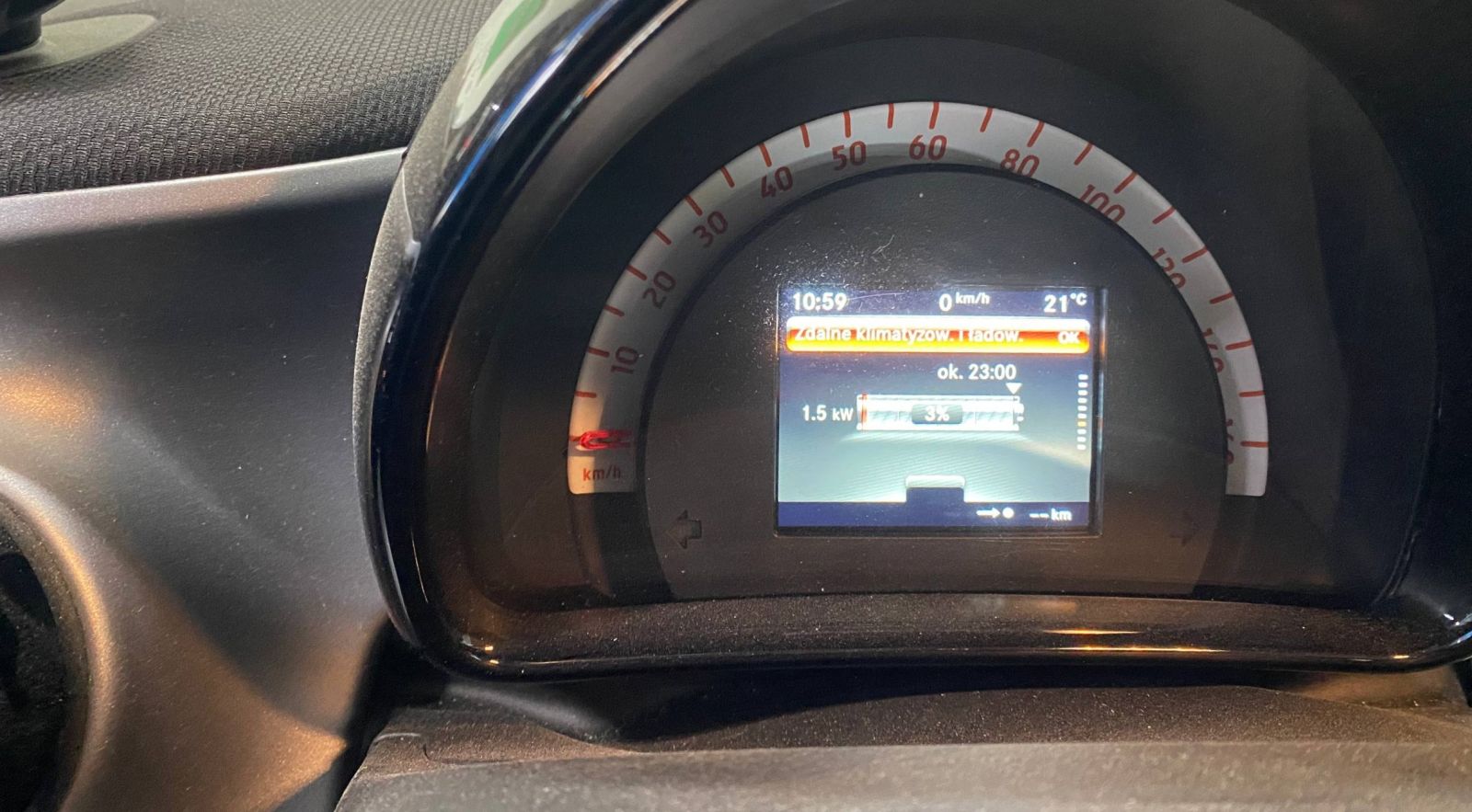
- Interim testing and connection under load: Testing was conducted prior to the final assembly of the protective covers and housings. The vehicle was placed on the charging station to monitor currents, temperature conditions, and operational sound parameters (a characteristic low hum confirmed the proper operation of the induction circuit).
- Final assembly and final inspection: After successfully completing the charging test cycle, the system was fully assembled, all protective components were installed, and a final computer check was performed to ensure there were no errors.
Thanks to a systematic approach and a deep understanding of the specifics of Renault-Daimler high-voltage platforms, the STS.Electro team quickly resolved the smart fortwo’s charging issue. We not only replaced the critical electronic module with an original component but also completely eliminated associated risks in the power circuits, returning the electric vehicle to its owner in perfect technical condition.
Do you need professional repairs or diagnostics for your electric vehicle?
Specific engineering solutions, shared multi-brand platforms, and high-voltage circuits require technicians to have more than just the ability to tighten bolts—they need a deep understanding of the physics behind these processes and the circuitry of modern EVs.
The specialists at STS.Electro possess all the necessary specialized equipment and practical experience to work with the most complex charging systems, inverters, power modules, and batteries in electric vehicles of any make. We don’t just replace parts—we thoroughly understand how every component of your car works.
- Is your car refusing to charge?
- Are there high-voltage system errors showing up on the dashboard?
- Do you need a precise diagnosis of the power electronics before purchasing a vehicle or after an accident?
Don’t risk damaging your electric vehicle’s expensive components. Contact the professionals!