

Repair of the steering rack on a Volkswagen Passat B5 in Warsaw
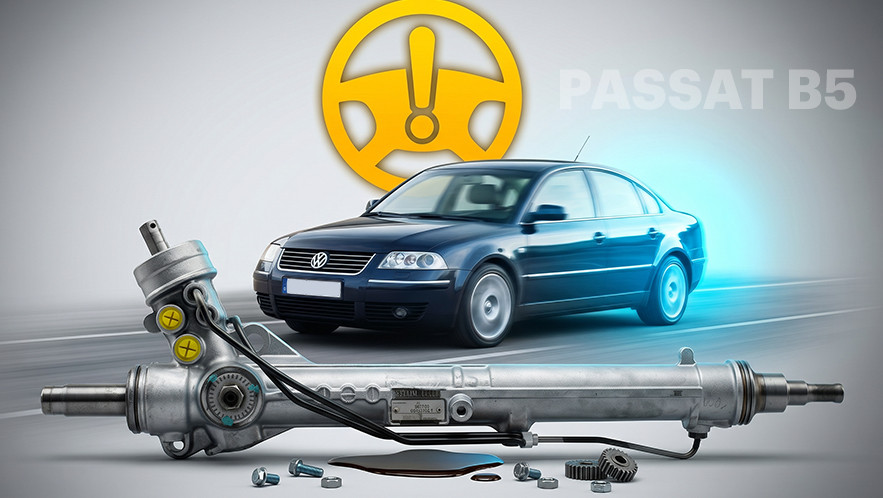
The Volkswagen Passat B5 isn’t just a car, it’s an entire era. It serves as a bridge from the overly simple VAG cars of the 1980s to today’s highly technological ones. It was with this generation that the engineers in Wolfsburg decided to showcase their full talent, gifting fans of the model a multi-link suspension, a longitudinal engine layout, and a level of comfort that had previously been the exclusive domain of the business class. However, this premium ride quality came at the cost of maintenance complexity. Today, as these cars have passed the quarter-century mark, owners are increasingly noticing the first signs of a faulty Passat B5 steering rack.
Symptoms of a damaged Passat B5 steering rack, what to look for?
Unlike many modern cars, where the electronics can remain “silent” until the very end, the Passat B5’s hydraulic system is very vocal. Its malfunctions can be divided into two types: those we hear, and those we feel through the steering wheel. If the Passat B5 steering rack is already showing signs of wear, they should not be ignored.
Acoustic signs (what we hear):
- A faint tapping sound when driving over bumps: if you hear a metallic rattling on gravel or a "comb" surface that disappears on smooth asphalt, this is the first sign of play in the "worm gear-rack" assembly or wear on the inner bushing.
- A hum and whine when turning the steering wheel: these sounds come from the power steering pump, but the rack itself is often the cause. If air enters the system through damaged seals, the fluid foams, and the pump begins to “whine.”
- A whistling sound under the hood in extreme positions: this is a sign of critical load and malfunctioning relief valves in the rack distributor. To gain a deeper understanding of these symptoms, we recommend reading our technical article on noises in the steering gear.
Tactile signs (what we feel with our hands):
- "Heavy" steering at idle: if you have to exert effort when parking, but the steering becomes lighter while driving, this is a sign of a drop in operating pressure inside the rack or wear on the distributor.
- Play and "looseness": you feel that the car has become less responsive to steering inputs, and there is a certain "emptiness" in the center position.
- Feedback (jolts) in the steering wheel: every bump on the road is felt as a sharp jolt in your hands. This indicates that the mechanism has stopped absorbing shocks.
- Sticking: the most dangerous symptom, when the steering wheel momentarily becomes immobile or moves in jerks. This is a sign of critical wear on the teeth or bearing failure.
Remember: The Passat B5 does not forgive neglect of the smallest details. If you’ve noticed even one of these symptoms, the system has already begun to “eat” itself from the inside. Ignoring these signals in the B5’s hydraulic system leads to metal shavings from the rack killing the pump in a matter of days, turning a relatively simple service into a major overhaul of the entire steering system. Early detection of the problem is your only chance to preserve that very German handling. For a complete analysis of potential system issues, check out our guide on steering system failures.
The most common causes of rack damage
So why does that legendary reliability sometimes fail? In the automotive industry of the late 90s, they built for longevity, but you can’t fool physics.
- Corrosion is the main enemy: The steering rack dust cover may have a micro-crack invisible to the naked eye. Water gets onto the shaft, it becomes covered in rust, and, like a grater, destroys the seals.
- Complex subframe geometry: On the Passat B5, the engine is mounted longitudinally. This means the rack is exposed to high temperatures, causing the rubber seals to wear out faster.
- Fluid aging: CHF11S-type fluid does not last forever. It accumulates abrasives that begin to erode the inner bushing and cylinder bore. To learn how to perform maintenance correctly, read our guide on changing the hydraulic power steering system oil.
- Road Impacts: The Passat B5’s low ground clearance means that impacts from potholes travel directly through the tie rods into the mechanism, causing the rack teeth to wear out prematurely.
Even the most reliable hydraulics are powerless against the combination of dirt and shock loads. That is why the condition of the dust boots and the cleanliness of the fluid are the small details that determine whether your mechanism will last until the next service.
How can you check the condition of the Passat B5 steering rack yourself?
Before contacting a mechanic, conduct your own technical assessment. By spending 10–15 minutes on a self-inspection, you can get a preliminary idea of the assembly’s condition and understand the scope of future work. We have prepared a detailed step-by-step procedure in our article about the power steering diagnosis checklist.
The “clean cloth” method: Wipe down the power steering reservoir and check the fluid level. If it’s at the minimum mark, look for a leak.
- "Sticking" test: With the engine running, smoothly turn the steering wheel from lock to lock. Resistance when turning at a certain point indicates shaft deformation or distributor wear.
- Auditory test: If the engine sound changes to a strained squeal when turning the steering wheel, the power steering system is operating at its limit.
- Inspect the dust boots: This is essential. If they are wet, fluid leaks have already started inside, and it is only a matter of time before the rack fails completely.
These checks allow you to pinpoint the problem in time, before it has a chance to damage the hydraulic power steering pump. Remember that a dry dust boot and a stable fluid level are the key indicators of your rack’s health at the initial stage of diagnosis.
Repair or replacement of the Passat B5 rack, which is more cost-effective?
Once the diagnosis is confirmed, the owner faces a choice: try to revive the original unit or look for an alternative. In the case of the Passat B5, this is an equation with many unknowns, where the final cost depends on whether the shaft has retained its “mirror-like” condition and whether the mounting seat for the central bushing in the housing itself is intact.
Advantages and limitations of restoration
Professional restoration at our workshop, which includes expert steering rack remanufacturing, allows you to preserve the original unit. This is advantageous because you know for sure that the rack will fit your subframe. However, if the shaft is so corroded that even grinding won’t save it, you’ll have to look for a replacement.
New or used, comparison table
| Unit type | Pros | Cons |
| New (original) | Perfect condition | Costs half as much as a car |
| Used (scrap) | Cheap | May start leaking in a week |
| Refurbished | Warranty and quality | Requires professional selection based on VIN code due to a large number of modifications |
Estimated repair cost
The final amount on the receipt is never fixed, as it directly depends on the extent of the damage and the overall condition of the unit. While in one case it may be sufficient to replace the rubber seals, in another, complex restoration of the shaft surface or replacement of the internal bearings will be required, which significantly affects the overall complexity of the work.
| Service type | Estimated price (PLN) |
| Bench testing | from 50 |
| Rack and pinion kit with HPS | from 100 |
| Complete overhaul | from 800 |
| Removal and installation | from 300 |
Classification of B5 racks: it’s not that simple
Although this model used exclusively belt-driven hydraulic steering racks with HPS with CHF11S fluid (electric systems appeared only in the successor B6), there is a strict division within the B5 lineup that often makes components incompatible:
- 4-cylinder engines (1.6–2.0): The most common. The racks here are relatively simple and often interchangeable between models. Manufacturers are primarily Koyo or ZF.
- V6 and heavy-duty diesels (2.5 TDI, 2.8): Here, the subframe is different due to the longitudinal placement of the large engine. The control arm has a different geometry and is often equipped with a damper to dampen vibrations from the heavy engine.
- W8 Exclusive: The control arm for the 4.0 4Motion is completely unique and incompatible with anything else. It has its own mounting points and is designed for different loads. For more information on the layout of this component, see our detailed guide on everything you need to know about steering gear.
- Drive type matters: Racks for front-wheel drive (FWD) and all-wheel drive (4Motion) often differ in housing shape due to the need to “work around” transmission components.
- Servotronic: Some top-of-the-line versions had a system that made the steering lighter during parking maneuvers and heavier at higher speeds. Such a rack is easily recognizable by the electric valve on the housing.
When should you see a mechanic immediately?
Don’t wait until steering rack issues lead to a disaster. Contact a professional if:
- The steering suddenly feels "heavy" while maneuvering.
- There is significant play, and the car is not holding the road.
- You see significant fluid leaks under the car. You can read about the roots of this malfunction in our article on why power steering fluid is leaking.
- You hear a metallic grinding noise when trying to turn the steering wheel.
How to maintain the steering rack to extend its service life?
- No "steering wheel to the stop": don’t hold it in the extreme positions for more than a few seconds, this wears out the seals.
- Change the fluid: CHF11S is not a “lifetime fluid.” Every 2 years or 50,000 km, and your power steering system will thank you. To select the correct product, read our technical review on choosing and changing power steering fluids.
- Keep an eye on the dust boots: Early detection of rubber damage will save the shaft from corrosion.
- Don’t ignore the joint: A worn steering rod end or joint creates shock loads on the rack teeth.
Conclusion
STS Warsaw offers expert solutions for VW owners: from precise diagnostics on test benches that simulate real-world road conditions to providing ready-to-install, professionally remanufactured components from our warehouse. Years of experience working specifically with hydraulic systems allow us to guarantee factory-level steering precision even for high-mileage vehicles. By choosing STS, you get more than just a repair, you get confidence in every turn and an official warranty on the work performed. Don’t wait until a minor knock turns into a serious problem, visit the professionals who know everything about steering systems.