

BMW E60 Steering Rack - Signs of Damage
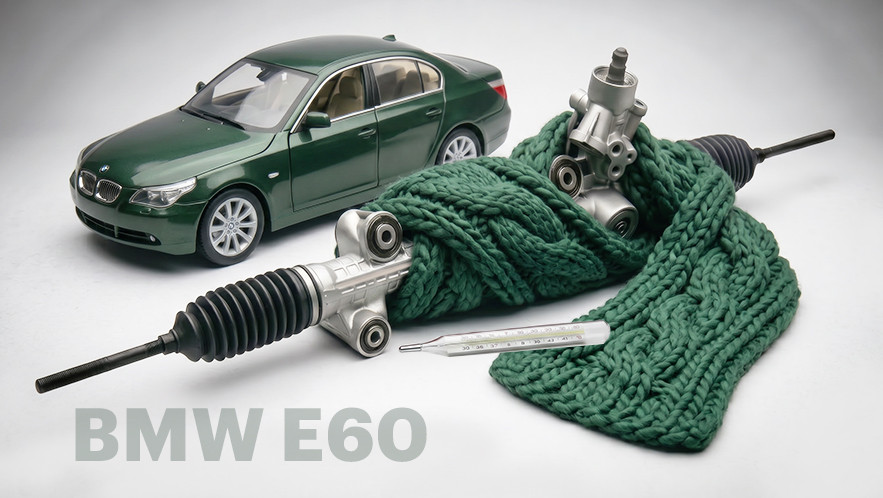
The BMW 5 Series E60 made history thanks to its Active Steering system, which effectively transformed an ordinary sedan into the benchmark for handling. However, the complexity of the design has a downside: the BMW E60 steering rack, whose signs of malfunction we will examine today, is considered one of the most complex assemblies of its kind. After all, the steering system here is not just a mechanical assembly, but a symbiosis of hydraulics and intelligent electronics.
Timely diagnostics and an understanding of how your steering system works will help you avoid the costly replacement of the entire unit. This is especially true for the innovative Active Steering system, which many service centers consider “disposable.” After all, for the professionals at STS in Warsaw, restoring such components is a daily success story.
Evolution of mechanisms: what type of steering rack is on your BMW E60?
Before analyzing the steering rack on the E60, its symptoms, and solutions, it’s worth determining exactly which type of mechanism is installed on your vehicle. This is because the BMW E60 could have been equipped with several technically different steering systems depending on the model year, engine type, and trim level.
- Standard hydraulic rack (HPK): Most commonly found on pre-facelift models with base engines. This is a classic design with fixed steering effort.
- Hydraulic rack with Servotronic: The sweet spot for the E60. It features a special solenoid valve that makes the steering light during parking and heavier at higher speeds.
- Active Steering (AFS): The pinnacle of BMW engineering. This is a hydraulic rack supplemented by a planetary gearbox and an electric motor. It physically changes the gear ratio: when parking, you’ll need just 1.8 turns from lock to lock. It was most commonly installed on models with larger engines (530i, 535d, 545i, 550i) and top-tier trim levels. These systems are often mistakenly considered purely electric, but in reality they are full-fledged hydraulic racks, where the electric motor on the shaft merely adjusts the steering angle.
- Electric power steering (EPS): Introduced in the facelifted models after 2007, primarily on 4-cylinder models (e.g., 520i/520d) for fuel economy.
How can you determine the type of your steering rack yourself?
Most BMW E60 owners have no idea how complex the system controlling their wheels is until an error appears on the dashboard. To understand what you’re dealing with, a quick visual inspection is enough:
- Classic power steering (base): Only two metal fluid lines connect to the rack. There are no electrical wires on the housing.
- Rack with Servotronic (most common): Look for a small cylindrical valve with a two-pin electrical connector where the steering shaft enters the rack. This is what makes the steering wheel “light as a feather” when parking. If the wire to it has rotted, the steering wheel will instantly become heavy.
- Active Steering (AFS): You can recognize it by the massive aluminum housing (gearbox) on the steering shaft, from which a whole bundle of wires extends. This is a system that can “steer” the wheels for you.
- Electric Power Steering (EPS): There is no reservoir for power steering fluid under the hood. The entire system runs exclusively on electricity, and a powerful electric motor is mounted on the steering rack itself.
Note: If you have an electric power steering system installed and it has failed, you will need a specific repair for the electric power steering system. However, today we will focus specifically on hydraulic systems, which make up 90% of the E60 fleet.
Typical symptoms of a damaged BMW E60 rack
Despite technical differences, signs of wear have both general and specific characteristics:
- Knocking and feedback in the steering wheel: These occur when driving over bumps. In conventional racks, this is a sign of wear in the support bushings. In Active Steering, the planetary gear itself may also knock.
- "Heavy" steering: If the steering effort suddenly increases, the power steering pump is usually to blame in a standard rack. In versions with Servotronic or AFS, the problem often lies in a failed solenoid valve.
- Fluid leak: Oil stains under the car are a sure sign of shaft corrosion, which “eats away” at the seals. This applies to all hydraulic types.
- Dashboard errors (yellow steering wheel): A symptom specific to Active Steering. This could be a power steering failure while driving due to wiring or sensor issues.
- Steering wheel is crooked: Yet the car drives straight. This may indicate a calibration error in the active steering system or mechanical wear of the position sensors.
The most common causes of E60 steering rack damage
Why do steering rack problems occur on BMWs?
- Shaft corrosion: Moisture gets inside due to damaged dust boots. For the E60 with its aluminum subframe, this is fatal.
- Wiring faults: The Active Steering harnesses and connectors are located in a high-risk area under the front left wheel, where they are exposed to salt and dirt.
- Wear of the worm gear pair: The car’s heavy weight and wide wheels create enormous pressure on the rack teeth. Read more about the mechanics of this process in the article “How the steering rack works”.
- Attempts to “tighten” the rack: Unprofessional adjustment of the steering mechanism leads to overheating of the unit and irreversible damage to the teeth.
How to confirm a malfunction?
Professional diagnostics at STS includes not only a visual inspection but also a computer scan of the Active Steering system’s operating parameters.
How to perform basic tests yourself?
- On-site check: With the engine running, shake the steering wheel sharply. If you hear a knocking sound, there is play.
- Servotronic test: Check whether the steering wheel becomes lighter during parking and heavier after 60 km/h. If the effort remains constant, the system is operating in emergency mode.
- Fluid check: Check the color of the fluid in the reservoir. Black fluid indicates that the steering rack has already begun to deteriorate from the inside due to wear.
- Visual inspection of dust boots: Any crack is a reason to go to a service center immediately to avoid costly repairs.
Repair Options and Prices
BMW E60 owners often find that they are asked to pay astronomical sums for a new Active Steering rack. However, there are alternatives.
| Solution option | Scope of work | Cost (PLN) | Expert opinion |
| Diagnostics | Computer diagnostics + test bench | From 70 | Required before repair |
| AFS Repair | Disassembly, shaft grinding, sensor repair | Approx. 1,500–2,800 | Best choice: price/quality |
| GPK repair | Standard mechanical restoration/regeneration | From 800 | Reliable and economical |
| Used rack | Purchase of a used unit | 1,000–5,000 | High risk of receiving a defective item |
| New original | Complete replacement | 10,000+ | Justified only in the event of an accident |
Unlike regular service stations, STS has special test stands for testing racks with active reducers, performing professional steering rack repair. This allows us to provide a warranty on repairs equivalent to that of a new part.
How to extend the service life of the rack?
To ensure that the steering rack on your BMW E60 and its failure symptoms don’t bother you for as long as possible, follow these “golden rules”:
- Check the condition of the dust boots every six months. This prevents corrosion.
- Do not turn the steering wheel all the way to the stop for more than 5 seconds—this creates peak loads on the hydraulic system.
- Fluid replacement: Use only genuine Pentosin (CHF 11S), and proper power steering fluid replacement will extend the life of the entire unit.
- Do not ignore the condition of the suspension: a damaged tie rod end transmits destructive shock loads to the shaft teeth.
- Professional service: If a steering error appears on the dashboard, consult a mechanic who is familiar with BMW communication protocols.
Don’t wait for serious steering problems to arise. If you feel play in the steering, hear unusual knocking sounds, or the steering wheel becomes difficult to turn—come to STS. We know everything there is to know about BMW E60 steering racks—and then some. Our professional approach will help ensure your comfort and safety on the road.