



Repeated application for repair of the steering rack of Skoda Octavia A7 after operational impact
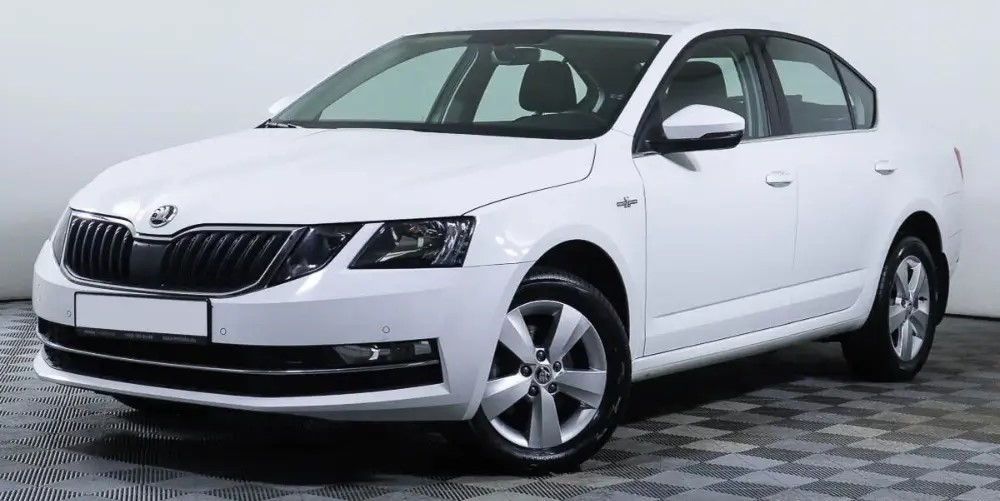
SKODA Octavia
Car repair history
In March 2025, the owner of a 2013 Skoda Octavia A7 1.6TDI CR contacted STS (Warsaw) with a malfunctioning EPS electric power steering rack.
A complete overhaul of the unit with OEM part number VW415.NL00.RT was performed:
- disassembly and defect detection;
- mechanical part restoration;
- electronic module testing and restoration;
- replacement of worn components;
- assembly in compliance with technical tolerances;
- testing on a test bench under load.
After installing the rack, the car was operated without any issues. Over the following period, the car traveled 28,900 km, confirming the unit's performance immediately after repair.
A second complaint was received regarding:
- complete lack of power steering;
- extraneous noises when turning right;
- changed, “unnatural” steering feel.
Diagnostics
The initial inspection of the car revealed no external damage:
- the steering rod dust covers were intact;
- the unit housing had no mechanical defects;
- the control unit had no obvious signs of depressurization.
However, given the symptoms, it was decided to dismantle and completely disassemble the unit.
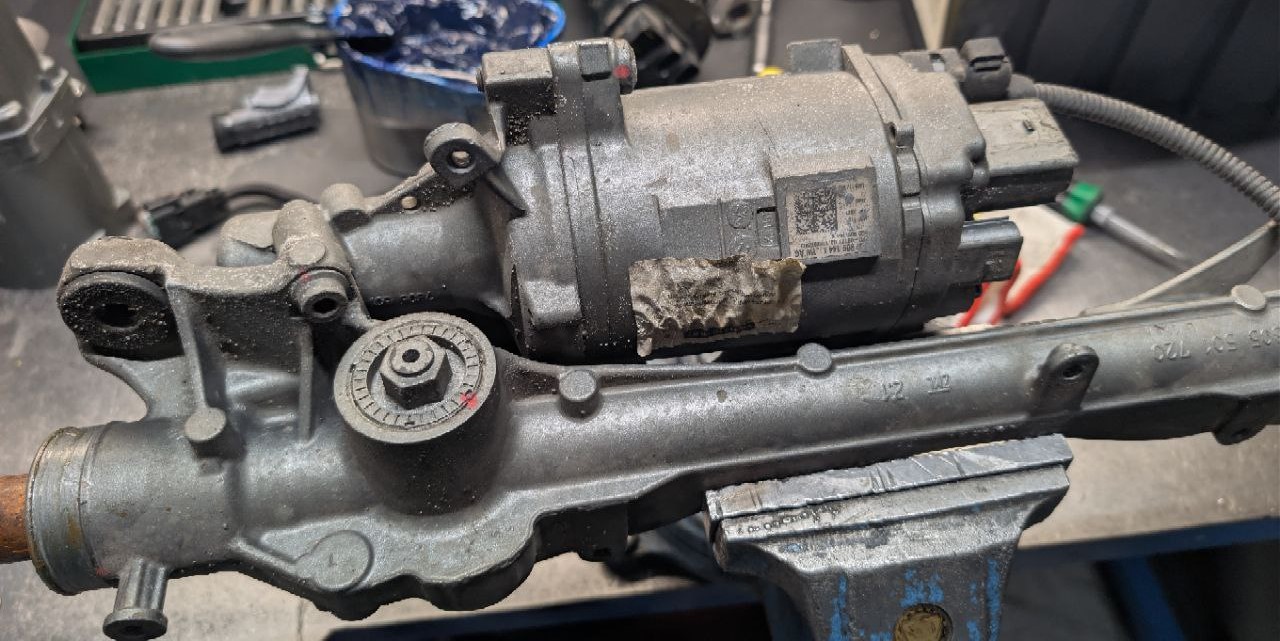
After opening the housing, the following was found:
- moisture inside the mechanism;
- corrosion of metal elements;
- traces of oil washout;
- critical damage to EPS electronic components.
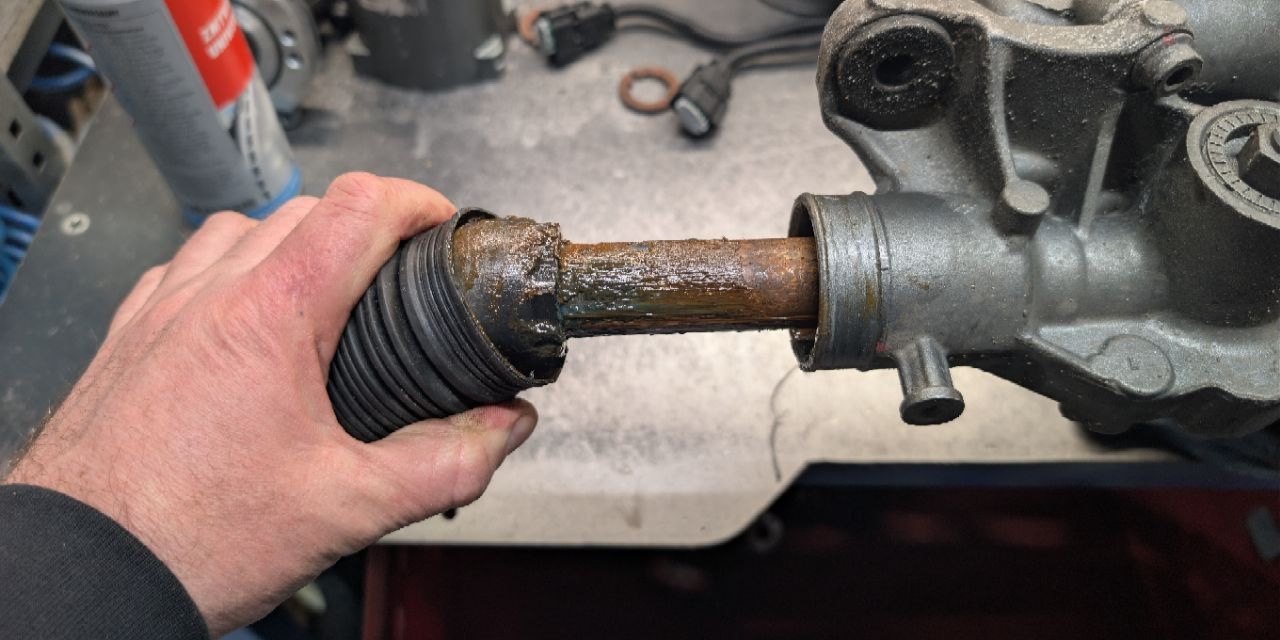
The condition of the unit indicated not gradual technical wear and tear, but external influence. It was this moment that became the “turning point” from technical diagnostics to analysis of warranty grounds.
STS warranty: what it means in practice
STS provides a warranty for the work performed and the repaired units.
The warranty covers:
- material defects;
- assembly errors;
- internal technical malfunctions related to the restoration process.
The warranty does not cover:
- mechanical damage resulting from an accident;
- third-party interference;
- natural wear and tear after prolonged use;
- violation of operating conditions;
- the influence of external factors that are not structurally provided for by the manufacturer of the unit.
Important: the service does not refuse to repair as such. This refers exclusively to the distinction between warranty and non-warranty cases.
Why such cases are not considered warranty cases
1. Design limitations of the unit and IP standards
The EPS electric power steering rack is not a sealed, waterproof module. Its degree of protection is determined by the international IP (Ingress Protection) standard, which is a classification system that indicates the level of protection of the housing against solid particles and water.
The marking consists of two digits:
- the first digit indicates protection against dust and solid particles;
- the second digit indicates protection against water.
For steering racks, the typical value is IP54 or IP55.
Explanation:
- 5 (first digit) - partial protection against dust (dust can penetrate in minimal amounts, but does not affect operation);
- 4 or 5 (second digit) - protection against splashes or water jets from different directions.
Important!
IP54-IP55 does not mean that the device can be immersed in water.
IP67 or IP68 levels (complete waterproofing when submerged) are not applicable to steering racks due to their design.
This means that the unit is designed for rain, wet roads, and normal operation in conditions of high humidity.
However, it is not designed for driving through deep puddles, flooding, submerging the unit even for a short time, etc.
2. Physics of the process
The steering rack operates in the engine compartment, which is a temperature-loaded area of the vehicle.
It heats up:
- from the electric motor inside the mechanism;
- from the exhaust system passing nearby;
- from the general heat background of the engine compartment.
While driving, the unit can reach a significant operating temperature. If the car then enters cold water (a deep puddle, a flooded area), there is a sharp temperature drop.
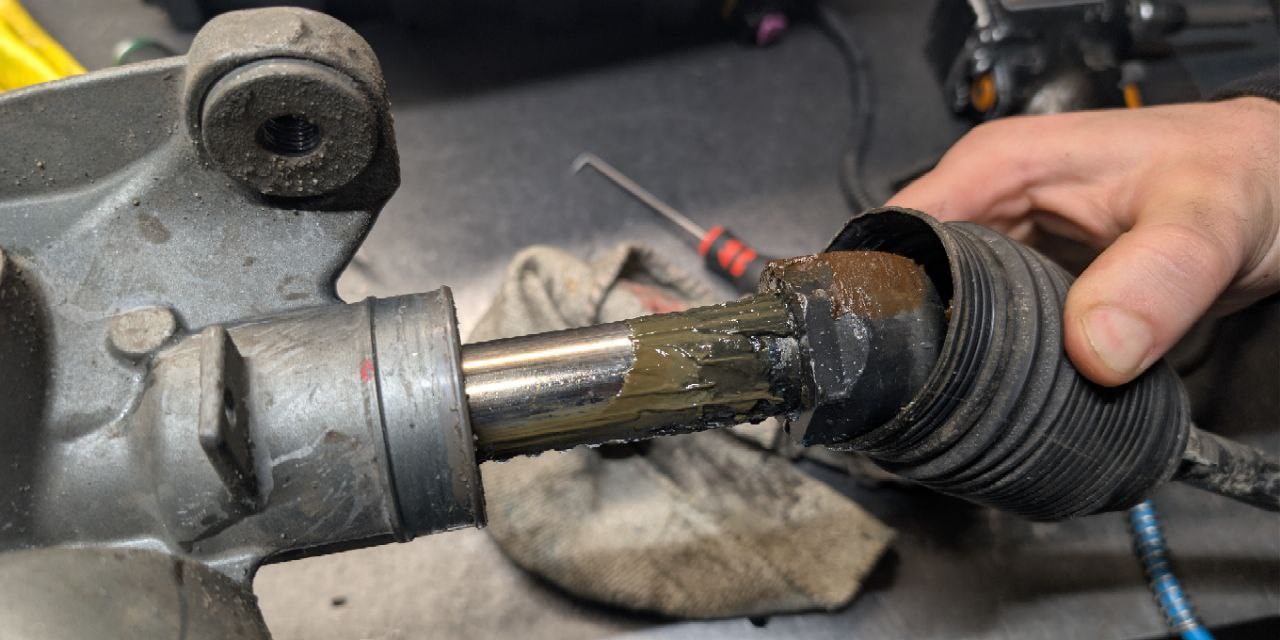
As a result:
- the air inside the housing is compressed;
- the ventilation channels cause moisture to be drawn in;
- water gets inside the mechanism.
Since the seals are designed to compensate for air pressure rather than hydrostatic load, moisture remains inside and triggers the following processes:
- corrosion of metal parts;
- destruction of electronics;
- degradation of lubricant.
This is exactly what was observed during disassembly.
3. Dust cover design
Steering rod dust covers cannot be hermetically “seated” on the body. They must have a certain amount of freedom of movement and are secured with clamps. This is provided for by the manufacturer's design.
4. Operating conditions
In 2025, local flooding was recorded in Warsaw, and on some roads, heavy rains caused real floods in tunnels.
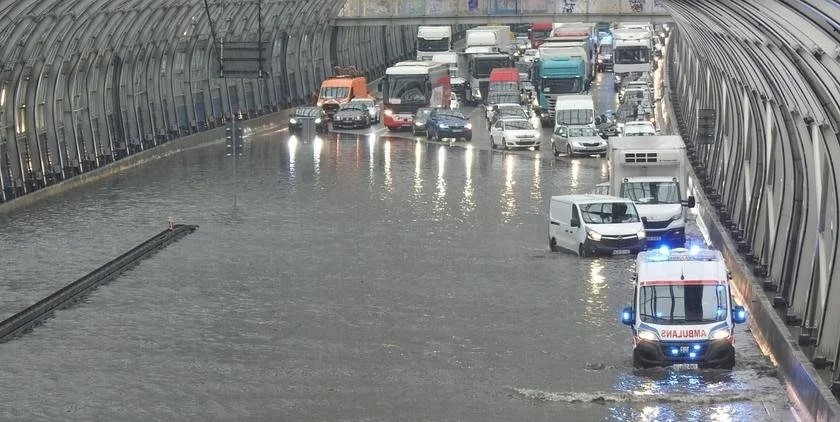
For a passenger car such as the Skoda Octavia A7, such conditions are critical.
Thus, water getting inside the unit is a result of operational impact, not a repair defect.
Resolving the situation
Despite the fact that there were no technical grounds for warranty repair, STS offered a compromise:
- disassembly and assembly were carried out at the company's expense;
- the customer purchased a high-quality refurbished steering rack from the STS warehouse;
- after installation, complete testing and adaptation of the EPS was carried out.
The car was returned in working order.
Unit nomenclature
The steering rack with OEM part number VW415.NL00.RT is used in a large number of VAG Group models and has a number of related part numbers. The design principles for moisture protection are the same for all these models.
Conclusion
A warranty is the service provider's responsibility for their work, but it is not insurance against all operating conditions and force majeure events.
The electric steering rack with OEM part number VW415.NL00.RT, like any similar unit, has design limitations regarding the effects of water. Violation of these conditions leads to damage that cannot be considered covered by the warranty.
STS operates openly, reasonably, and within the bounds of technical logic. We are responsible for the quality of the restoration, but the physics of the processes cannot be reversed.
In our practice, warranty cases do occur - this is a normal part of the work process. Their share does not exceed approximately 3%, and in such situations, the service takes full responsibility.
However, in this particular case, the signs of operational impact were obvious. If the cause had been a manufacturing defect or a restoration error, the unit would not have been able to travel even a few thousand kilometers, let alone 28,900 km.