



FORD Explorer Turbine


Turbine for other models of FORD
FORD Explorer Turbine for other cars
Spare parts for FORD Explorer
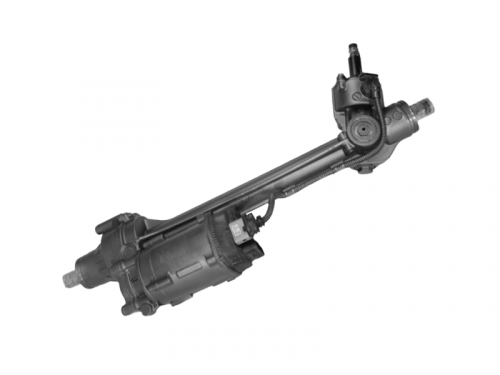
Steering system for FORD Explorer


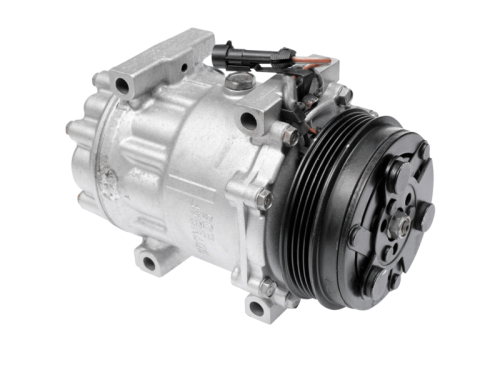
Air conditioning for FORD Explorer




Turbochargers
Turbines have long been used in various types of technology - where it's necessary to convert linear momentum into rotational. For example, to transform the force of water flow into the rotation of a hydroelectric power plant shaft so that the generator rotor creates current from it, or to direct the force of steam in a steam turbine in the right direction. The turbine uses the same principle in an automobile engine but is designed even more efficiently. The price of a turbocharger for a car is quite high, so repair services are in great demand.
What are turbochargers
The principle of this unit is already in its name. Just as the word "turbocharger" consists of two - turbines (from the Latin turbo - rotation at high speed) and compressor (from compressor - compression), the automotive turbocharger itself consists of two impellers. One receives rotation, and the other uses it, not for shaft rotation, but for compressing the air entering the cylinders.
What is this needed for? The power of an internal combustion engine directly depends on the amount of fuel entering its cylinders. However, since oxygen is also needed for combustion, simply increasing the amount of gasoline is not enough: it is also necessary to increase the volume of air. In a conventional, naturally aspirated engine, this is difficult to do: the dimensions of the combustion chamber have their limits.
Fortunately, air can be compressed. Compressors are used for this. They can be mechanical, driven by a pulley on the engine crankshaft, or turbochargers. The latter are more popular because they don't take power from the engine but use the energy of exhaust gases. They allow for achieving higher power and fuel efficiency indicators.
How a turbocharger works
The exhaust gases coming out of the engine, on their way out, spin the blades of one of the impellers. It is called the "turbine" or "hot" impeller because it contacts the hot exhaust. On the same shaft with it is attached the "compressor" or "cold" impeller. Its blades forcefully take in air, compress it, and force it into the intake manifold.
The impellers rotate at high speed, which depends on the engine's rpm. In addition, the turbocharger has a bearing, and the lubrication circuit and/or engine cooling system pass through it. There is also a bypass valve in the unit, through which excess air is released in case of excessive pressure.
Signs of turbocharger malfunction
Of all the car's units, the turbine works in the most stressful mode, constantly experiencing overloads. The rotation speed of the compressor shaft is several tens of thousands of revolutions per minute, and the temperature of exhaust gases is over 1000°C. Manufacturers use the highest quality parts for turbochargers, but they still fail.
Symptoms of breakdowns:
- engine power drop;
- black or blue smoke from the exhaust;
- increased oil or fuel consumption;
- foreign sounds.
Among the causes of turbine failures, problems with engine oil are in the first place: its quality, quantity, filter, and oil supply channels. Even a new turbocharger can be damaged by foreign objects inside the impellers.
Incorrect driver actions can also damage the turbine: sharp acceleration on a cold engine, turning off the engine too quickly after active driving.
The cause of turbocharger malfunction can also be problems in other units. Then the engine control unit does not allow the turbine to turn on.
Where to buy a turbocharger
Turbochargers of all types for any cars, as well as repair kits for their restoration, can always be found in the STS.Parts turbocharger store. We deliver to any point in Poland.