Step 2 of 4
How the Hyundai i30 steering column is designed
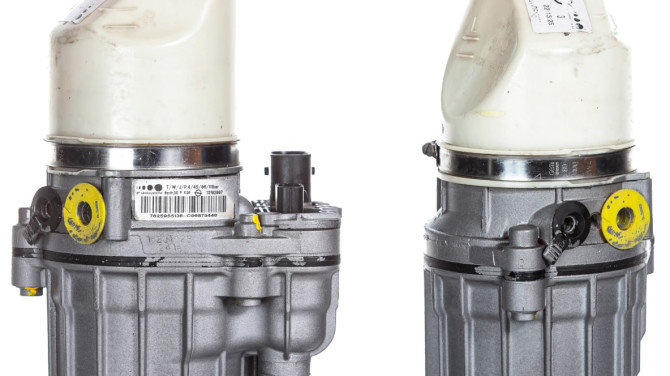
The first-generation Hyundai i30 has a design feature that significantly affects steering: its electric power steering is integrated directly into the steering column (EPS type — Electric Power Steering, column-type). Unlike traditional systems with hydraulic or rack-mounted electric power steering, in this case the entire power steering mechanism is located in the passenger compartment, in the steering column housing. This approach reduces the number of components in the engine compartment, lowers fuel consumption, and simplifies the design of the rack.
Main design elements
- An electric motor built into the steering column housing, which uses a gear (star wheel) to rotate the shaft, amplifying the driver's effort.
- A reduction gear and connecting mechanism, which is responsible for the precise transmission of torque without backlash.
- EPS controller, which processes data from torque, speed, and steering wheel position sensors to regulate the power assistance.
- Steering column shaft, which transmits force directly to the steering rack.
Important to know: since in this generation of Hyundai i30 and similar KIA models (CEE'D ED, PRO CEE'D ED) the rack has no power assistance, all force and load compensation is provided by the EPS mechanism in the column. Because of this, any malfunction in this unit immediately leads to knocking, loss of steering precision, and potential risks while driving.