



Repair of the Nissan Leaf II charging connector
NISSAN Leaf
Detailed diagnostics and repair process
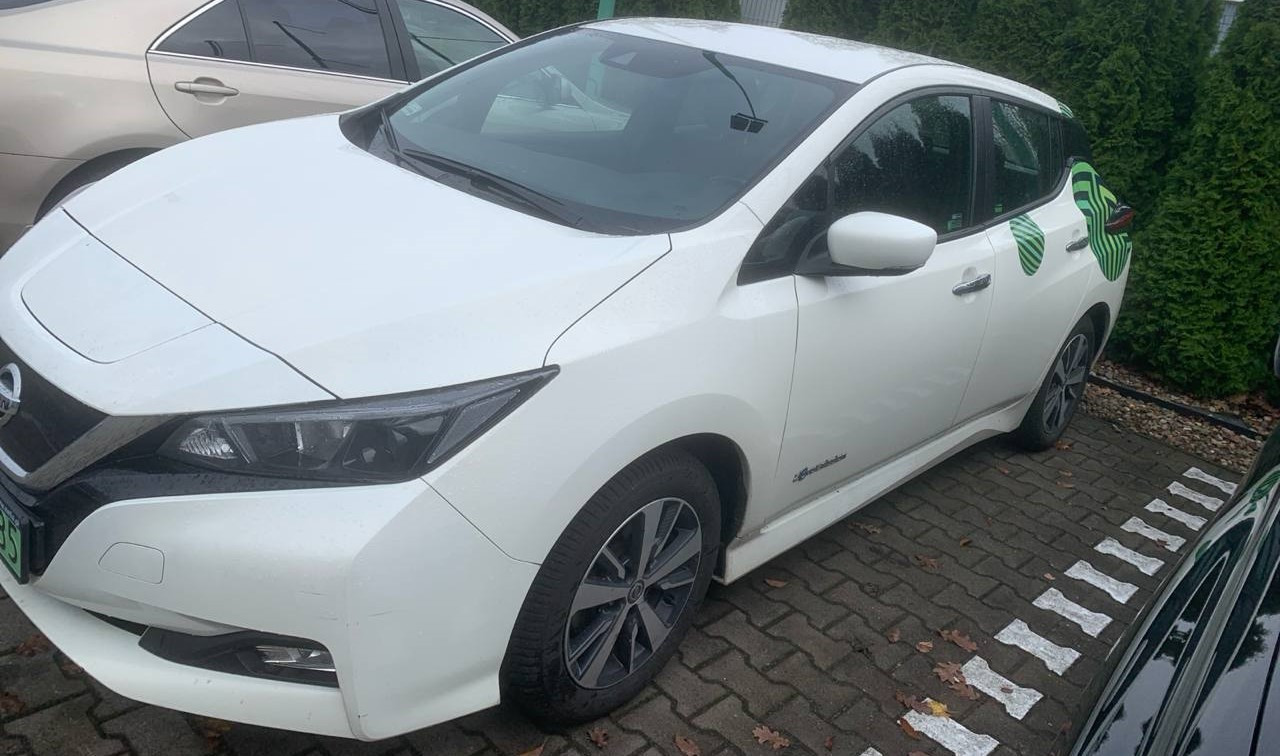
A Nissan Leaf II arrived at our workshop, which had stopped charging via the AC charging port, while the CHAdeMO port continued to function normally. 
At first glance, it seemed that the problem might be related to the PDM (Power Delivery Module) — a power unit that controls the distribution of energy between the on-board network, battery, and charging systems. The PDM is responsible for converting alternating current from the mains to direct current for charging the traction battery. Therefore, the suspicion of its malfunction was quite logical.
However, during a further inspection, specialists found that the mechanical part of the charging connector did not lock the cable in the socket — the plug could be inserted but not locked, so the “ready to charge” signal was not sent to the PDM, and the process did not start. 
After disassembling the unit, the technician found that the locking mechanism inside was damaged - the system responsible for holding the charging pistol and safely closing the circuit. 
This mechanism consists of several plastic gears and a small electric drive. When the user inserts the charging cable, the motor turns the lock through the gear system, which secures the charging gun in the socket. Thanks to this, the car reliably recognizes the connection, and the electronics allow charging to begin. 
One of these gears had a broken axle and damaged teeth, causing the entire mechanism to lose synchronization. The broken gear no longer transmitted torque to the lock, and the connector remained in the “free” position - the safety system blocked the start of the charging process. 
The STS.Electro technician carefully repaired the damaged part:
- removed the connector lock assembly;
- mechanically repaired the gear shaft using strong reinforced material;
- checked the operation of the entire transmission;
- conducted a functional test - after assembly, the mechanism worked correctly, and charging started without any problems.
After confirming its operability, it was decided to order a new set of gears to replace the temporarily restored element with a new one. It was found on a large international online marketplace and fully corresponds to the original OEM part numbers: 253E0-5SH0C and 253E0-5SH1C (a repair kit consisting of two gears that form the charging port lock reducer).
The gears have already been ordered, and as soon as they arrive in Warsaw, STS technicians will install them to finally solve the problem. 
Interestingly, the cost of the repair kit turned out to be quite affordable—about $40—and the repair itself took only a few hours, including diagnostics.
The professionalism and ingenuity of the STS.Electro team
This case study demonstrates not only a deep understanding of electric vehicle design, but also the creative approach of STS.Electro specialists to solving non-standard problems. The charging port locking mechanism is a unit that combines electronics and precision mechanics. Its failure is often perceived as a complex or “expensive” malfunction, because without proper locking, the charging process is impossible even with fully functional electronics.
STS.Electro's masters were able to not only accurately locate the cause, but also quickly restore performance without expensive replacements or long waits for spare parts. This approach is the result of a combination of experience, technical knowledge, and engineering ingenuity, which is a hallmark of the STS team.
The result:
- the problem was identified quickly, without the need to replace expensive parts;
- the unit was repaired in-house and tested under load;
- the car returned to normal operation on the same day;
- spare parts for the final upgrade were ordered, and the customer was completely satisfied.
Conclusion
The repair of the Nissan Leaf II generation charging connector at STS.Electro (Warsaw) is an example of how proper diagnostics, experience, and ingenuity can quickly bring an electric vehicle back to life without unnecessary costs.
The STS.Electro team has a full range of knowledge in electronics, high-voltage systems, and electric vehicle mechanics, which allows them to effectively repair not only power modules or batteries, but also such “small” but critically important elements as the charging port locking mechanism.
STS.Electro - where experience meets engineering thinking.