



Fiat 500e battery is not charging - solving the problem
FIAT 500e
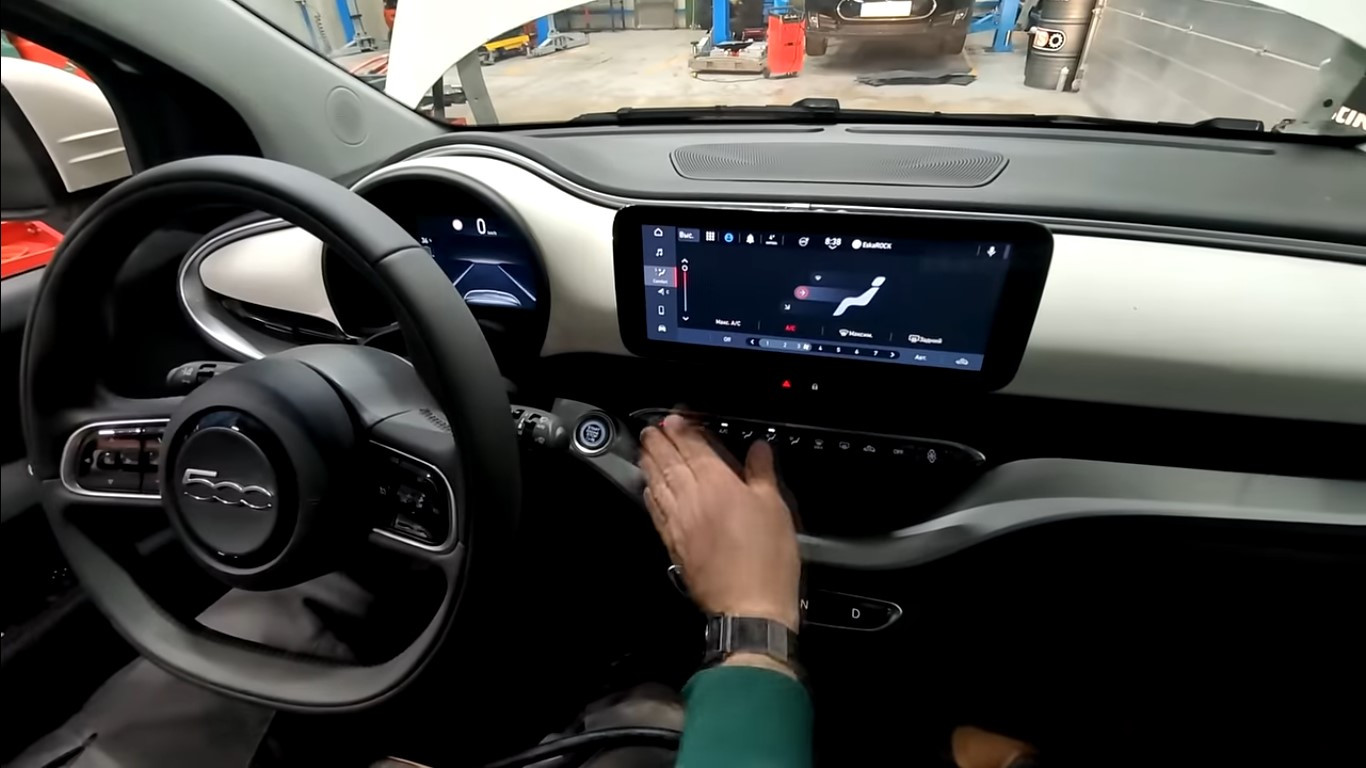
On the one hand, electric cars are also cars, just with a different type of engine. And many of the rules for them are similar to those for cars with an internal combustion engine: for example, do not drive fast through pits or refuel in a thunderstorm. On the other hand, electric cars have their own peculiarities. A regular car is unlikely to refuse to accept petrol in its tank, but problems with EV charging are not a common but quite possible occurrence. We will tell you why this happens and how we deal with it using the example of the Fiat 500e case.
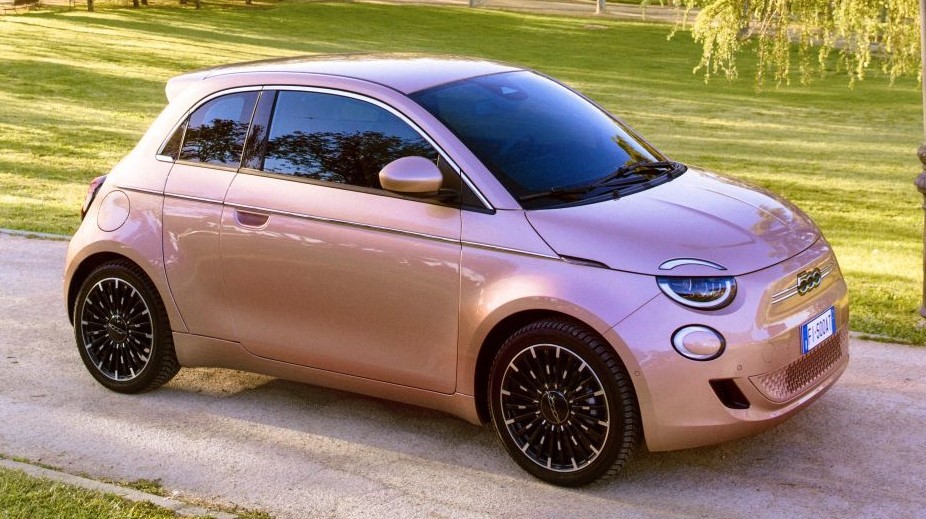
We have received a Fiat electric car from STS Electro with a very low odometer mileage - only 3628 km. This is the first practically new European electric car we have in repair, before that, only the Chinese came to us with such mileage. The car stopped charging from any type of device, the charge of the high-voltage battery dropped to 1%. It should be noted that this is already a 2022 car, which means it is more difficult to diagnose than older cars.
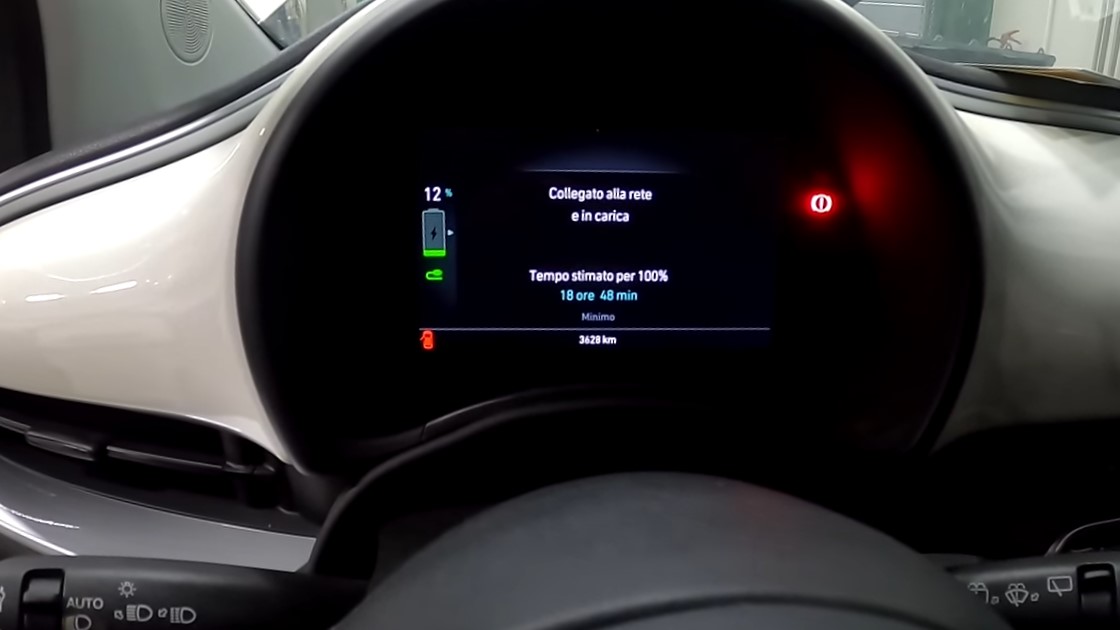
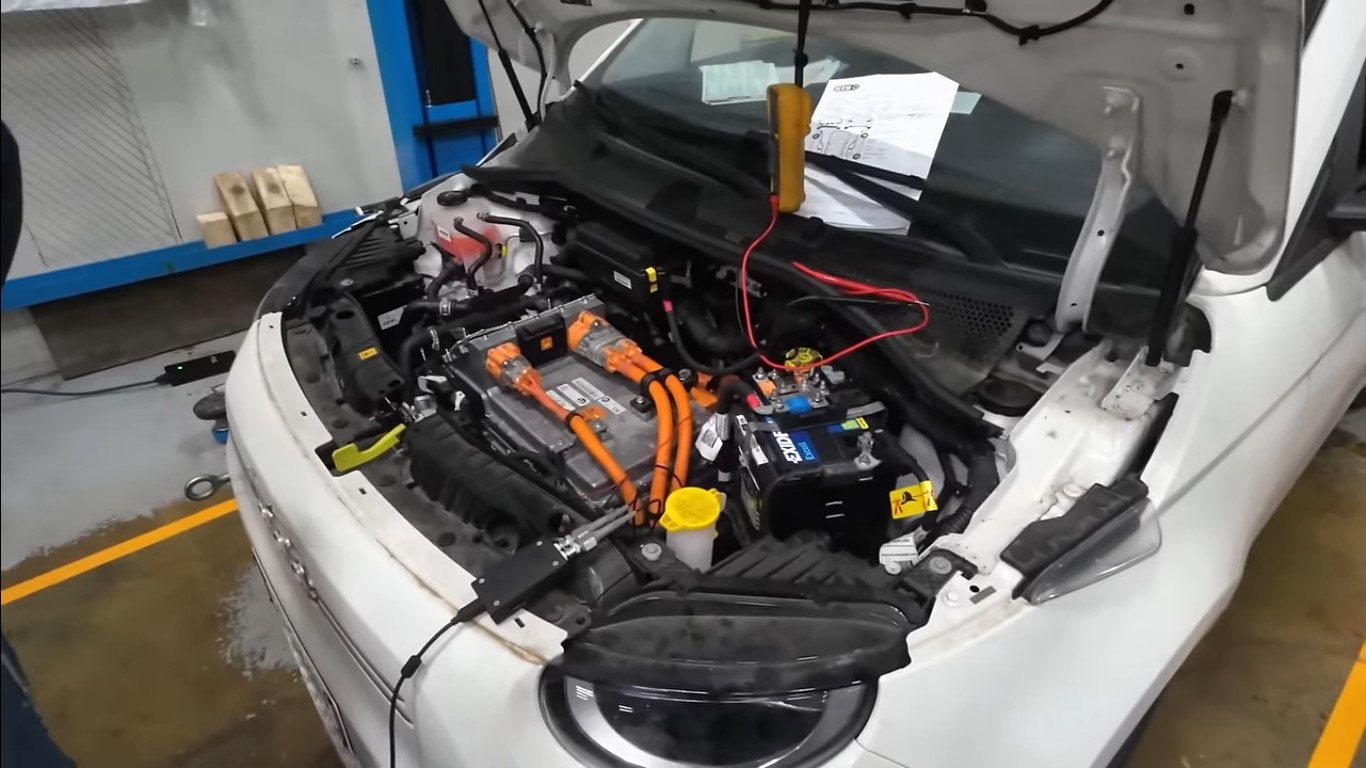
First of all, we removed the lid from the BBB and recharged it a little using an external charger. Now you can safely read errors without fear that the charge level will drop completely and the battery will have to be dismantled.
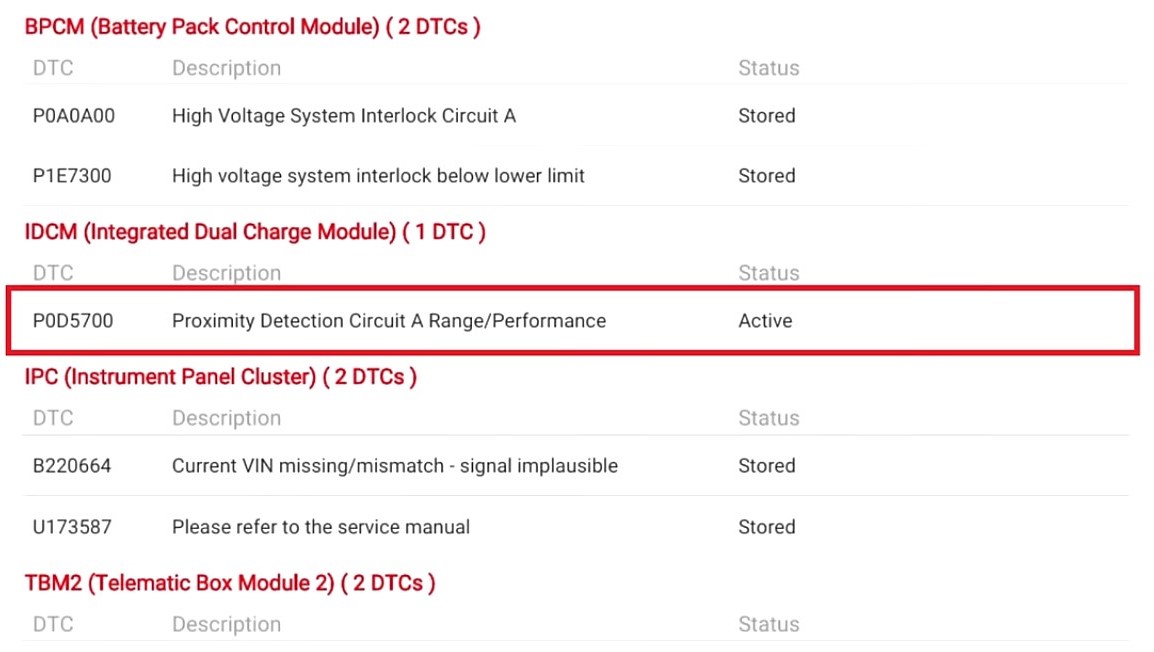
When we connected the scanner, we saw a lot of errors, but most of them were in the &Saved» status. There was only one error in the active status - an error on the Proximity Pilot, one of the contacts of the charging gun.
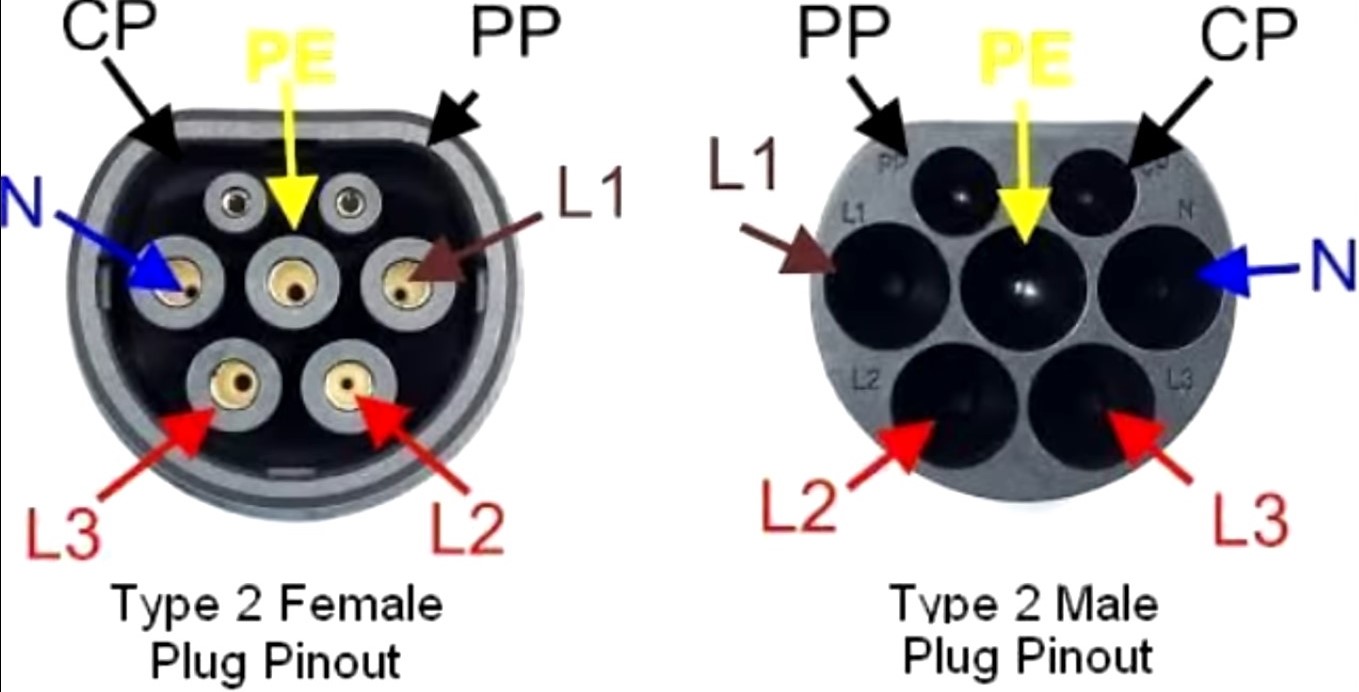
In addition to the power and ground pins, this device has two other pins: Control Pilot and Proximity Pilot. The first one transmits information between the charger and the car (for example, connection status and available power), and the second one detects whether the connector is inserted into the car and is able to lock it, preventing accidental disconnection of the gun from the live car.
The indicators located in the hatch next to the gun show that the car is not charging. When we connected the diagnostic equipment, we saw that the charging port was not blocked, although it should be 4 seconds after the gun was connected. This means that the feedback when the port is switched on does not work correctly.

Checked the resistance of the charging port resistor - it's fine. We connected to one of the CAN buses to conduct another test. We found out that there were problems with the on-board charger - the controller's input does not supply a voltage of 1.7 V. We supplied the required voltage from an external power supply to the circuit, and charging started.
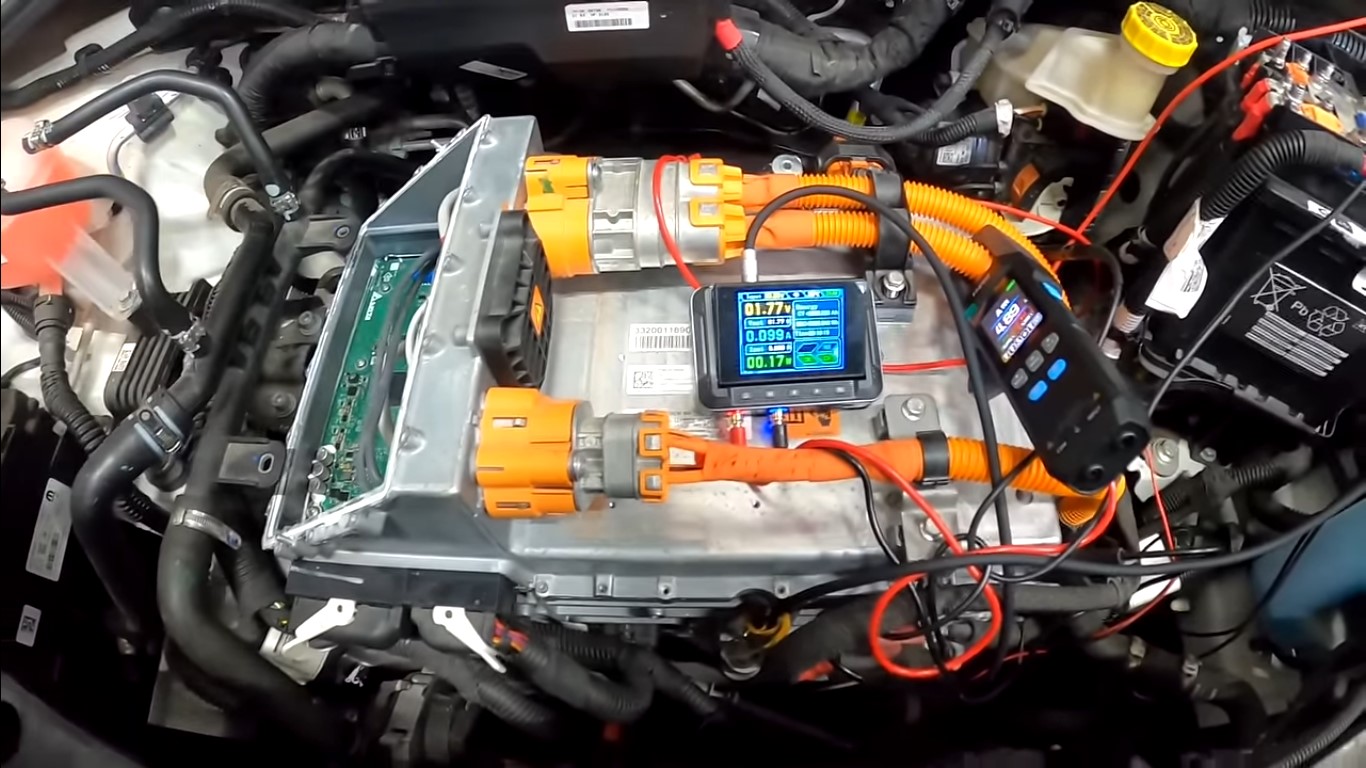
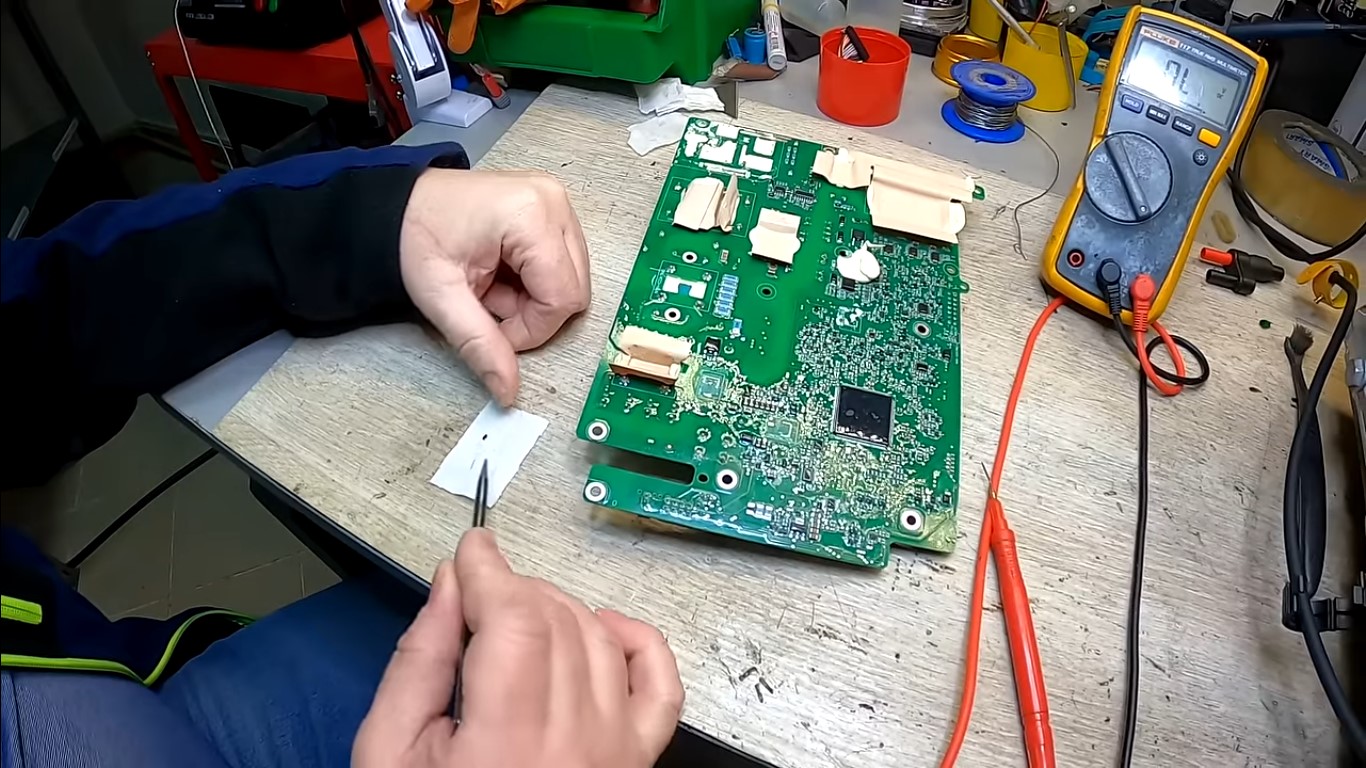
We realised that the problem was not with the port, but with the on-board charger. To repair it, we need to dismantle it. It is a monoblock with an inverter and AC/DC converter. We removed the entire unit, dismantled the board responsible for charging and generating the voltage going to the charging port.
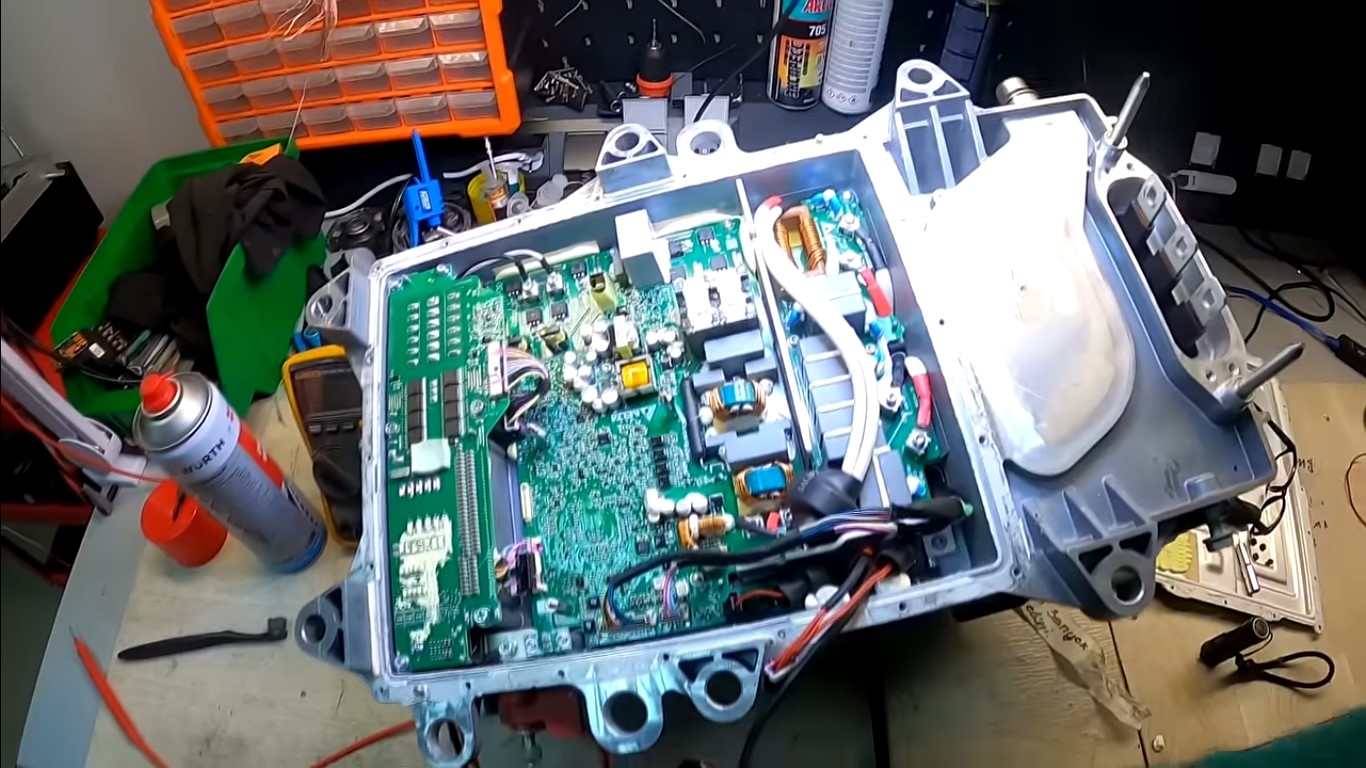
An inspection and check showed that one of the board's parts had burned out - a discharge zener diode in the circuit of one of the input connectors. It seems that the problem was in this inexpensive radio part - there was a breakdown to the mass, and the electronics did not see the charging gun. We believe that authorised dealers would not repair the board, but would replace the monoblock entirely - a rather expensive unit.
We mentioned the thunderstorm at the beginning for a reason. As it turned out, the problems with the car began after lightning struck nearby during charging, which led to magnetic fields and so-called interference with the electronics. Thus, despite the fact that there is no flammable fuel in the electric car, it should not be charged during a thunderstorm.
The Zener diode was replaced, the module was assembled and installed on the car, in full confidence that it would work. However, the problems continued. On the one hand, the car started charging normally, and the estimated charging time decreased. On the other hand, it stopped starting. Apparently, we have not eliminated all the problems associated with the storm.
We re-energised the unit using the external unit, and again it helped - the car started. We need to disassemble and disassemble the Charger again.
We disassembled and re-called the board, found another faulty element - the transistor responsible for the 5V reference voltage line.
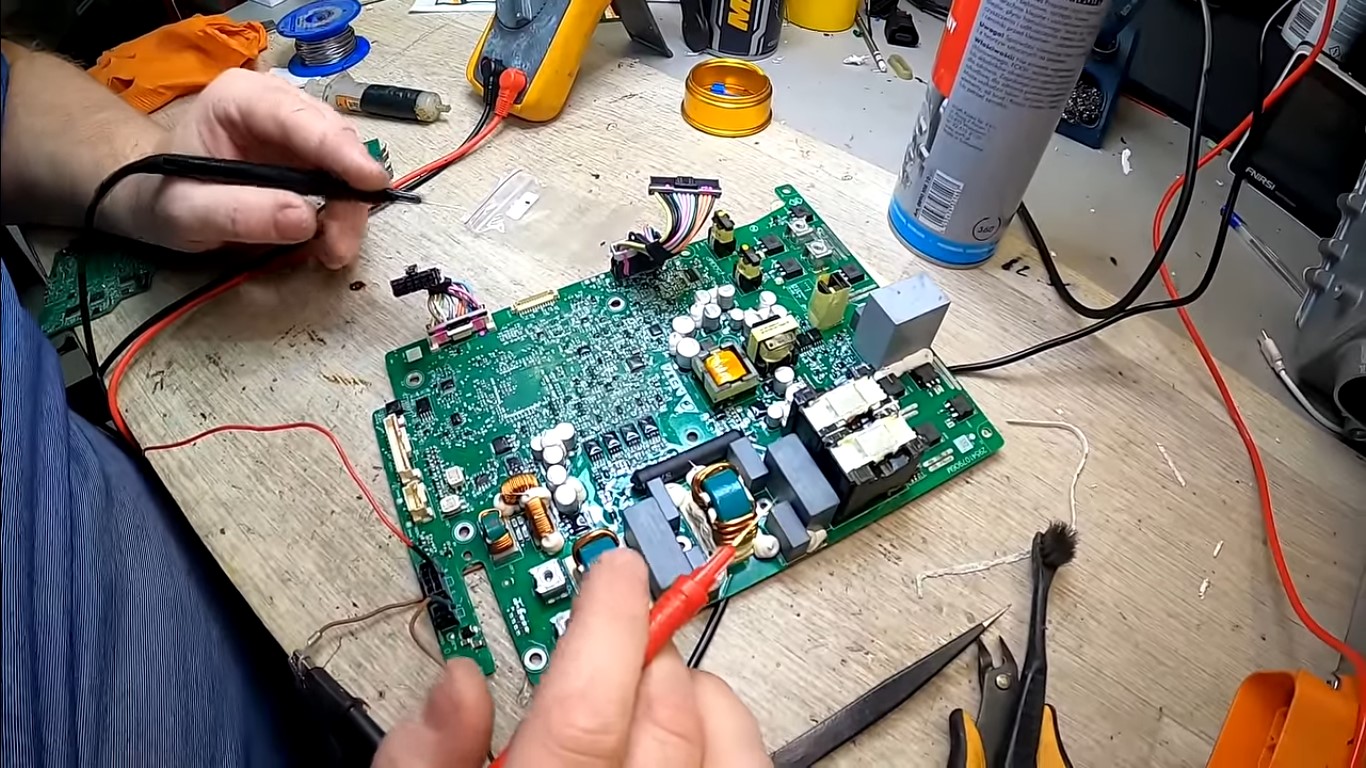
We also replaced this faulty part, installed the on-board charger in the car, but did not yet screw on its lid. However, this time it was in vain - the Fiat was not only charging, but also starting up absolutely normally.
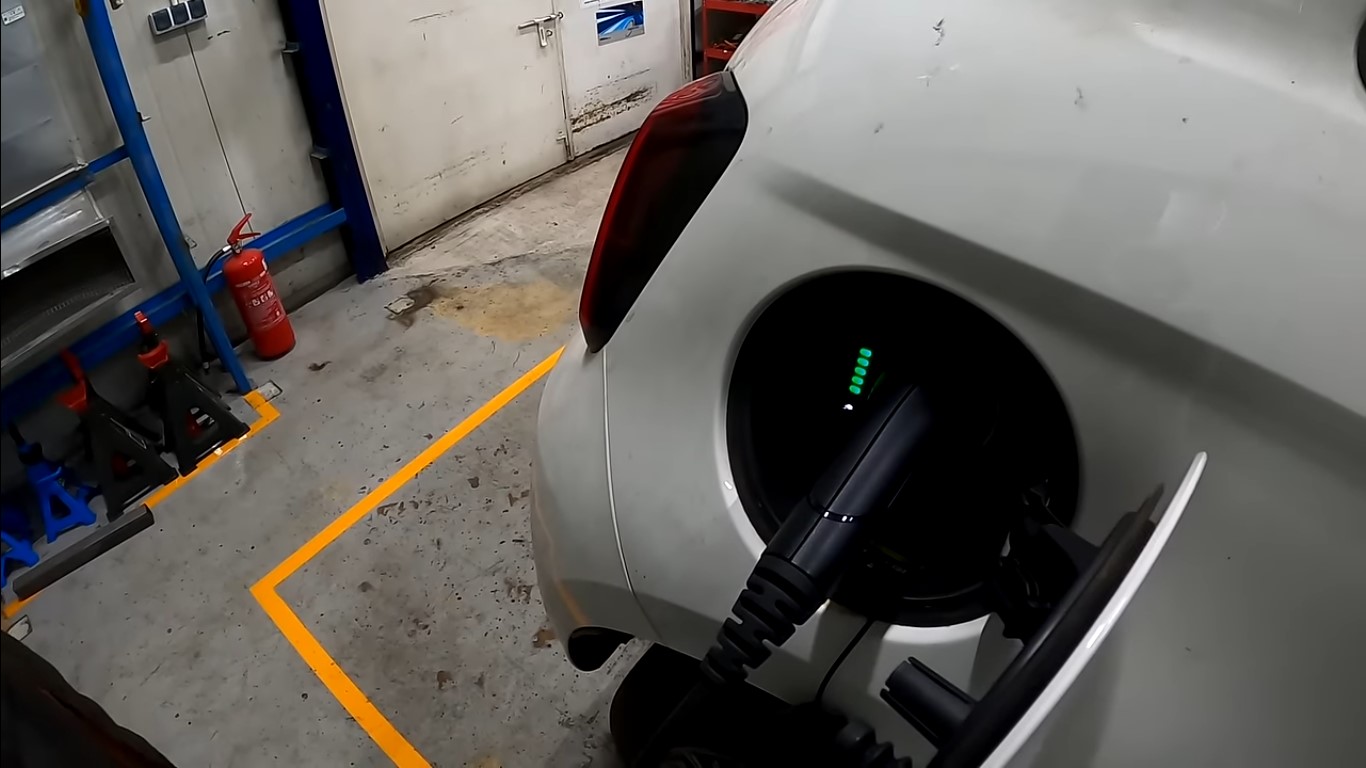
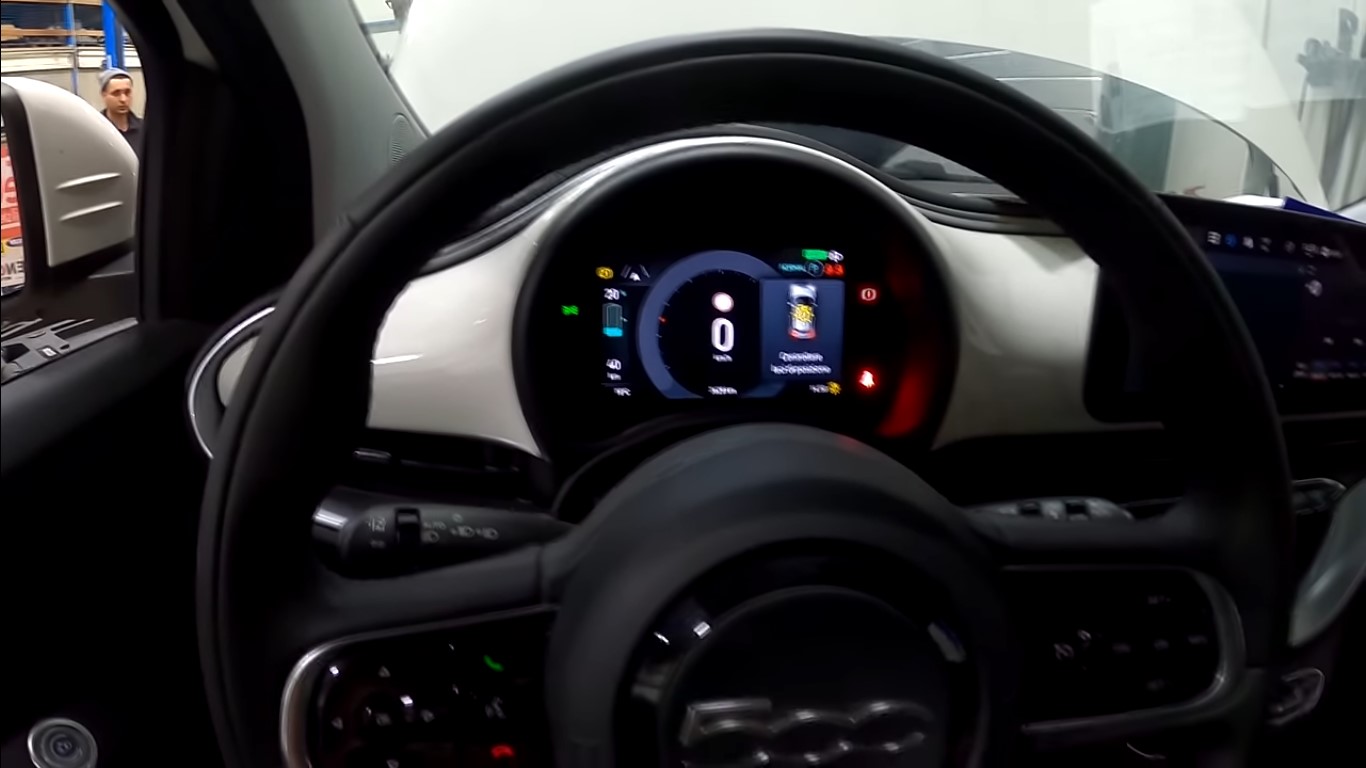
We connected the oscilloscope, checked the parameters - everything was fine. So we tightened the fasteners, added antifreeze, and decided to take it for a test drive.
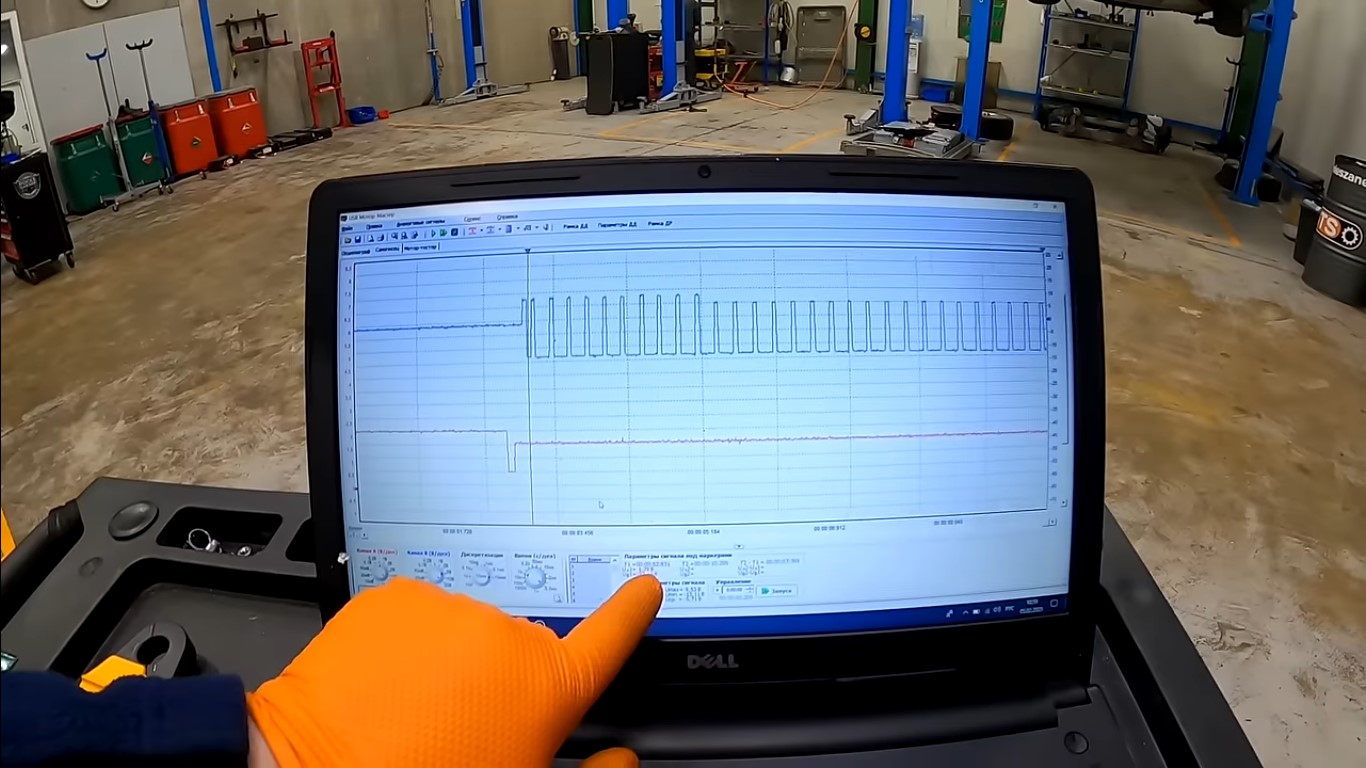
We made a test drive, there were no complaints about the engine and charger... but we found another problem - the cabin heater did not work. It should be noted that in electric vehicles, this is not just a radiator filled with liquid, but also a rather complex electronic device.

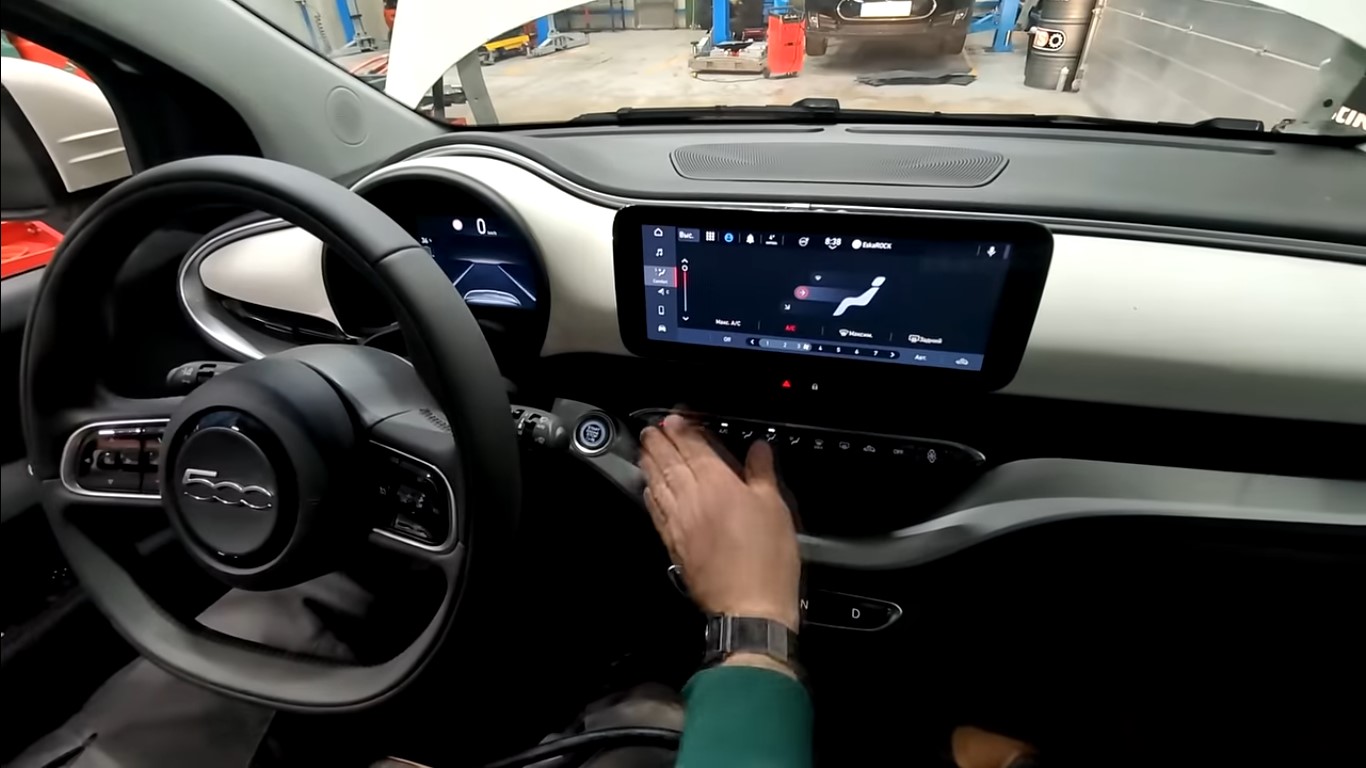

We dismantled it and checked it. The cause of the malfunction is similar to the previous ones: again, a low-voltage line of 5 V, again a transistor. We were ready to repair this one, but we didn't have the necessary components and had to order them. We informed the client about this, and he found a used unit, almost new, but for a very small amount of money. Both he and we were lucky.

Conclusion. The owner of an electric car needs to be careful not to take risks by charging the car during a thunderstorm, as this can lead to serious damage. But if this does happen, contact professionals who are able to solve any problems by repairing, not just replacing, the unit. This is STS.Electro - a company that can do what even officials cannot!